
A story from Tuli’s band
The Long Summer
About 10 minutes
Midsummer
The beads
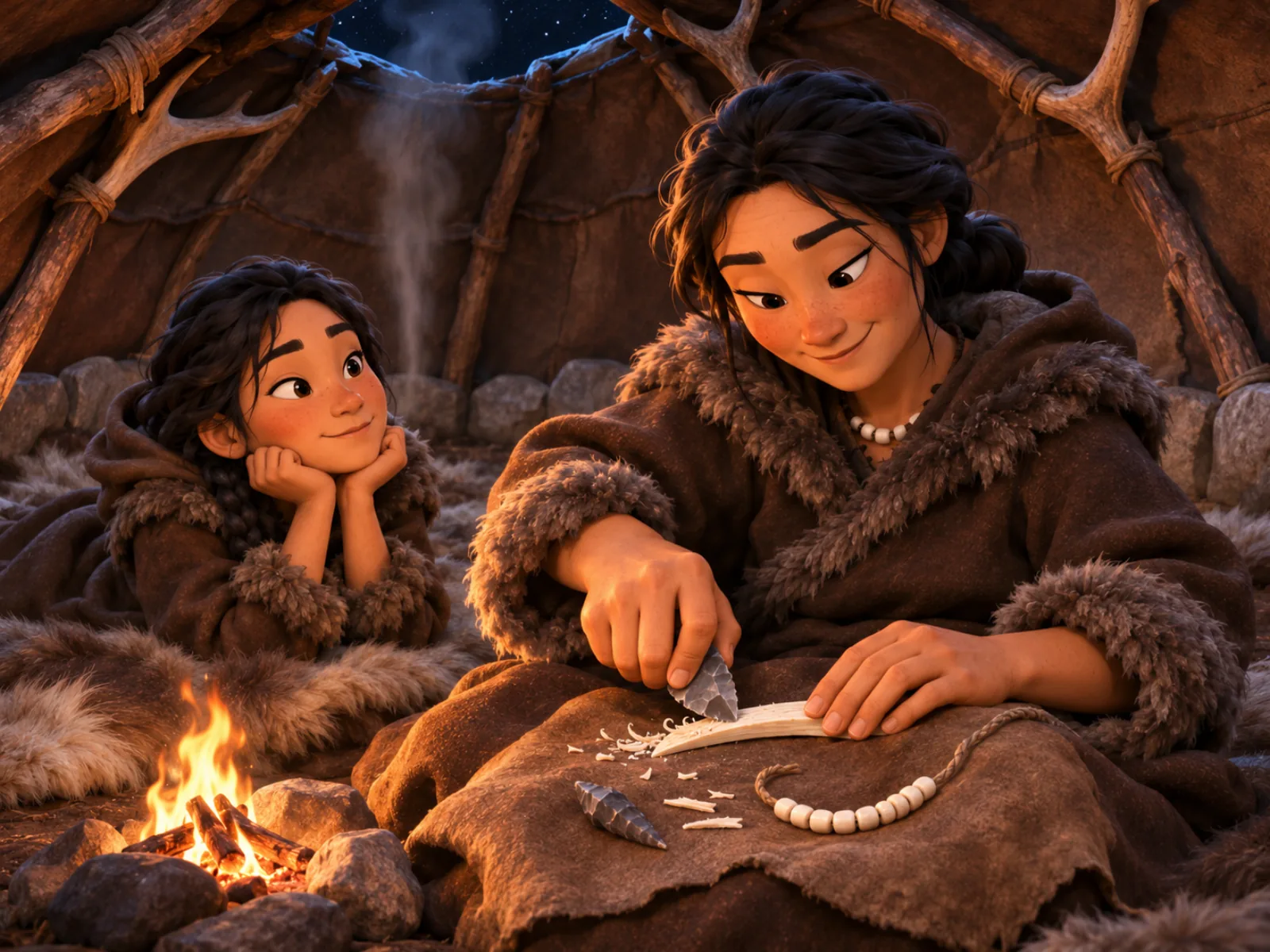
Tuli's mother made the beads all winter, and she made them in the dark, because that was when the band had time.
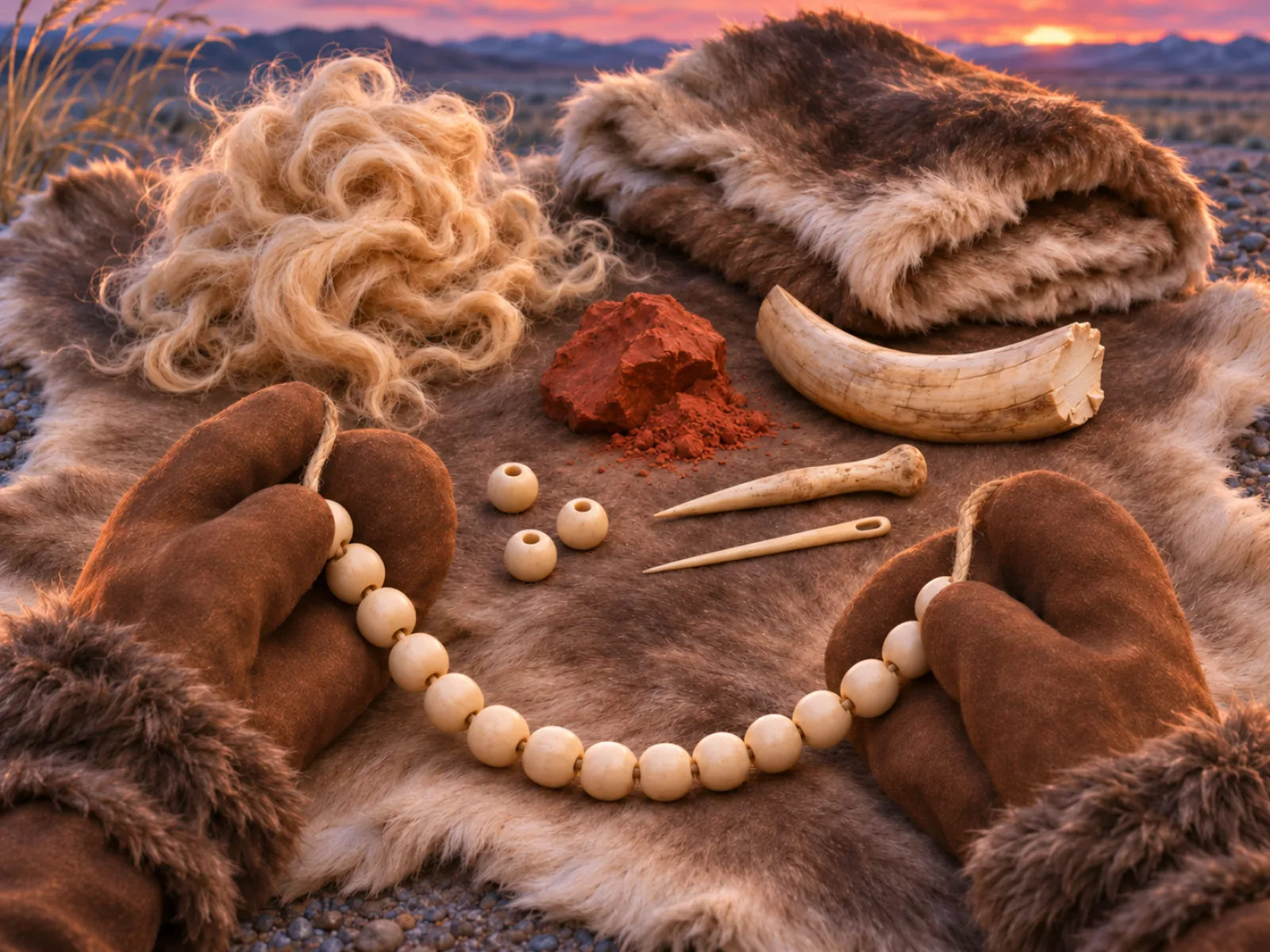
Each one started as a splinter of mammoth ivory. She scraped it round with a flint, drilled it with a flint point twirled between her palms, and polished it on a strip of hide until it was smooth as a river stone and almost as white as the snow. When Tuli woke in the night, her mother was still doing it, the little scrape-scrape going on beside the fire.
By midsummer there were sixty, on a cord, wrapped in a scrap of pelt.
“Sixty,” her mother said, and put the bundle in Tuli's hands. “Don't lose them.”
“I won't lose them.”
“Your great-uncle will try to carry them. Don't let him. He'll put them down somewhere to look at a bird.”
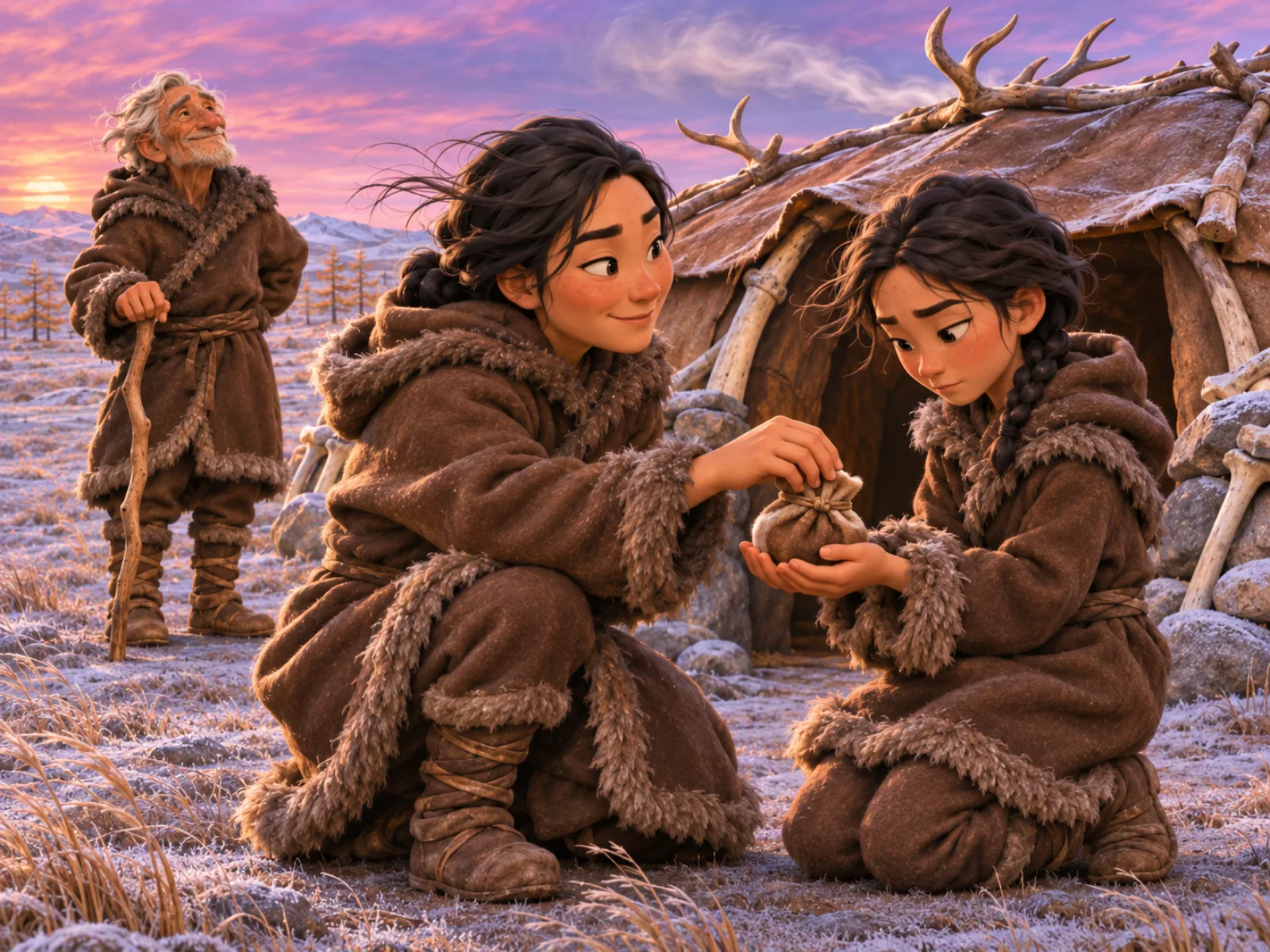
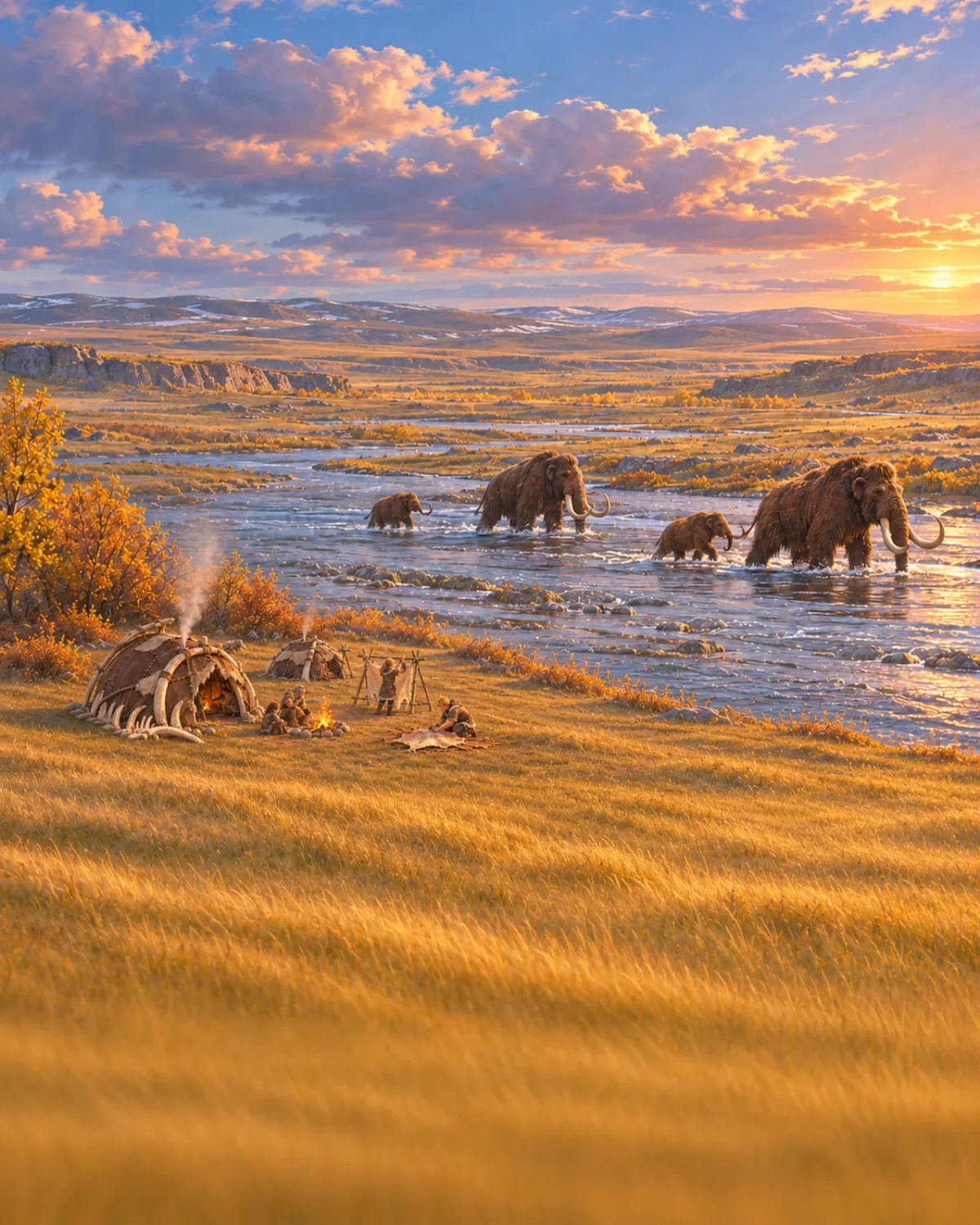
Tuli was twelve, and this was the first summer she was allowed to go. The band split up every summer, because no one place could feed all of them once the reindeer moved on. Families went out wherever the herds went, and the gathering was the one time in the year when anyone saw anyone else. This year it was far to the south, at a salt lake, five or six days' walk. There'd be a family there that followed the wild camels north every summer and gathered the wool the herd dropped. They'd have wool, and they'd want ivory.
“Why me?” Tuli said. “Why not you?”
“Because I'm making more,” her mother said. “And because Oyka can't be trusted alone, and you can.”
That was a lie, or half of one. Oyka was her mother's uncle, an old man with a bad hip and a worse temper, and he'd walked this country for sixty summers. If anyone couldn't be trusted alone, it wasn't him.
But Tuli knew a compliment when she was handed one, so she tied the beads inside her coat, against her ribs, and went to find him.
Out past the last water
For two days the country was easy. They followed a stream down out of the hills, and there were larches along it and a haze of mosquitoes, and in the evenings Oyka sat with his bad leg out and told her what was wrong with everything.
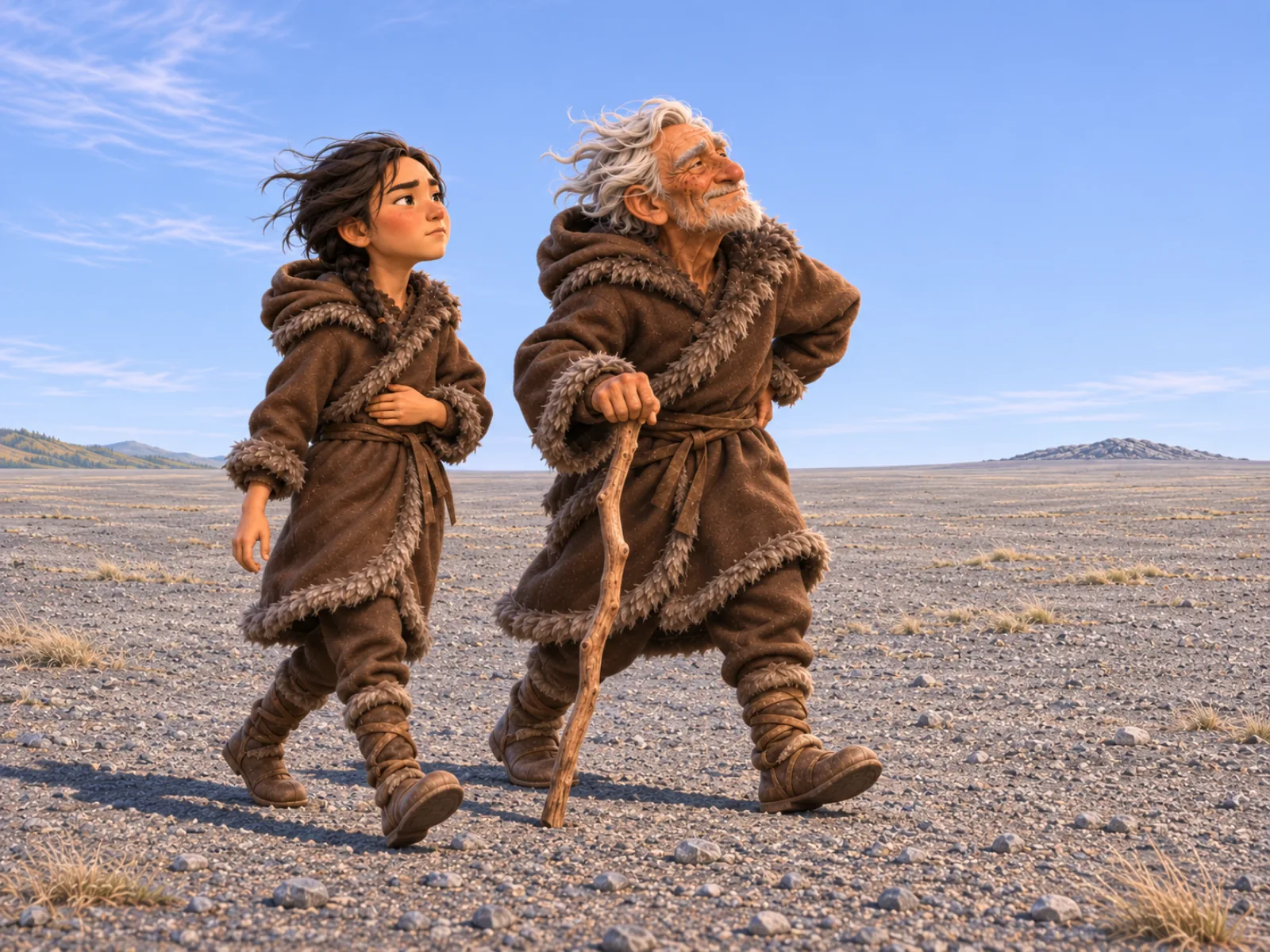
Then the stream gave out. It didn't dry up so much as sink: the bed got wider and stonier and the water went down into the gravel, and by midday they were walking on a flat gray plain with nothing on it at all.
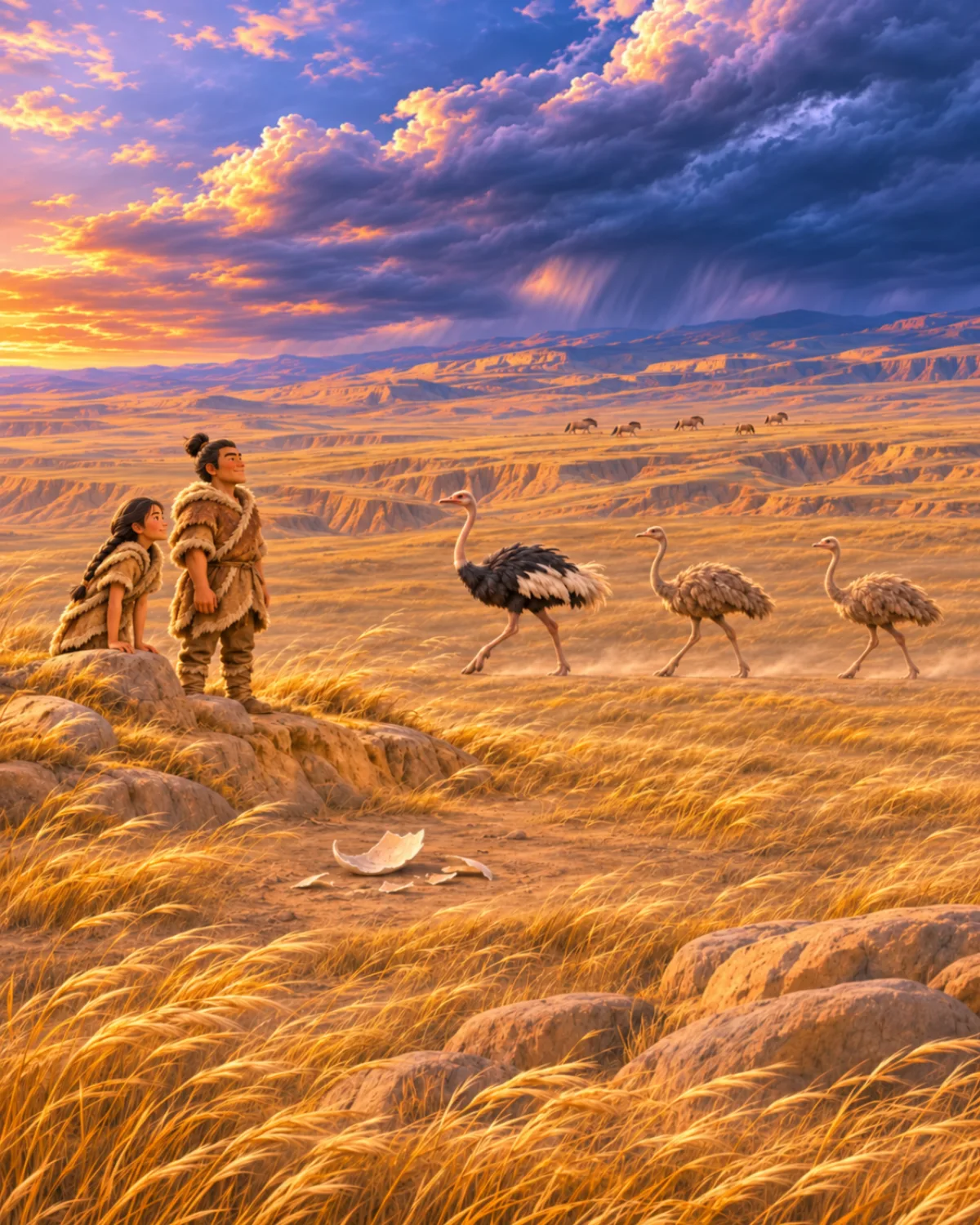
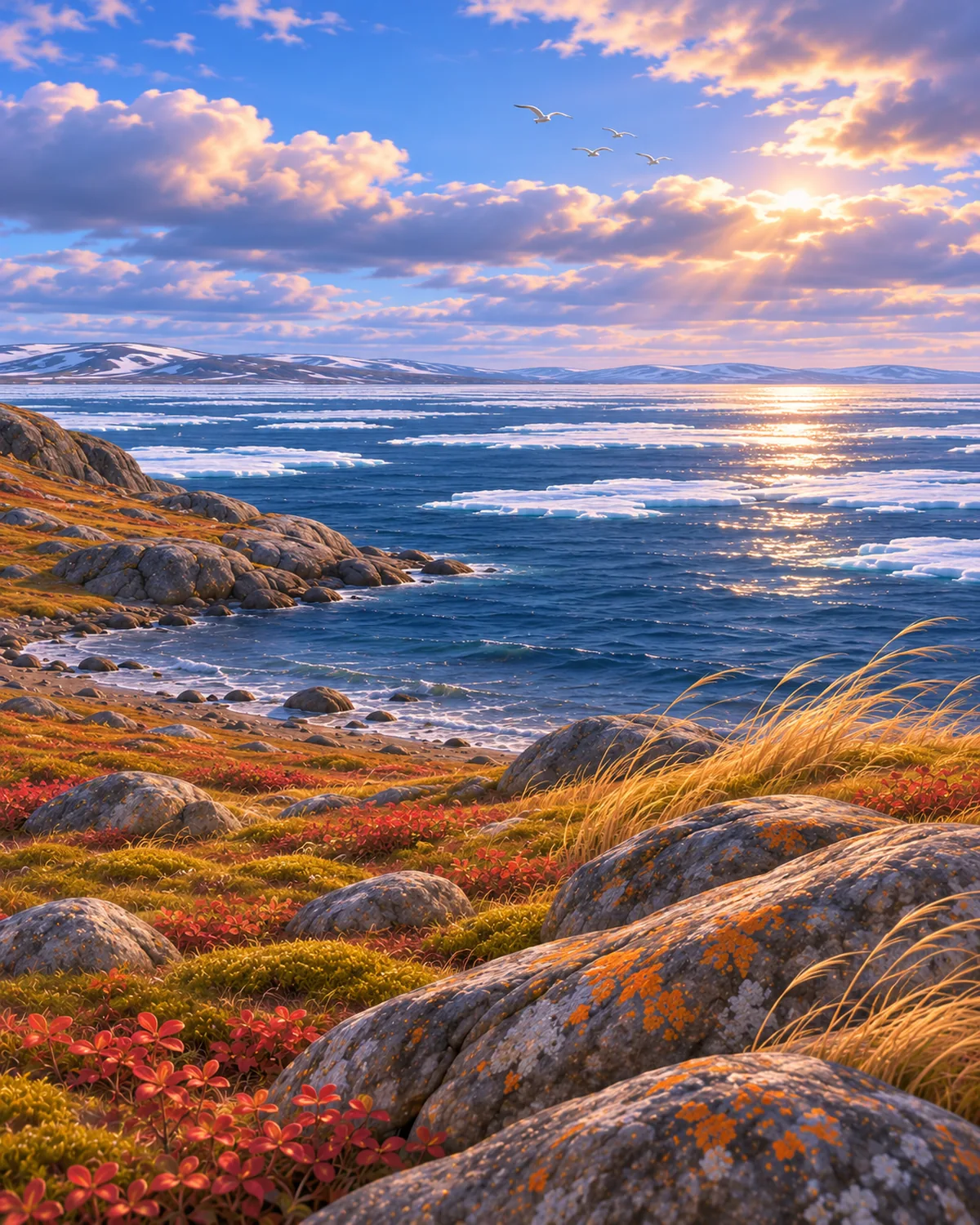
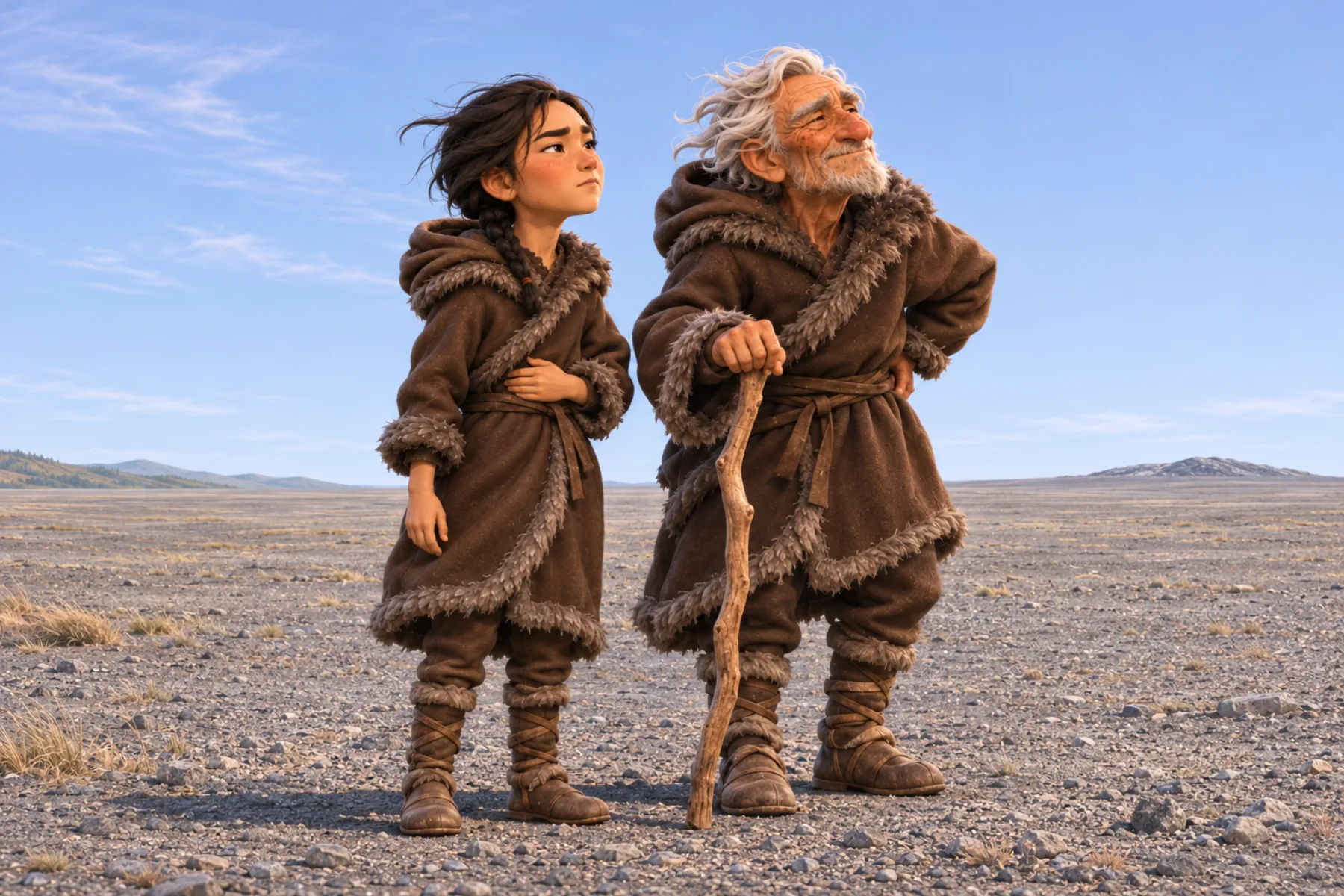
Tuli had never been anywhere with nothing on it. The hills went down behind them. The sky came all the way to the ground on every side. There was no tree, no bank, no rock higher than her knee. She turned all the way around once to check, and Oyka watched her do it.
“Go on,” he said. “Pick a direction.”
“South.”
“Why?”
“Because that's where we're going.”
“How do you know which way that is?”
She opened her mouth, and then she looked at the sky, where the sun was nowhere near where she'd have said, and shut it again.
“There,” Oyka said, and pointed with his chin at a low gray hump a long way off. “That. Walk at that. When you get to it, find the next one. You can walk a whole day out here and arrive nowhere in particular, so you pick somewhere in particular and make it arrive.”
They walked at the hump. It took the rest of the afternoon, and when they got there it was nothing, a heap of frost-cracked stone, and the next one was farther off than she'd have guessed.
The fourth night
Noon and dark
Noon out there burned the back of her neck. She wrapped her head in a strip of hide and it still burned. By the middle of the afternoon her lips had split and Oyka was walking with his mouth shut, saving the water in it.
Then the sun went down, and the whole day turned over.
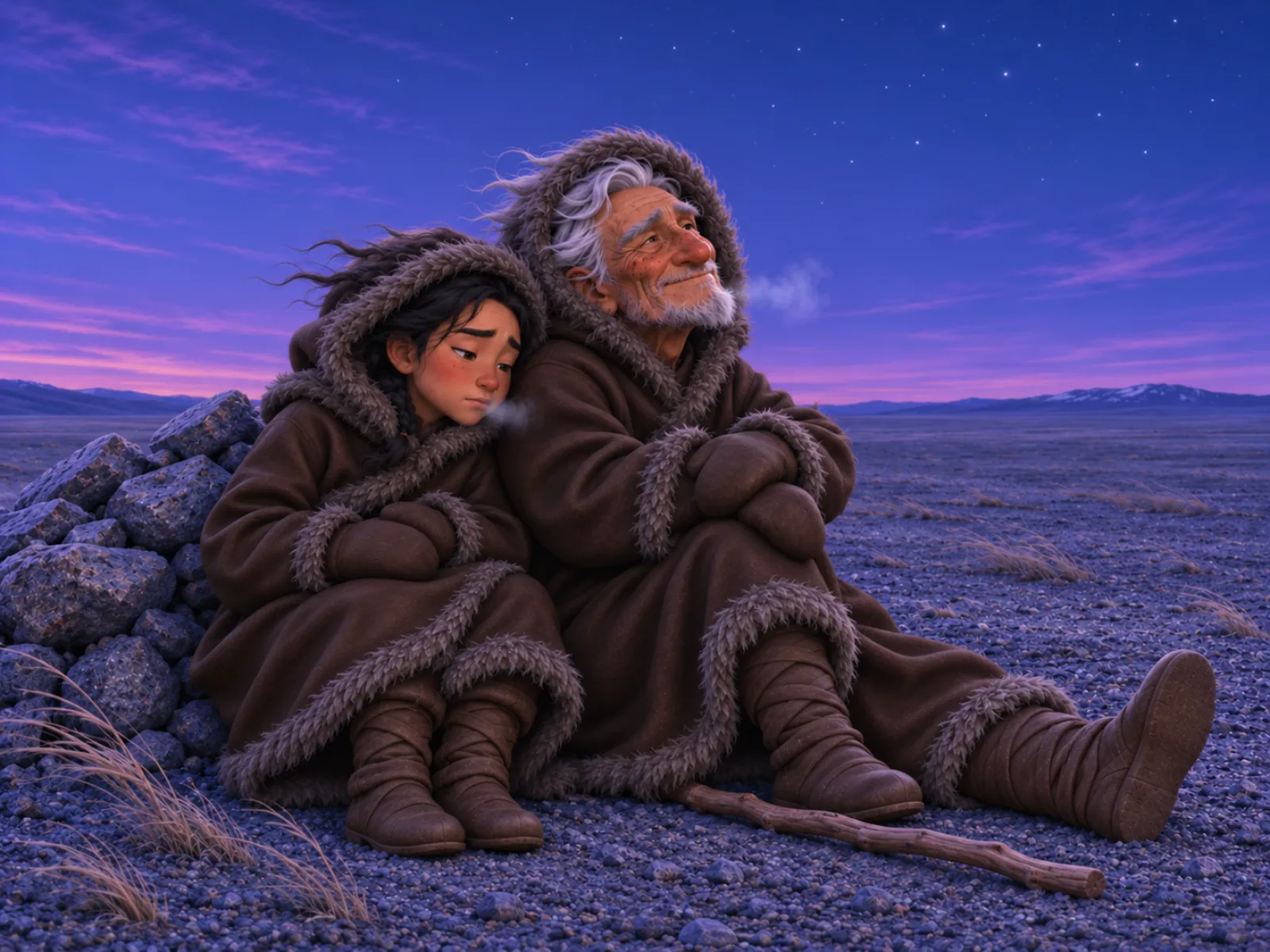
Cold came up from the gravel in the space of a few breaths. Her breath showed. They made a camp in the lee of a heap of stones with no fire, because there was nothing to burn but a few tufts of dry grass, and she lay close against Oyka's back and listened to the wind.
It never stopped. It had come from somewhere so far away that she couldn't picture it, across all that flat country with nothing to break it.
“The wind has crossed the whole world,” Oyka said into the dark. “You hear it out.”
“What does that mean?”
“It means shut up and let it finish.”
In the morning the water skin was a stiff lump with a slushy middle. She held it against her stomach under her coat and walked, and by noon it was water again, and then there was less of it.
On the fourth night Oyka made her say how much was left. She said half. He made her say it again, and then she shook the skin and said a little less than half.
“Good,” he said. “That's the true one.”
The water was not there
The next water was a spring at the foot of a ridge of dark rock. Oyka had drunk from it every other summer of his life. They saw the ridge from a day away, and Tuli's feet went faster without her asking them to, and by the time they got there she was nearly running.
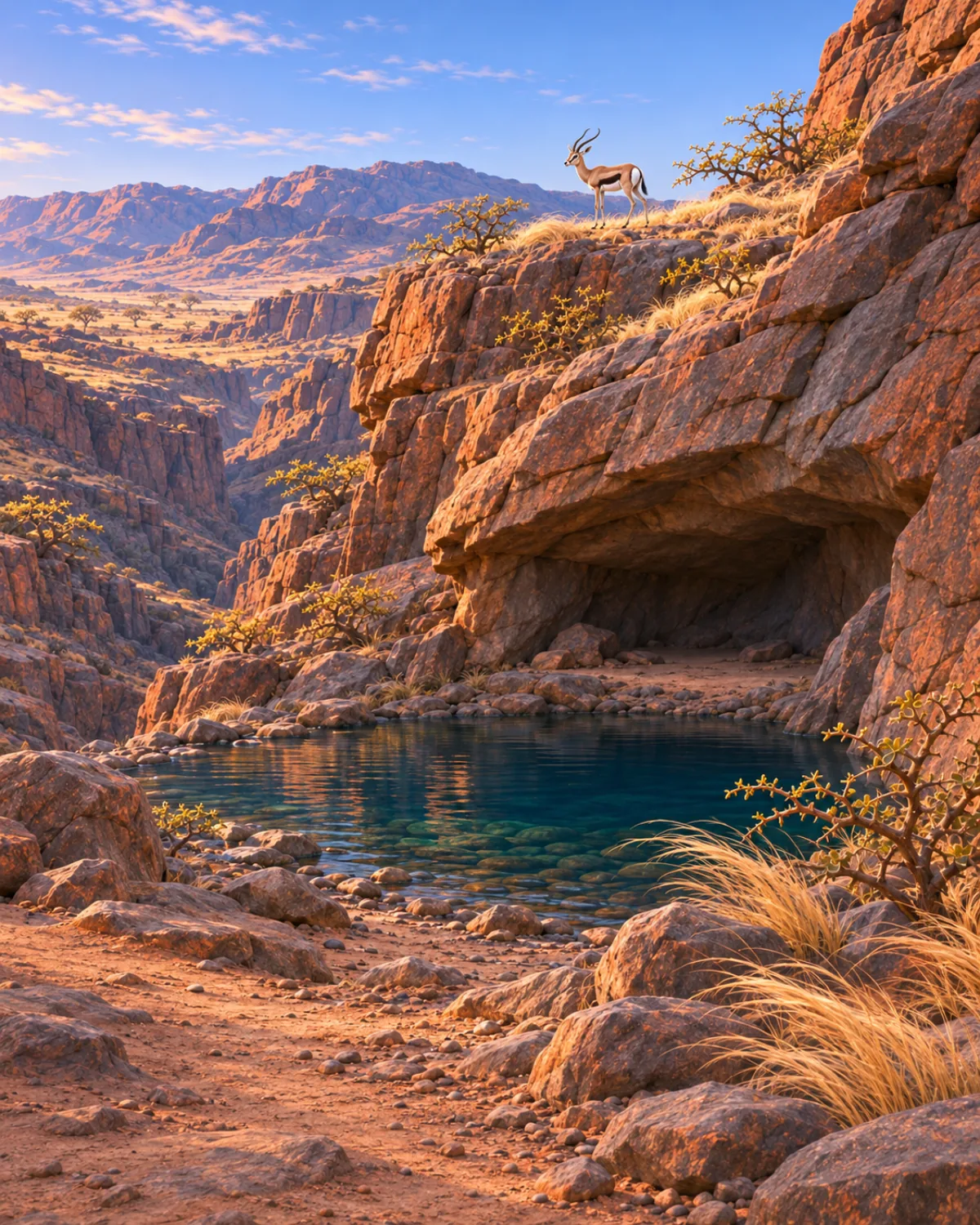
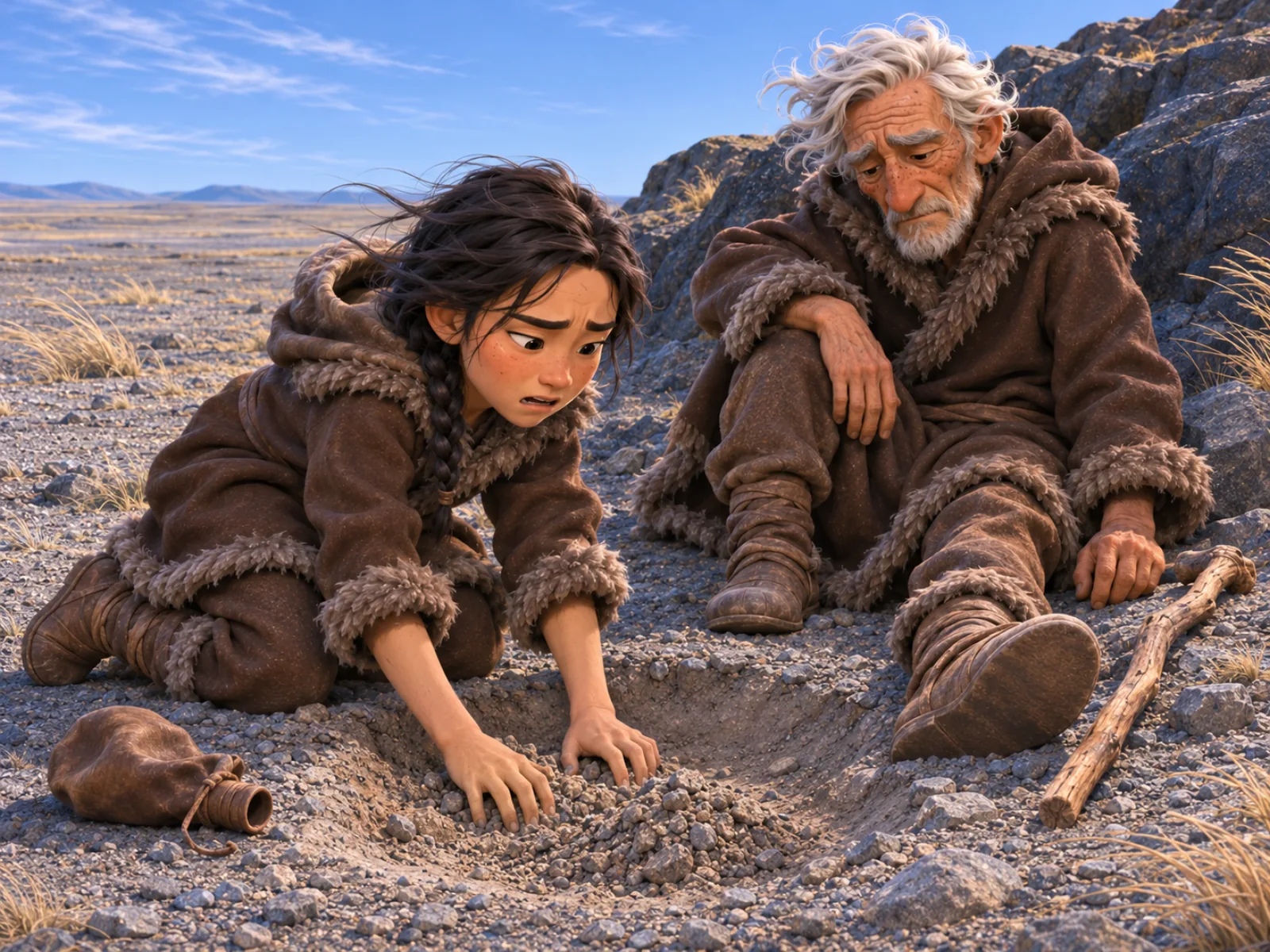
There was a hollow under the rock, and gravel in it, and a few flies. The gravel was dry all the way down. She dug until her fingers hurt.
Oyka stood and looked at the hollow for a long time. Then he sat down heavily, with his bad leg out, and didn't say anything.
She'd never seen him with nothing to say.
“There's more,” she said. “There's the other one, the one past the white hill. You said it yourself. Two more days.”
“Two days to the white hill and one more to the water,” he said. “We've got a little less than half a skin.”
She did the sum, and she didn't like it. The sum said that if the white hill was dry too, they'd be walking back in the dark toward a stream that had gone into the ground, with nothing in the skin at all.
“We could go back now.”
“And what would the beads be for?” Oyka said, and for once he wasn't being cruel. He was asking.
She didn't answer. She was too busy being frightened.
Follow the reindeer
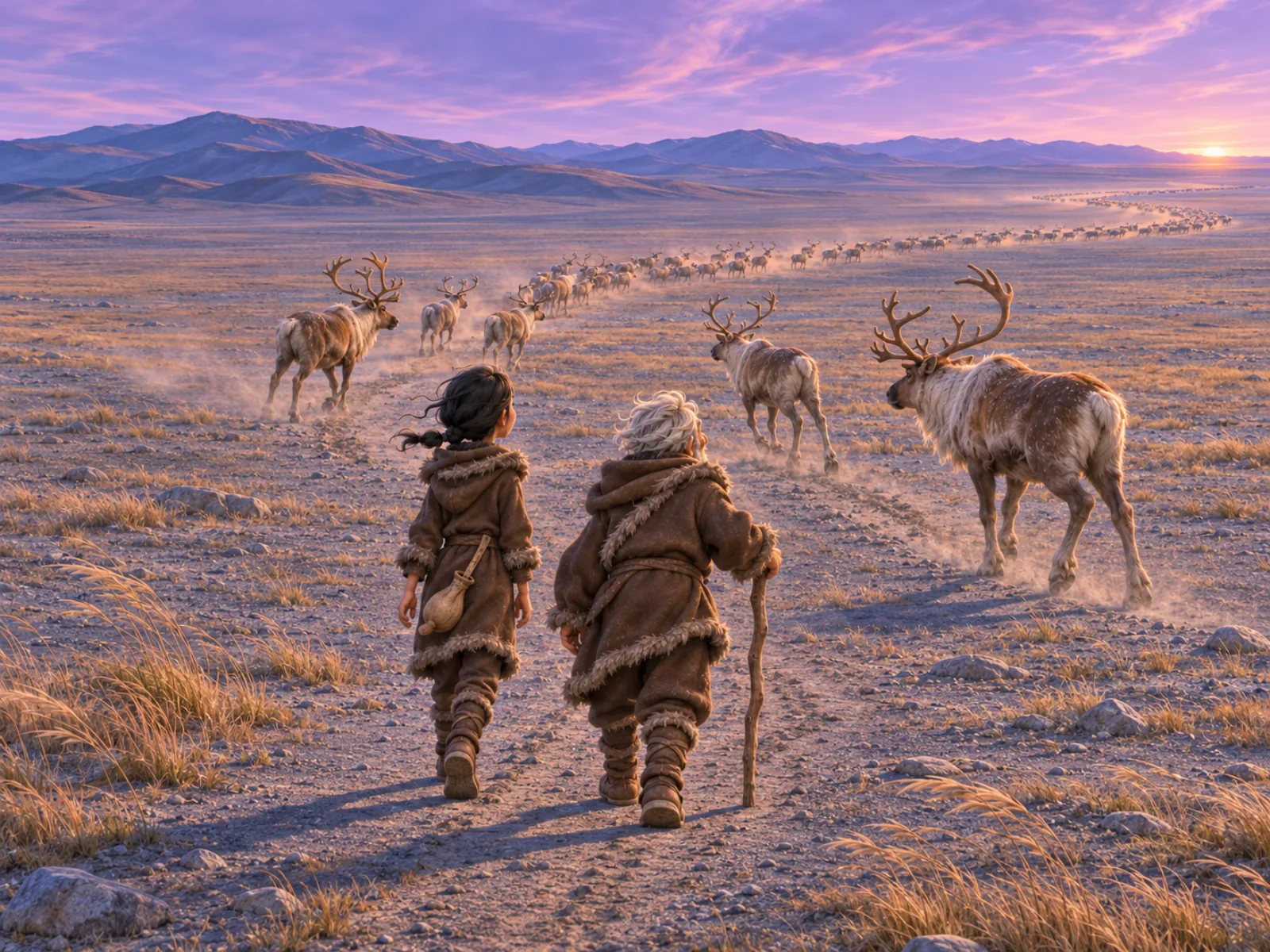
They saw the dust before they saw anything else.
It was just a smudge on the north horizon, early in the morning, brown against the pale sky. Oyka stood up faster than she'd seen him stand in days.
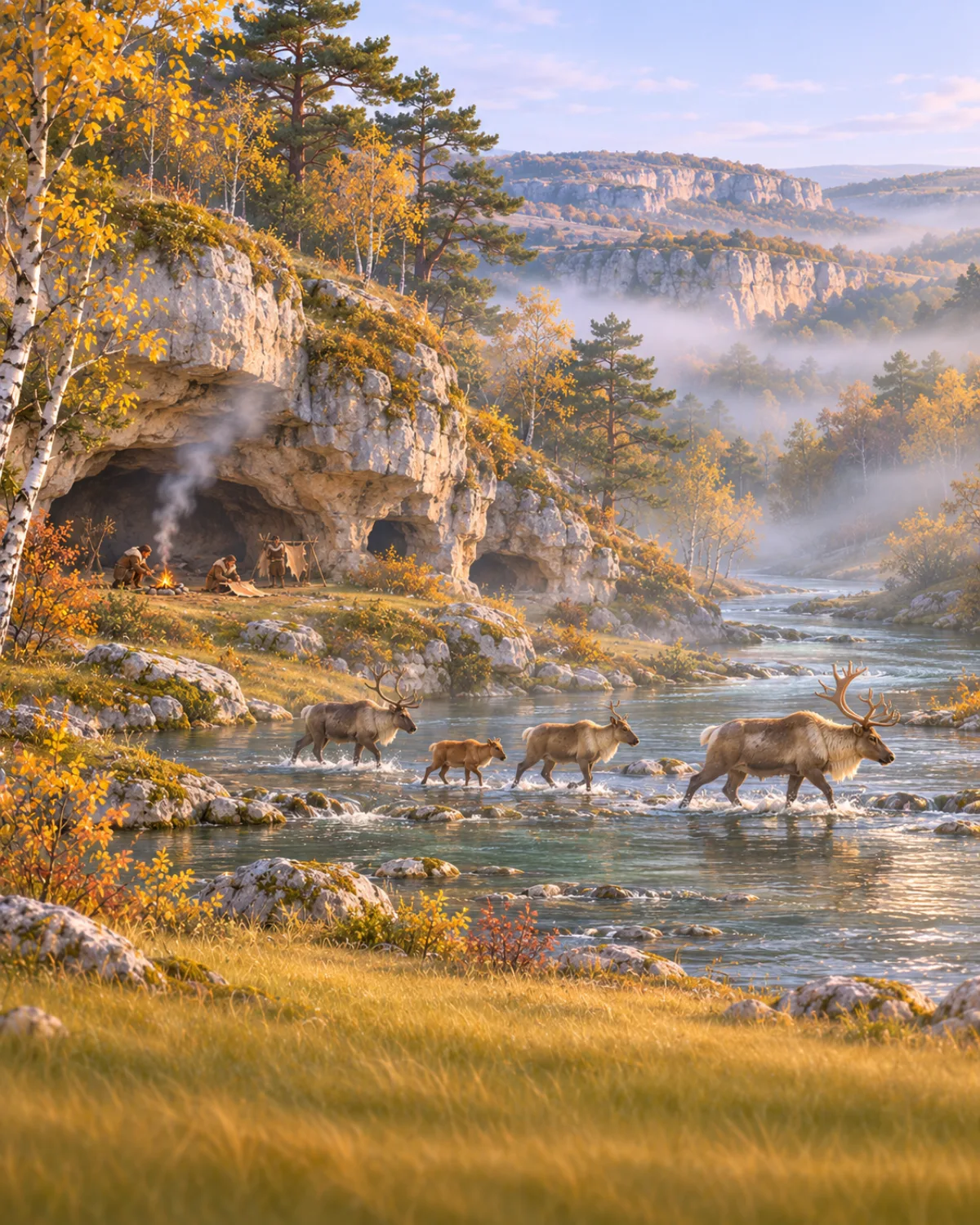
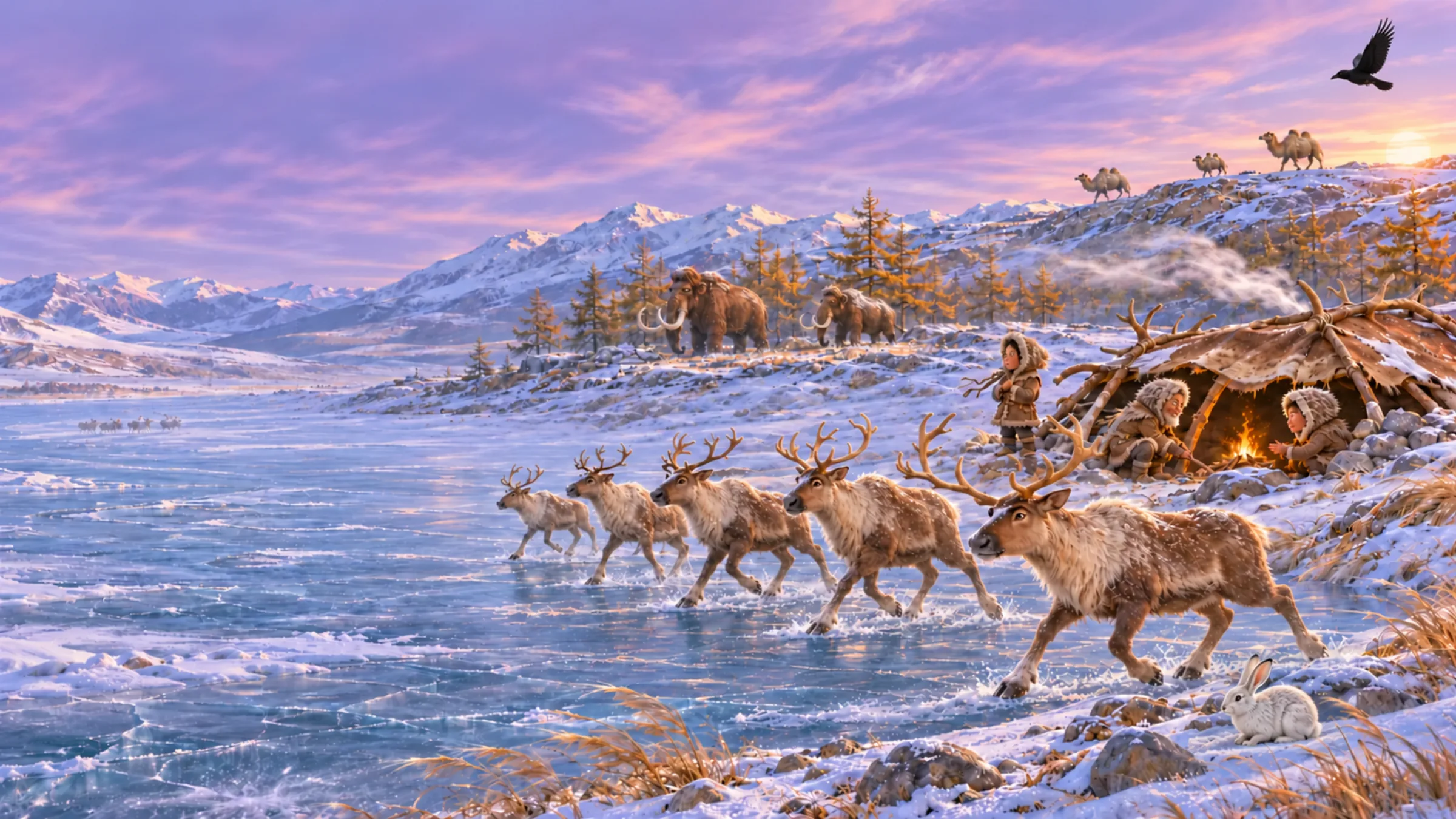
Then the sound reached them, thin and far off and clicking, like a thousand sticks knocked together, and the smudge became a line, and the line became animals. They came down out of the north in a long stream, heads low, and they didn't stop for people. Reindeer, more than she could count, with their antlers swaying together like a moving thicket, and they went right past the dry spring and bent south and east, all of them, without a pause.
“Look at them,” Oyka said, very quietly. “Look where they're going.”
“Not toward the white hill.”
“No.”
“Then they're going the wrong way.”
“They're not going the wrong way. We are.” His hand closed on her shoulder. “Follow the reindeer, not your feet. How many times did your mother say that to you? They aren't going where we planned to go. They're going where the water is. They've been doing it longer than we have.”
So they turned off their road and followed.
It was a bad day. They couldn't keep up, and the herd went out of sight by noon, and all that was left was a wide churned track of hoof-prints and dung crossing the gravel. But it was a road, and they walked on it with the skin nearly empty. In the late afternoon the track dipped and the ground went from gray to a dark, damp brown.
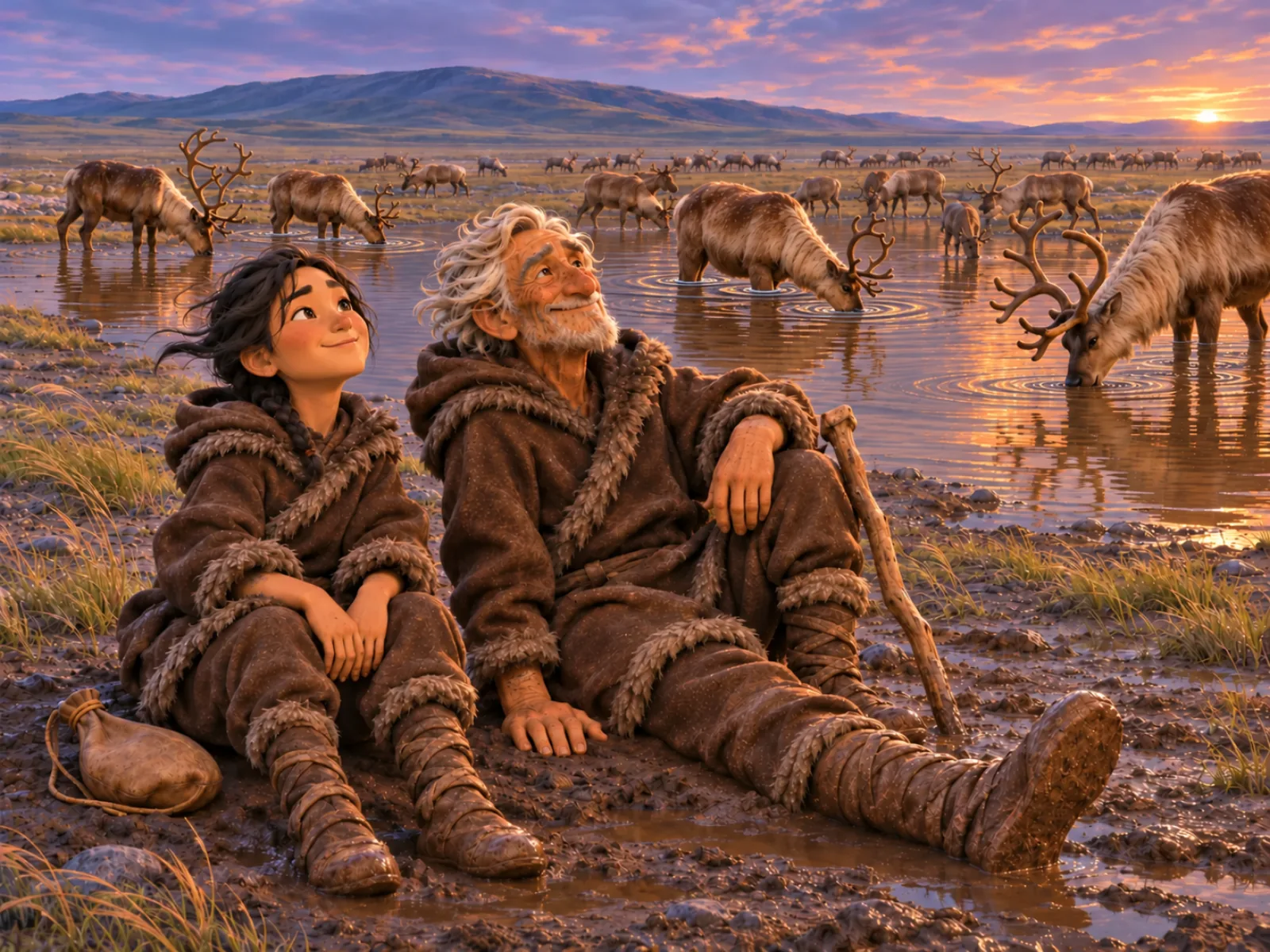
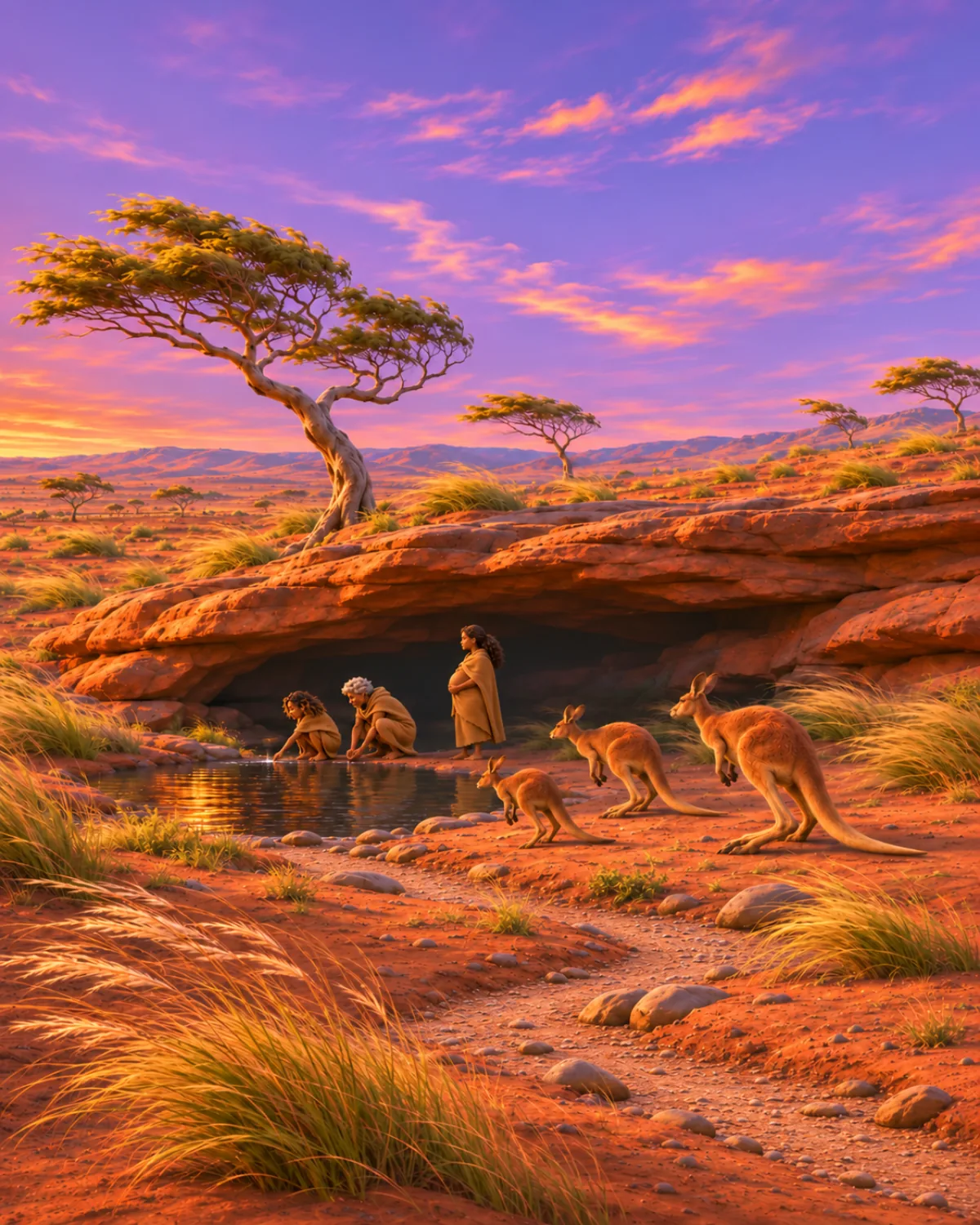
Tuli saw the water first, and then she saw a hundred reindeer standing in it up to their knees.
She sat down in the mud where she was. After a while Oyka sat down next to her, and neither of them said a word.
The camels
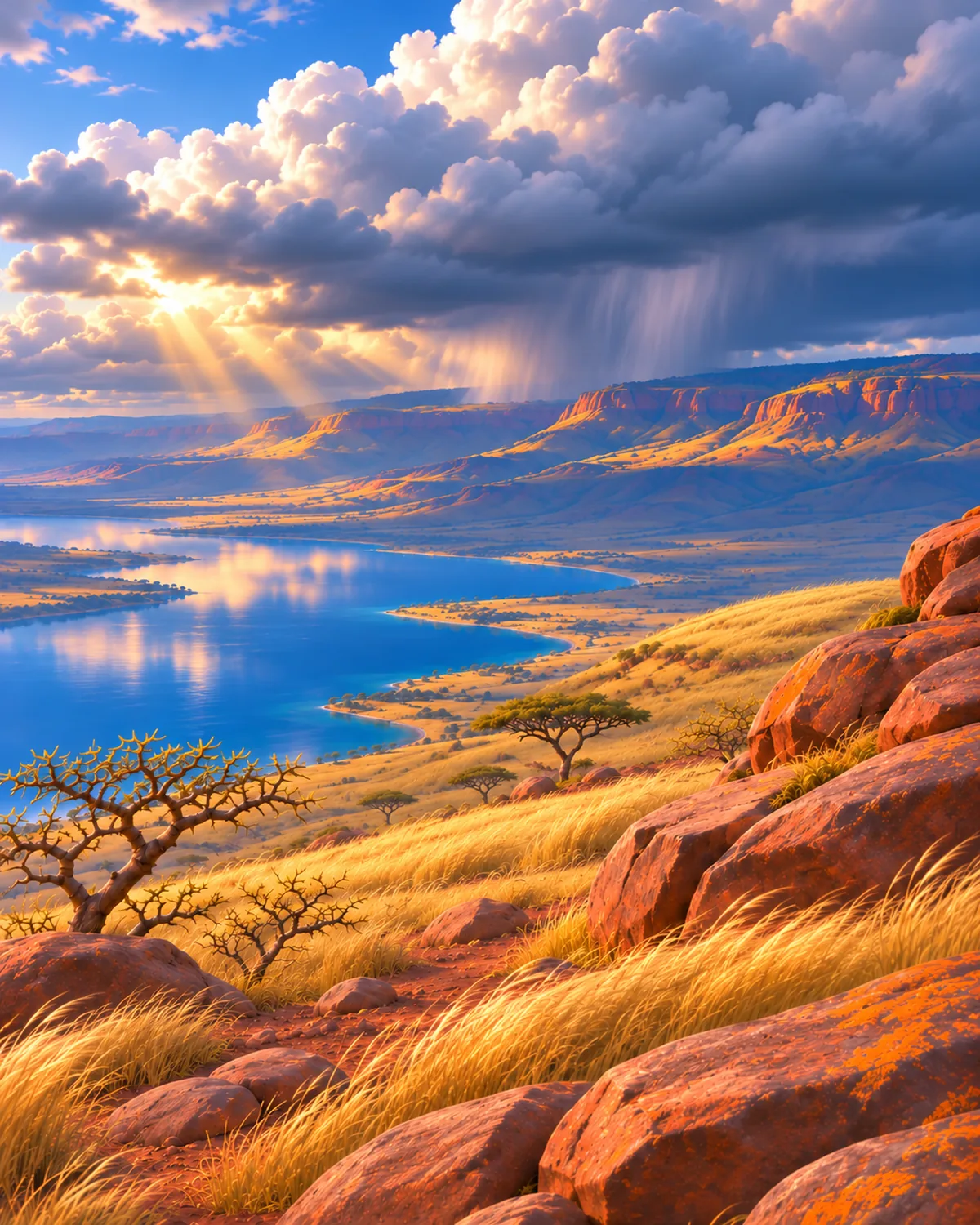
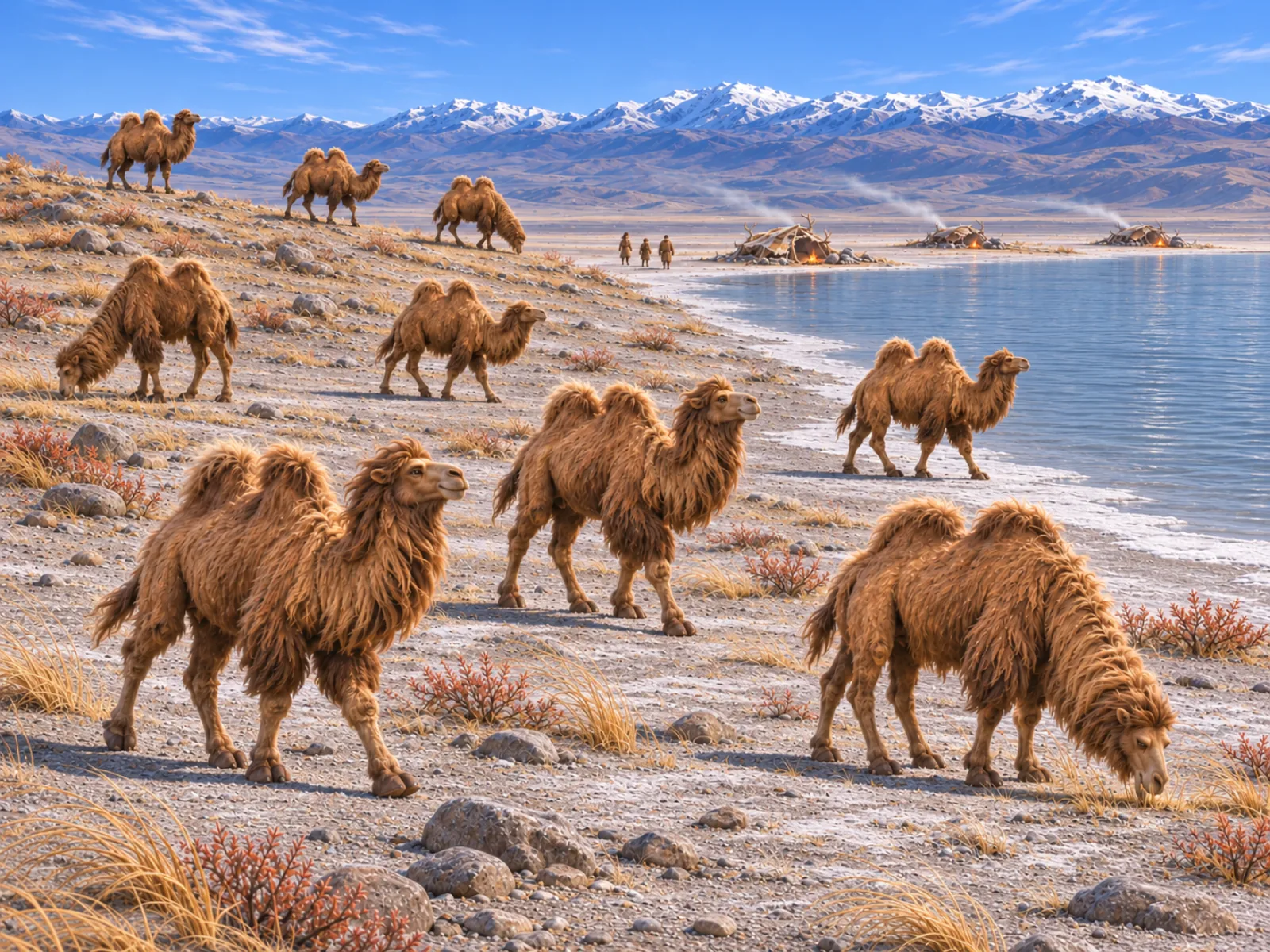
The salt lake was white from a day away, and so was the sky above it, and in the middle of all that white there were people.
Tuli had never seen so many. Three bands had come in, and there were forty or fifty of them in all, with children running between the fires. She stayed close to Oyka, and she kept one hand flat against the beads under her coat.
Then someone on the far side of the camp shouted, and everybody looked up. Over the rise to the south, in a line, unhurried, came the camels.
She'd heard about them. She hadn't believed it. They were tall and rough and humped, with long ugly faces and a way of looking down at everything, and they walked as if they'd never been in a hurry and never would be. There were nine, loose and wild, and a long way behind them, keeping their distance, walked the people who followed the herd. They wore hide coats with a pale, soft wool showing at every seam that she'd never seen before, the color of sand.
Oyka took her over to the camel followers' fire. A woman called Poyma sat there, with a man and a boy a little older than Tuli. They had no words in common. Oyka tried the words for ivory and for beads, and Poyma's face stayed polite and empty.
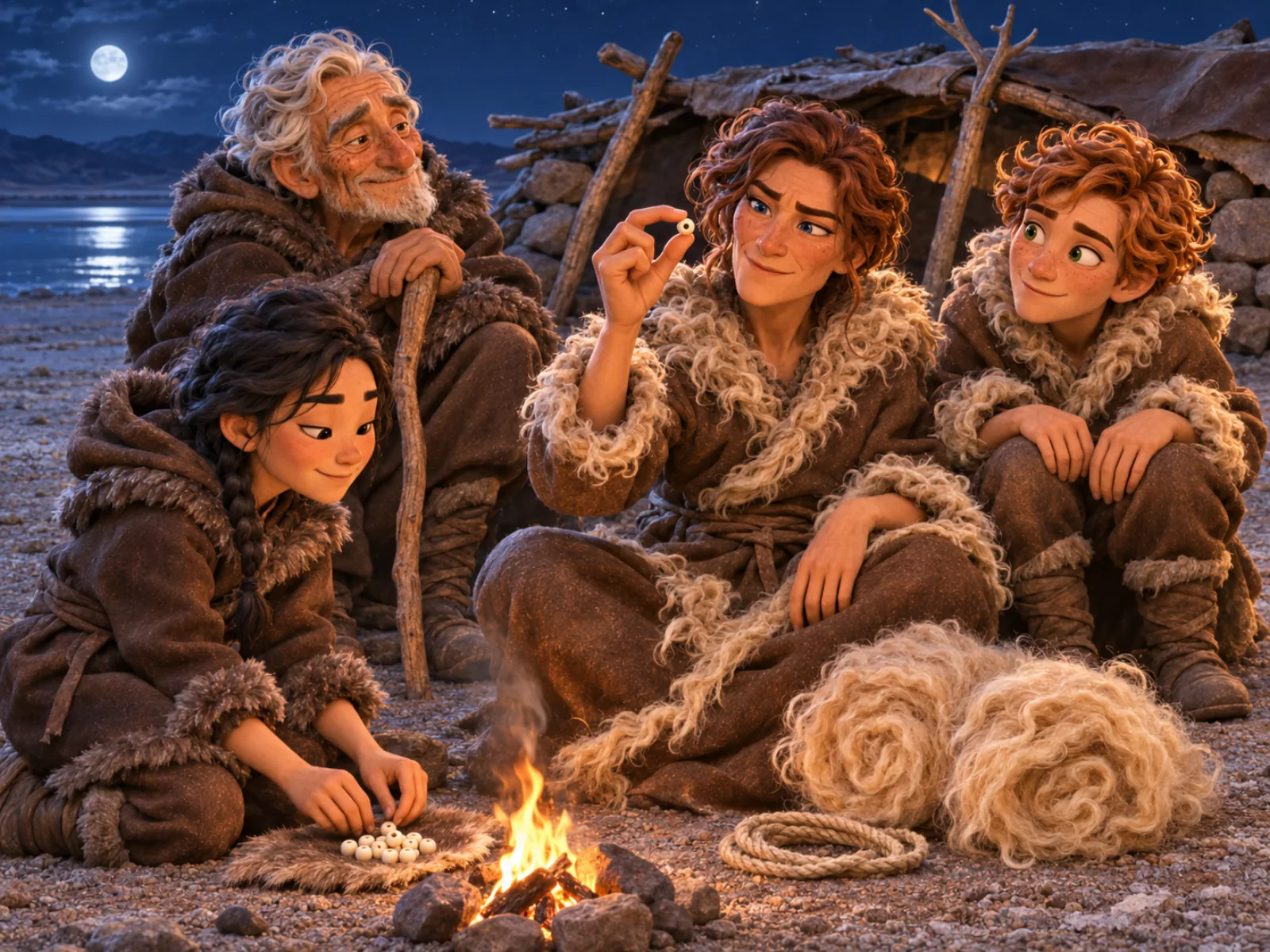
So Tuli unwrapped the pelt.
The beads lay in the firelight on the scrap of fur, sixty of them, white as the salt, and Poyma stopped looking polite. She picked one up and held it to the light. She looked at the hole, at how straight it went. She said something to the boy, and he came and looked.
In the end it was done with fingers. Poyma laid out a roll of wool and put her hand flat on it. Tuli counted beads onto the pelt, ten, twenty, and stopped. Poyma shook her head and held up more fingers, and Tuli went on counting. It took most of the afternoon. At the end of it they'd settled on thirty-eight beads and two rolls of wool and a coil of twisted camel-hair rope, and the boy had been given a handful of the polished ivory splinters to look at.
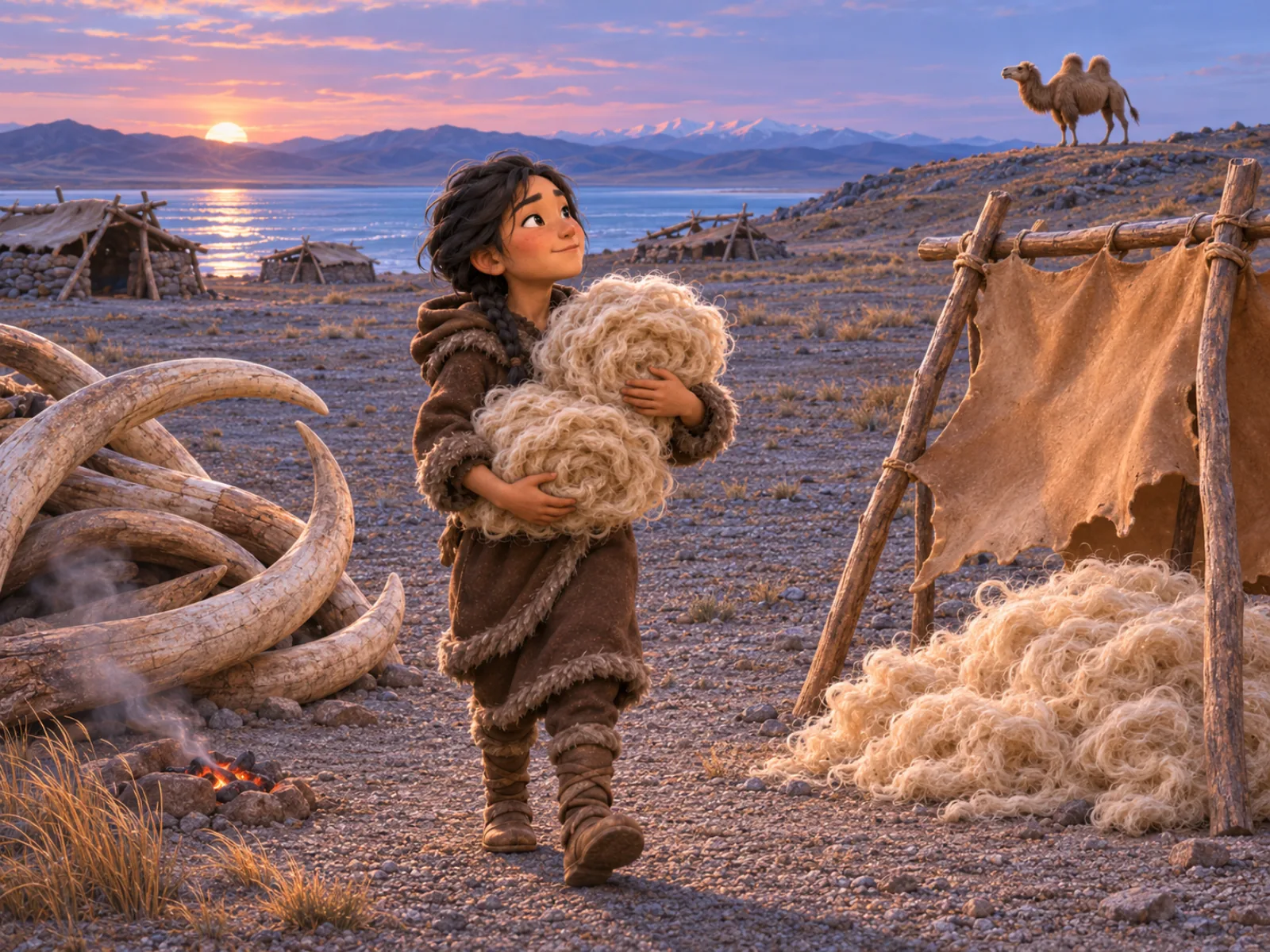
Walking back across the camp with the wool in her arms, she passed a pile of mammoth tusks on one side of a fire and a stretched camel hide and a heap of pale shed wool on the other, and out on the rise one live camel with its ugly face turned toward the tusks as if it was thinking about them.
She stopped and looked at that for a long time. Then she went and found Oyka.
First frost
Winter ground
They left with the first frost. All the bands did, going off in different directions, because winter was coming and everyone had to be at their own ground before it did.
The walk back was shorter, because she knew it now. Oyka's hip was bad, and by the third day he was walking slowly, leaning on a stick, and she took the wool and the rope and his pack too, and didn't say anything about it.
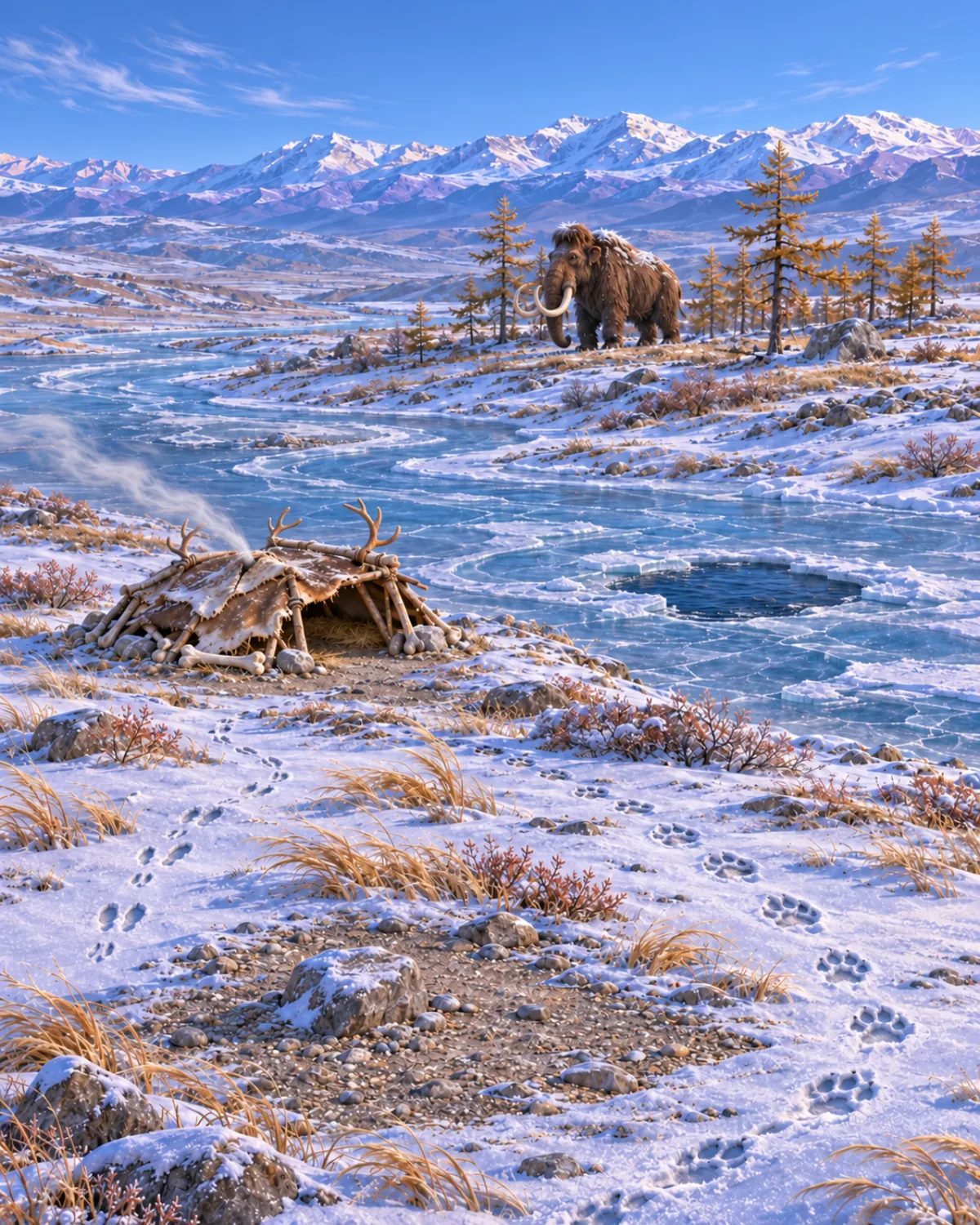
The band's winter ground was a river valley she'd known all her life, but never from this side, and not like this. The larches were turning. The river was low and slow, and along its edges the first ice had started, thin and gray and curling.
Her mother was already there with the others, and Tuli walked up the bank with the wool and put it in her arms, and her mother held it to her face and breathed in.
“It smells like a different country.”
“It is a different country,” Tuli said. “It's very big. It's got nothing in it.”
Her mother laughed, and held her.
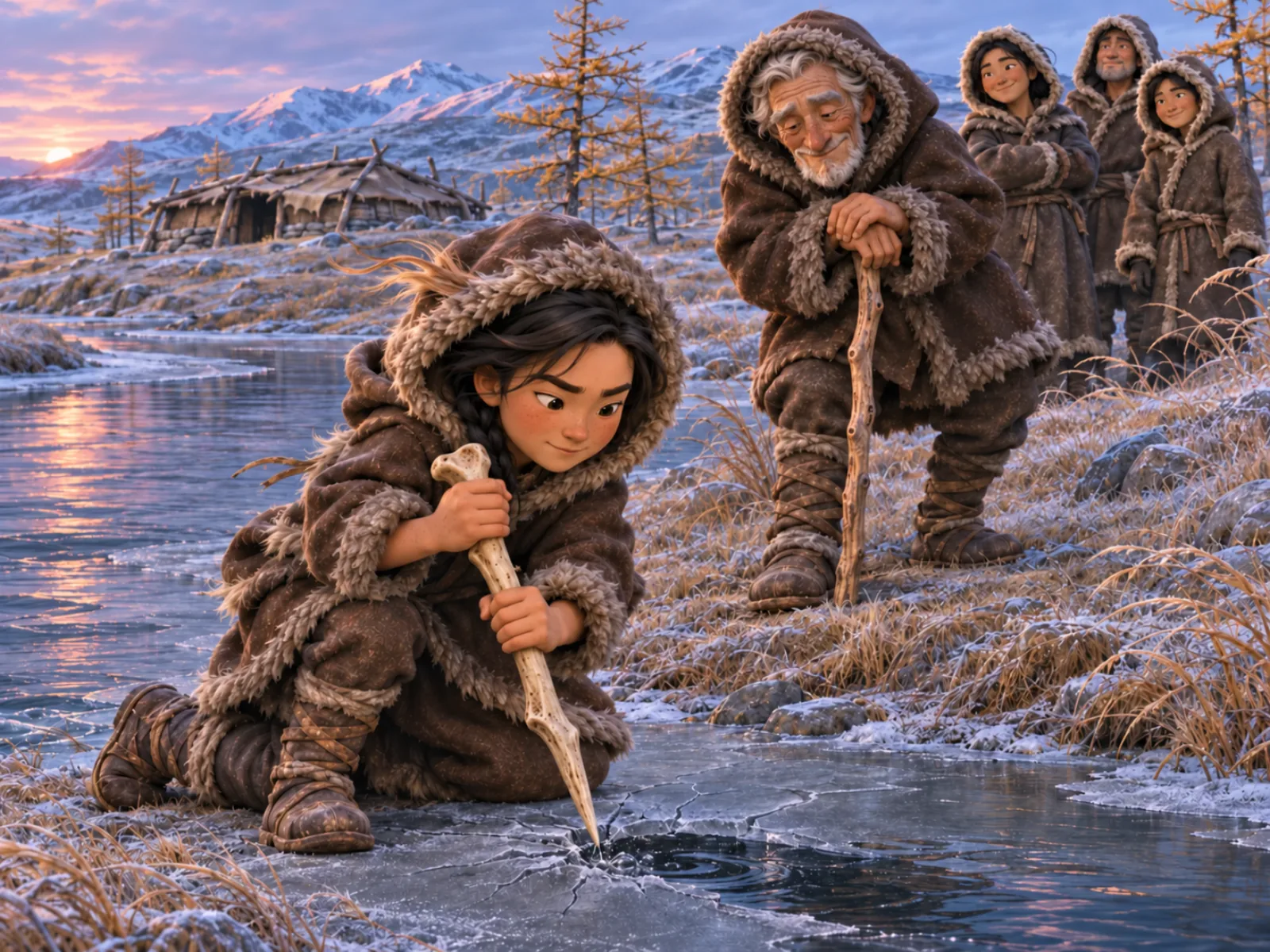
That night the cold came down hard, the way it does at the start of winter. In the morning Oyka's water skin had frozen solid, and so had everyone else's. Tuli picked up the bone pick from beside the fire.
“Which way?” she said to the river.
She walked along the bank, and she did what she'd watched him do every winter of her life. She looked at the color of the ice. She looked at where the current ran, and where it was slow, and where a bend had pushed the water close under the bank. At the second bend she knelt, and put the point of the pick on the gray ice, and leaned on it.
It cracked, and water came welling up, black and cold, through the hole.
Behind her someone cheered. She didn't turn around. She filled the first skin, and held it up to the light, and it was clear all the way through.
When she looked up, Oyka was on the bank above her, leaning on his stick, with his bad leg out to one side and his mouth working. He didn't say a word.
Then he said, “That's the true one.”