
A story from Red Ledge
The Way Back
About 9 minutes
Late summer
When the rain stopped
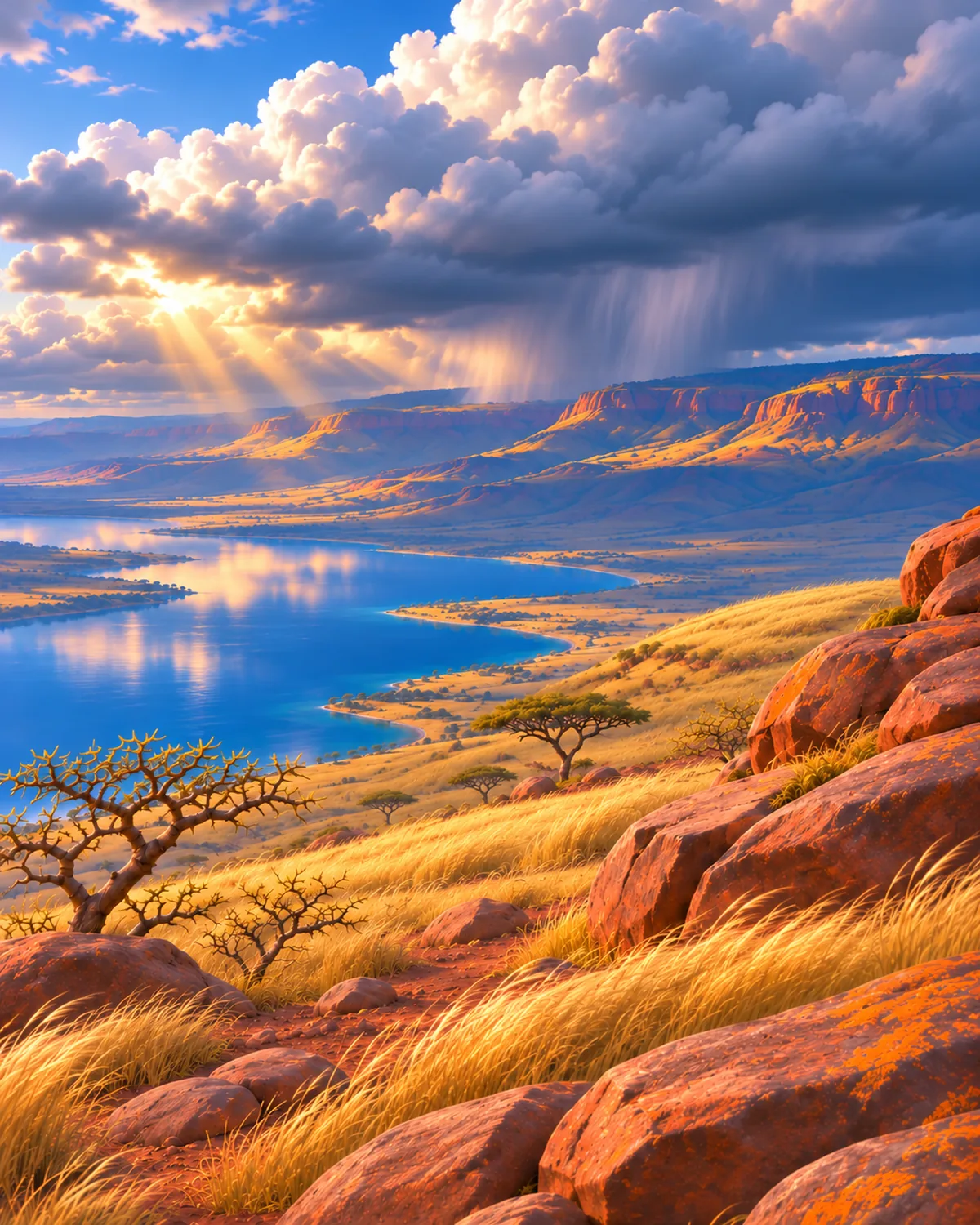
For a while after the rain, you could go anywhere. Every hollow in the rock held water and every claypan was a sheet of sky, and the Red Ledge band went out across the country in twos and threes and hardly saw each other for a month.
Then the rain stopped, and the country started to shrink.
Tjulpu noticed it the way children do, by the games. The claypan where she and her cousins slid on their bellies went to mud, then to cracked plates that curled up at the edges. The hollow by the camp went green, then went bad. One morning her mother Kapi looked at the sky for a long time, then started rolling up the sleeping skins.
“We're going in,” she said.
Everyone was going in. Over the next days the families came back from wherever they'd been, all walking the same way, toward the ledge.
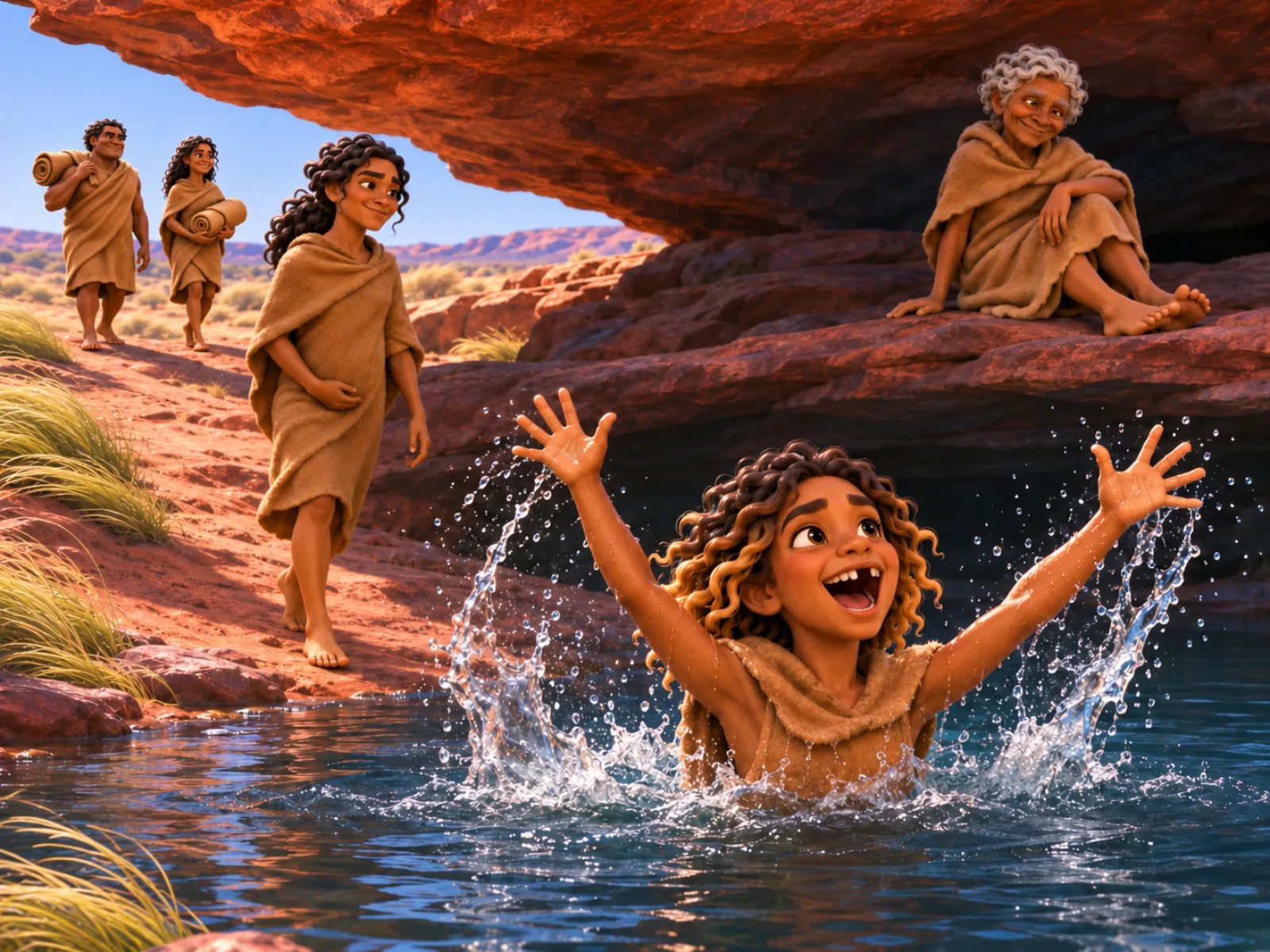
The big water sat under it: a long dark pool in the shade of an overhang of red rock, cold enough to make your teeth ache. Tjulpu ran the last part and went in up to her chest and came out yelling. Her mother came after her slowly, one hand on her belly, which was just starting to show.
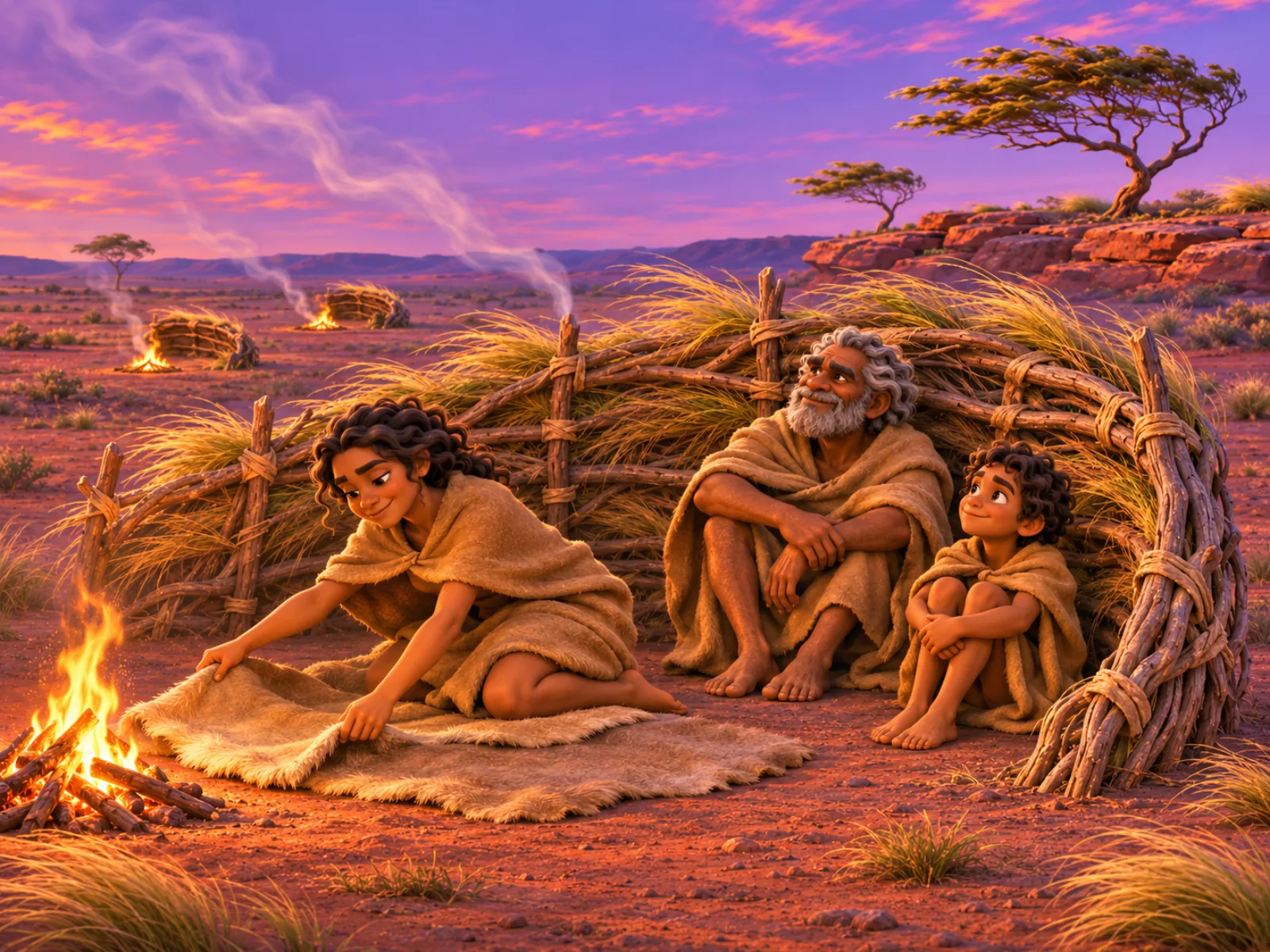
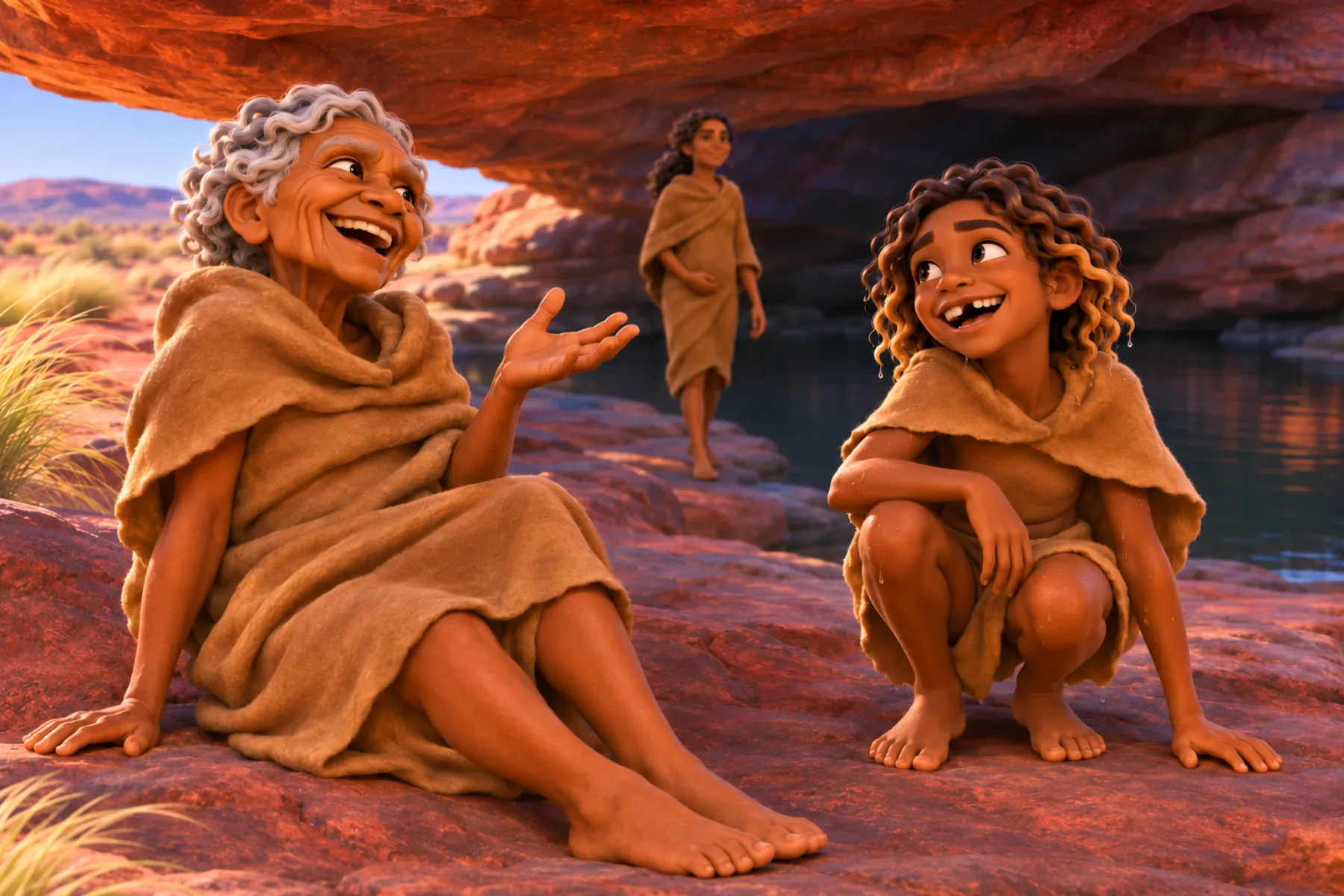
Up on the ledge, her grandmother Manta was already sitting in the shade with her feet out in front of her, as if she'd been there all summer.
“Look at you,” Manta said. “All bones and noise.”
The walk
Manta woke her before it was light and said, “Come on,” and nothing else.
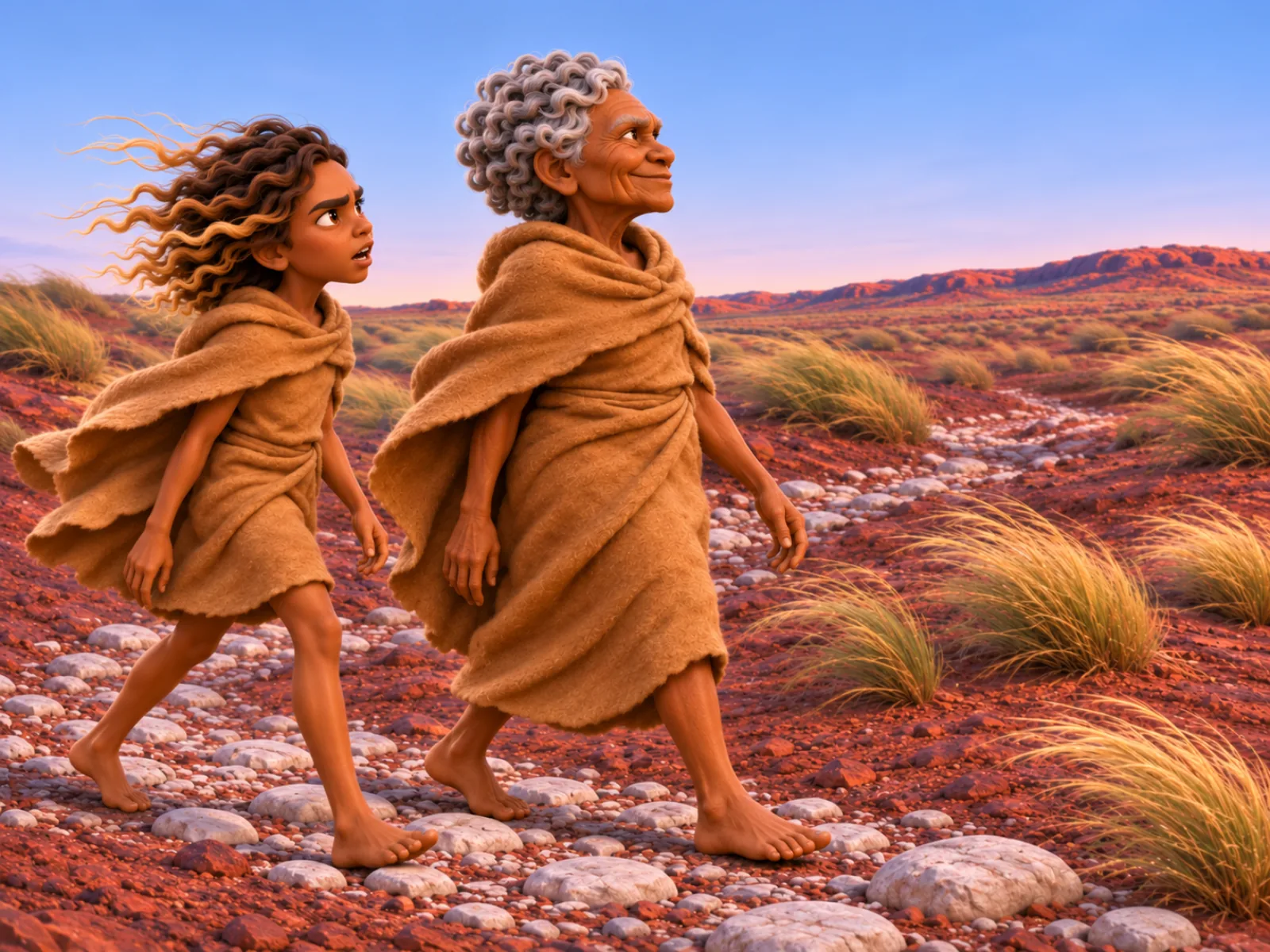
They walked out past the last of the windbreaks and kept going. The sand was cold under Tjulpu's feet, and then it wasn't. She asked where they were going and Manta didn't answer, so she stopped asking, and after a while she went quiet the way Manta was quiet, just walking.
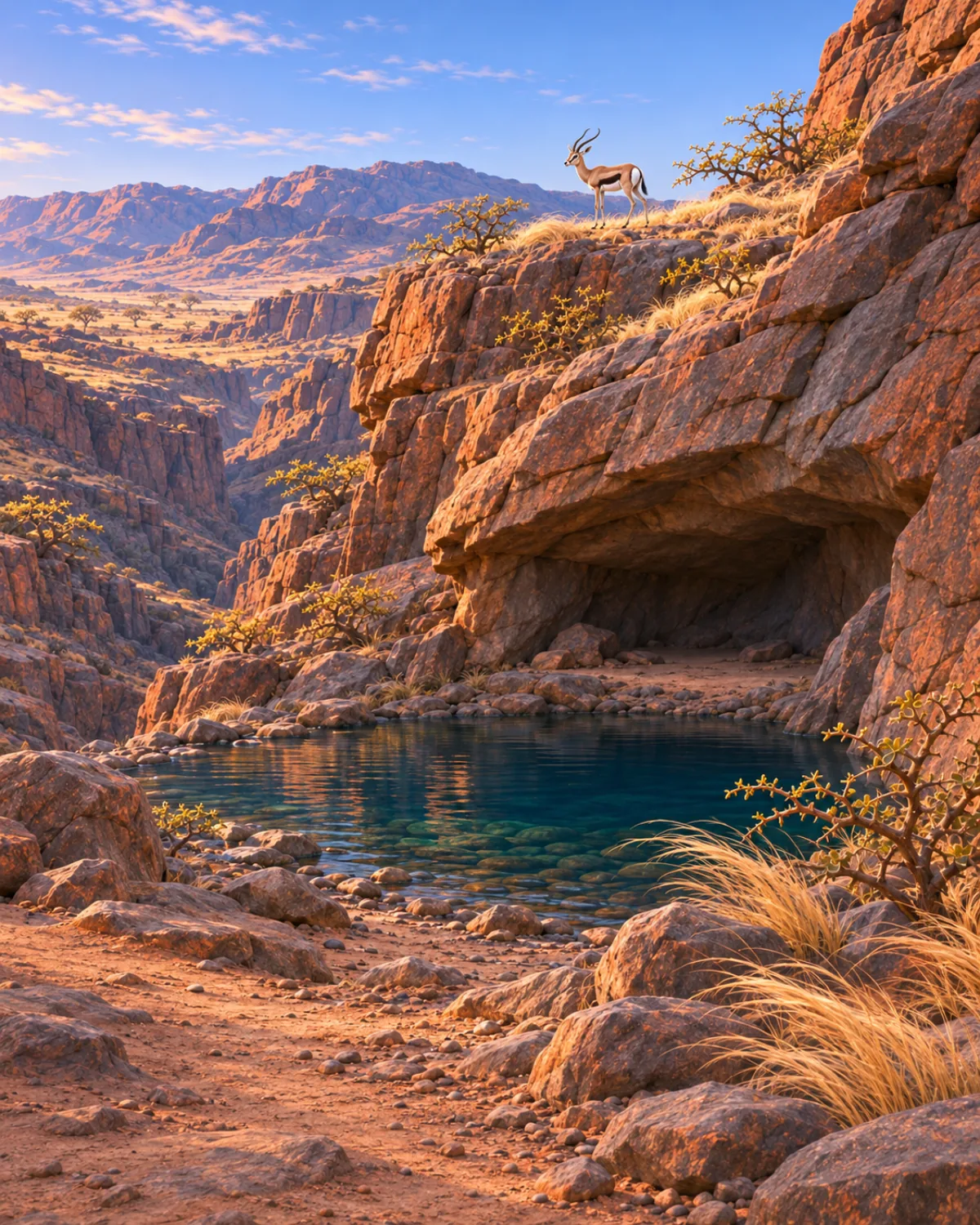
The sun came up. It got hot. A long way from camp, Manta stopped at a shelf of red rock that looked exactly like every other shelf of red rock Tjulpu had ever seen. She put her hand flat on it and waited.
Tjulpu looked. Then she looked properly.
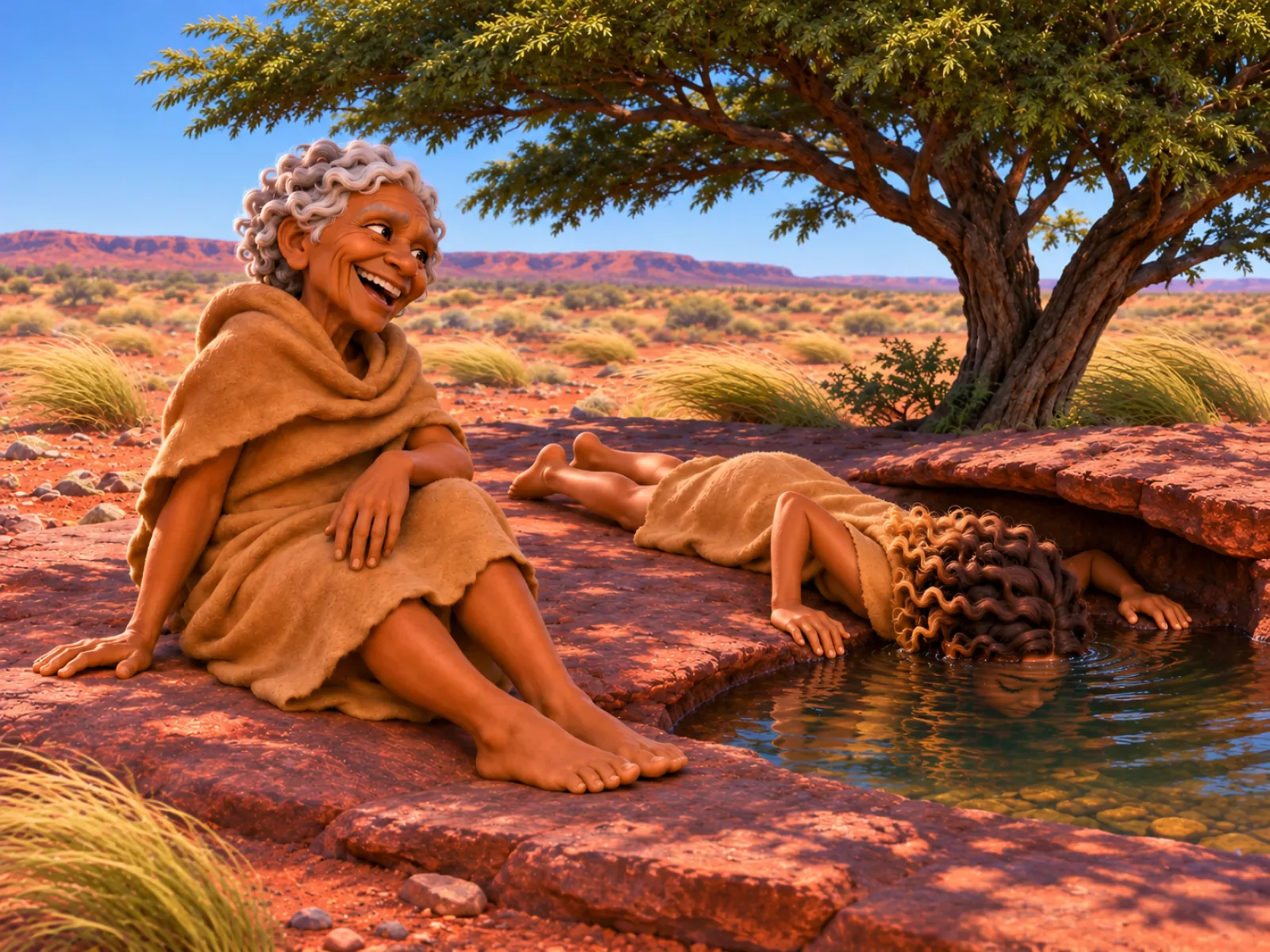
There was a hole under the overhang, about as wide as two people lying down, and down in the bottom of it, in the shade, there was water.
She didn't think about anything. She was hot and she was nine and there was water, so she lay down on her stomach and put her whole face in it.
Behind her, Manta laughed. It was a big laugh for such a small old woman.
When Tjulpu came up dripping, Manta was sitting on the rock. “Good,” she said. “Now look at everything else.”
“Like what?”
“The ridge behind it. Which way the ground falls. That tree.” She pointed with her chin. “It's a different green from all the others. See it?”
Tjulpu saw it.
“Who else knows about this?” she asked.
“Hardly anyone. I found it when I was about your age, chasing a lizard.” Manta looked at the water. “Nobody walks this far for water this small. But it's here when the big water isn't. It's no good to anybody if nobody remembers it.”
Winter
Learning it
Walking home, Manta made her say it. The ridge. The fall of the ground. The tree. The dry creek with the white stones in it. The place where the spinifex stops and the gravel starts.
Tjulpu got the creek wrong, and Manta took her back out two days later and walked it again.
Then again.
By the third time Tjulpu was angry. “I know it.”
“You know it walking with me,” Manta said. “That's not the same thing.”
The days got shorter. The nights got cold, properly cold, the kind of cold that comes straight up off the sand after dark, and the families pulled their windbreaks in close around the fires. At dusk the men went and sat downwind of the big water and didn't move, sometimes until it was too dark to see. The kangaroos came in to drink anyway. They had to. Everything did.
“That's the whole trick,” Manta said, when Tjulpu asked why they didn't go out and hunt like people did after the rain. “Wait at the water and the meat walks to you.”
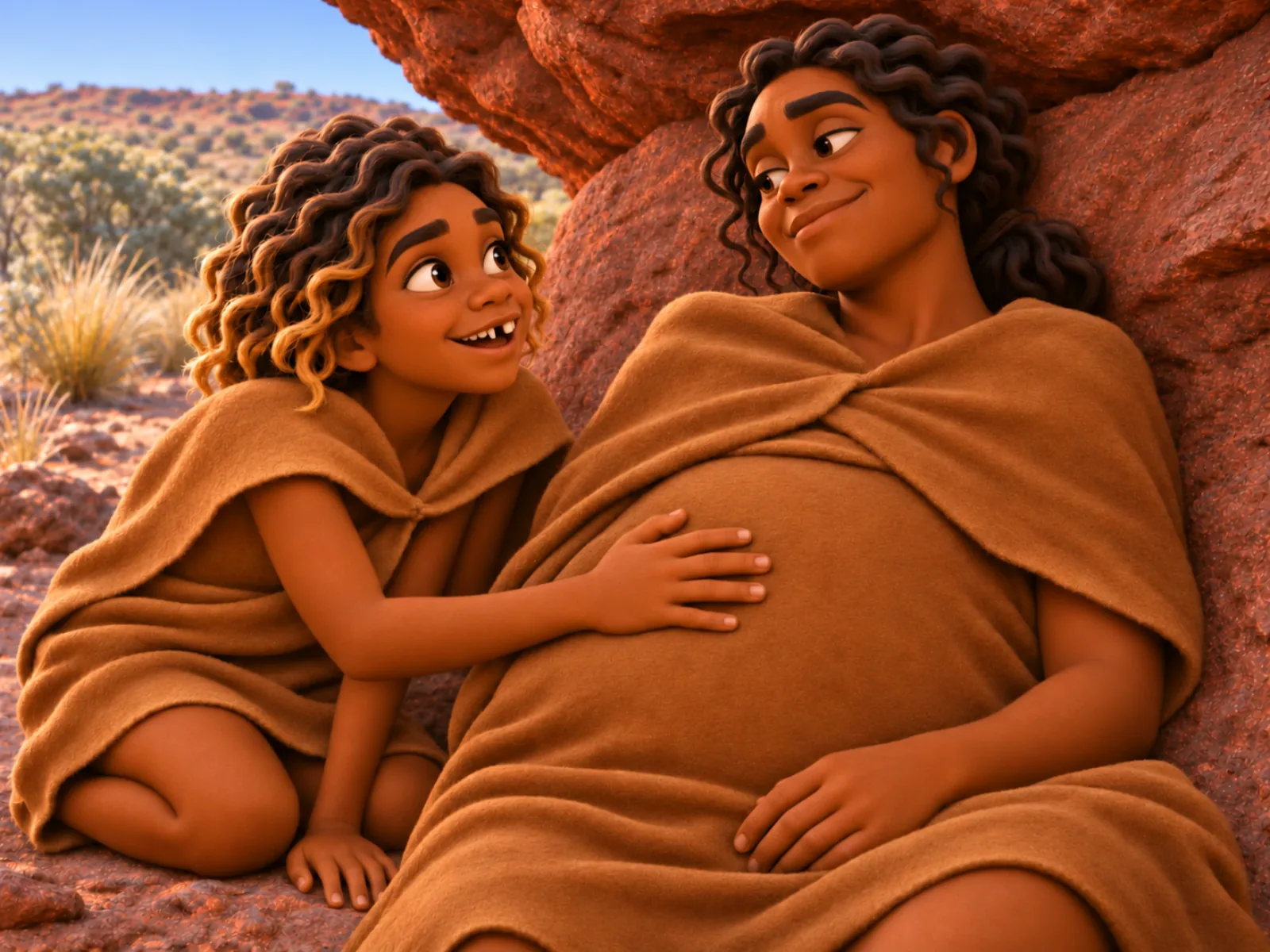
Kapi was huge by then. She sat with her back against the warm side of the ledge in the afternoons and let Tjulpu put her hand on her stomach to feel the baby kick.
“Is it a girl?”
“It's a baby,” her mother said. “Get your hand off, it's asleep.”
The water goes down
All winter the big water went down.
It went down slowly, a finger's width at a time, and then less slowly. The cold edge of the pool pulled back under the overhang. The children stopped swimming in it. Then the women started digging in the wet sand at the bottom, and the water that came up was brown and tasted of mud, and two of the little ones got sick from it.
Then Manta cut her foot.
It was nothing at first: a sharp stone, a little blood. But it swelled up hot and shiny, and by the next morning she couldn't put it on the ground.
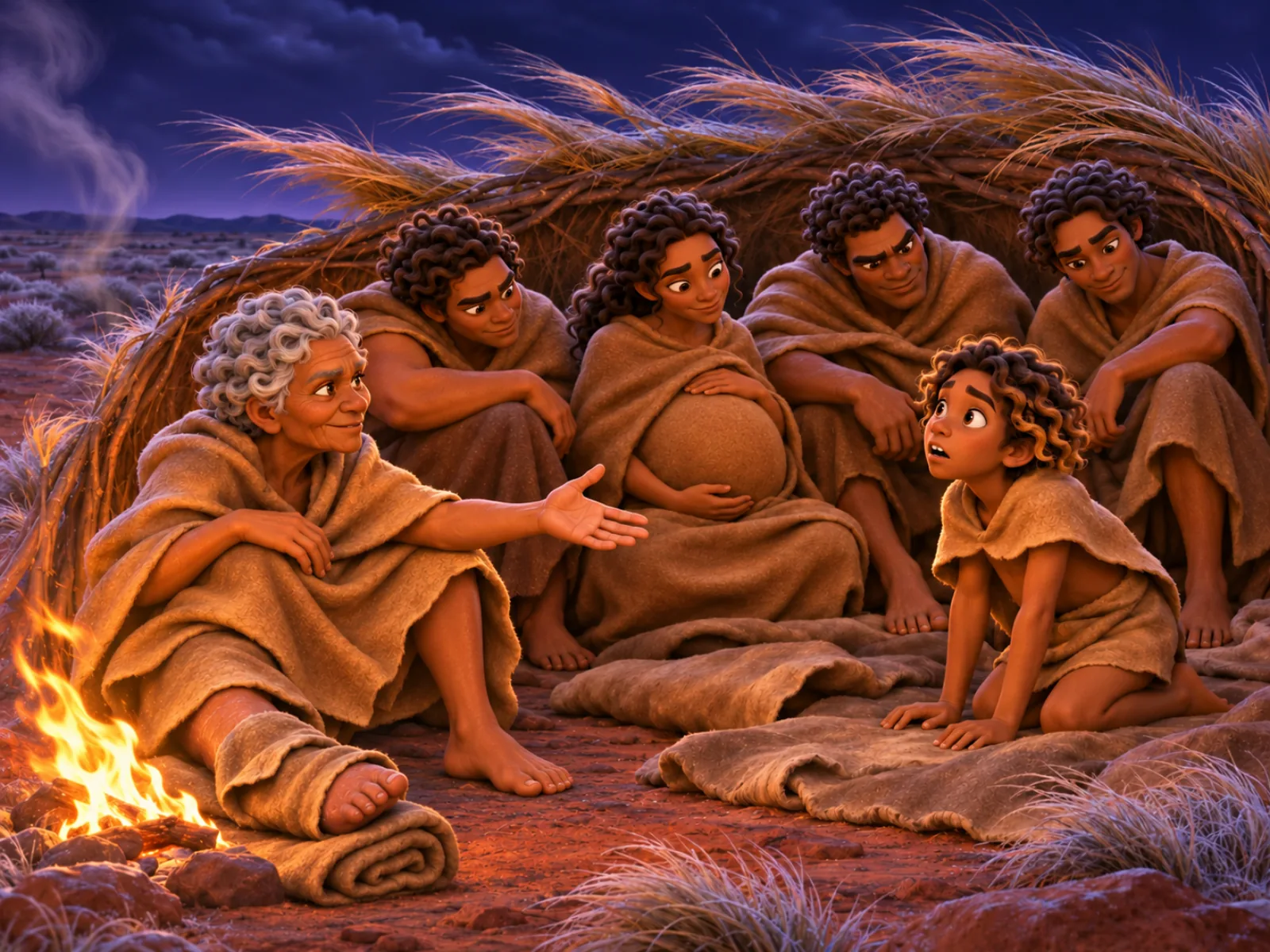
The men talked by the fire about the far water to the east, two days' walk, maybe three. Tjulpu listened from her skins. Two days was nothing for them. It was a lot for a woman about to have a baby. It was impossible for a woman who couldn't walk.
“She can't go two days,” Tjulpu's aunt Ilkari said, looking at Kapi.
“She doesn't have to,” Manta said from the dark at the edge of the fire.
Everyone turned.
“There's closer water. Out west, a morning's walk. It's small, but it holds.” Manta pointed at Tjulpu. “She knows where it is.”
Tjulpu felt the whole fire look at her.
“Then tell us the way,” one of the men said to Manta.
“I can't tell it. I can only walk it,” Manta said. “She's walked it. She'll take you.”
The way back
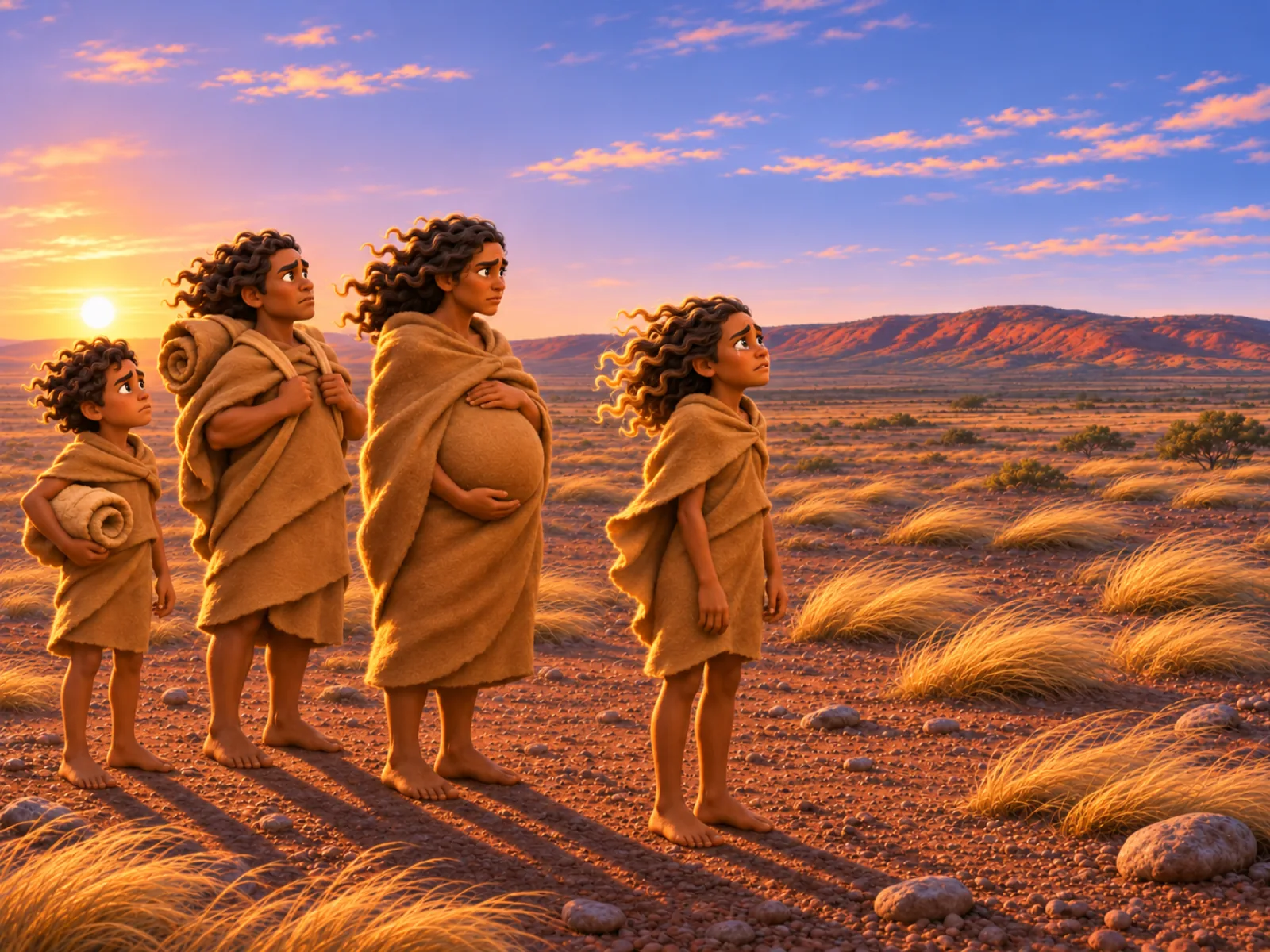
They left before it was light: Tjulpu in front, then her mother walking slowly with one hand under her stomach, then Ilkari and her boy with all the skins they could carry. The rest would follow tomorrow, with Manta.
At first it was easy. Tjulpu knew the start. Then the sun came up and everything changed color and nothing looked the way it had.
The dry creek was there, with its white stones. Good. But the place where the spinifex stopped was farther than she remembered, and when she got there the ridge didn't look right. It was the right shape, but it was in the wrong place.
She stood still. Everybody stood still behind her.
“Tjulpu?” her mother said.
She was going to cry. She could feel it coming up. She'd done it with Manta three times, and she'd been so angry the third time, and now she was going to stand here in the middle of nothing and cry in front of everyone.
So she did what Manta had done. She stopped looking for the water and looked at everything else.
The ground fell to the left. It had fallen to the left before, too. She turned until the ridge was the shape she had in her head, which meant walking a long way to her right, out of the way, and her mother didn't say anything, which was worse than if she had.
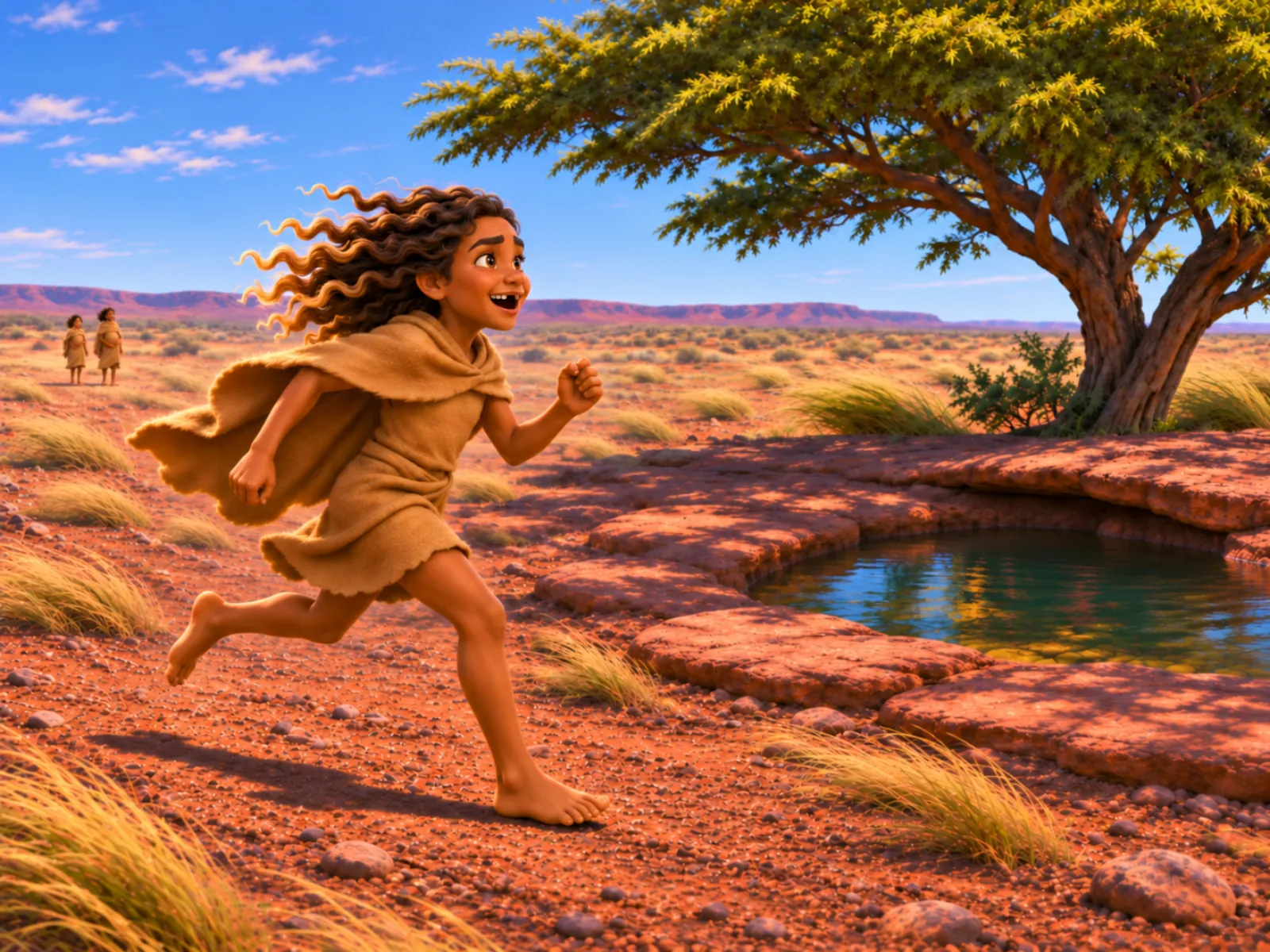
And there, ahead of them, was one tree a different green from all the others.
Tjulpu ran. She ran to the shelf of red rock that looked like every other shelf of red rock and got down on her knees and looked under it, and the water was there. It was lower than before, but it was there, dark and cold in the shade.
She didn't put her face in it this time. She put her hand flat on the rock and waited for her mother to catch up.
Water in it
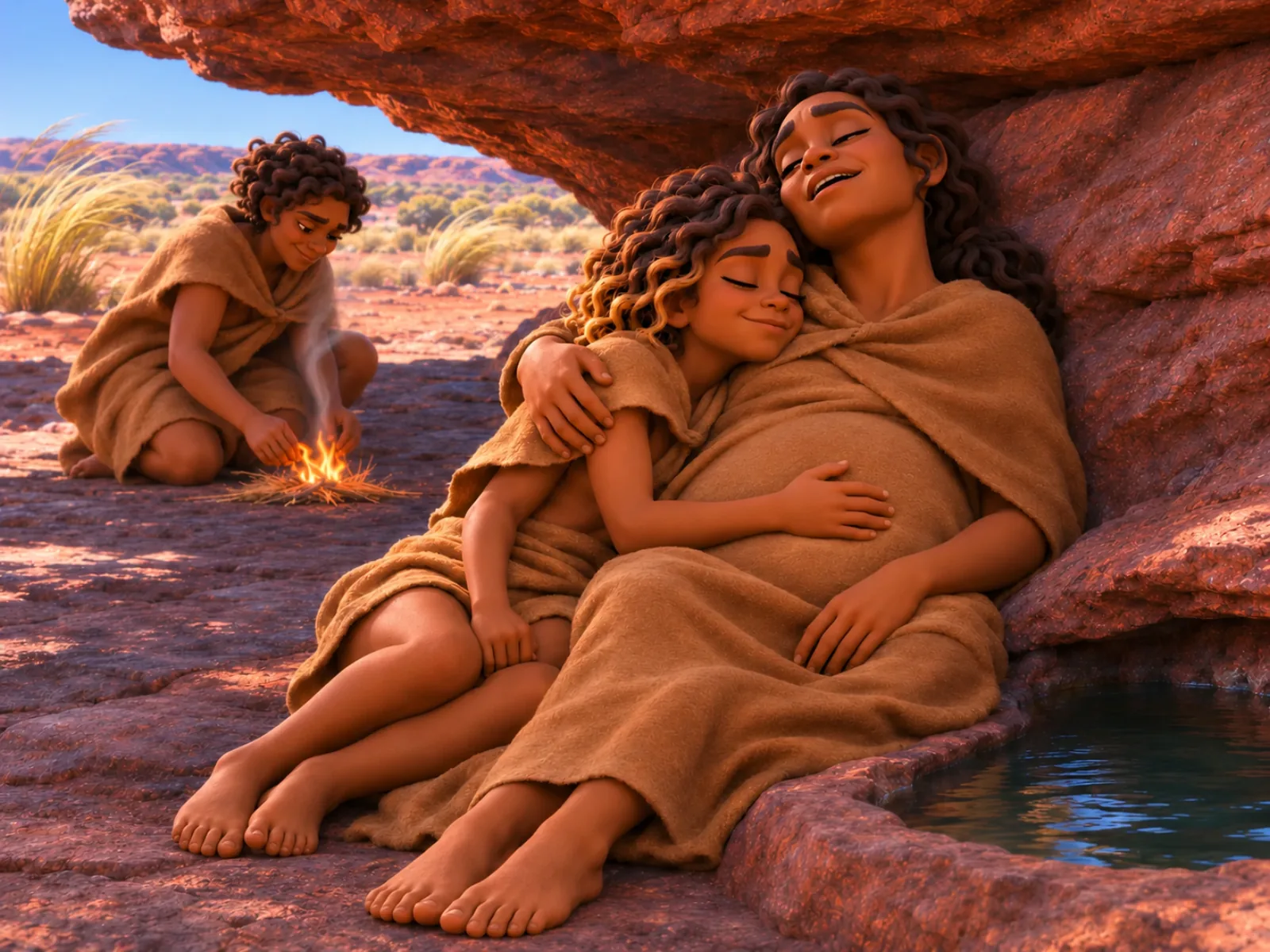
Kapi drank for a long time. Then she sat down in the shade of the shelf, put her head back against the rock, and closed her eyes.
“How far was that?” she said.
“A morning,” Tjulpu said. “The way Manta goes.”
“The way you go was longer.”
“I got the ridge wrong.”
“You got us here.” Her mother opened one eye. “Come here.”
Tjulpu sat down next to her and her mother put an arm around her and held on, harder than usual.
The baby came that night.
Tjulpu wasn't allowed to help, which she minded, so she sat by the little fire Ilkari had made and listened to her mother breathing and swearing, and then to Ilkari saying “Good, good, good,” and then to a thin new voice that didn't sound like anything she'd ever heard. It was a girl.
In the morning Tjulpu walked back toward the ledge, and met the rest of the band coming the other way, slowly. Manta was in the middle of them, with one arm over a young man's shoulders and her bad foot held up off the ground.
“Well?” Manta said.
“It's a girl.”
Manta closed her eyes for a moment. Then she said, “And the water?”
“It's there.”
“Of course it's there,” Manta said. “It's been there since before my grandmother. I meant, did you find it.”
“I went the wrong way at the ridge.”
“Everybody goes the wrong way at the ridge,” said Manta.
The end of winter
At dusk
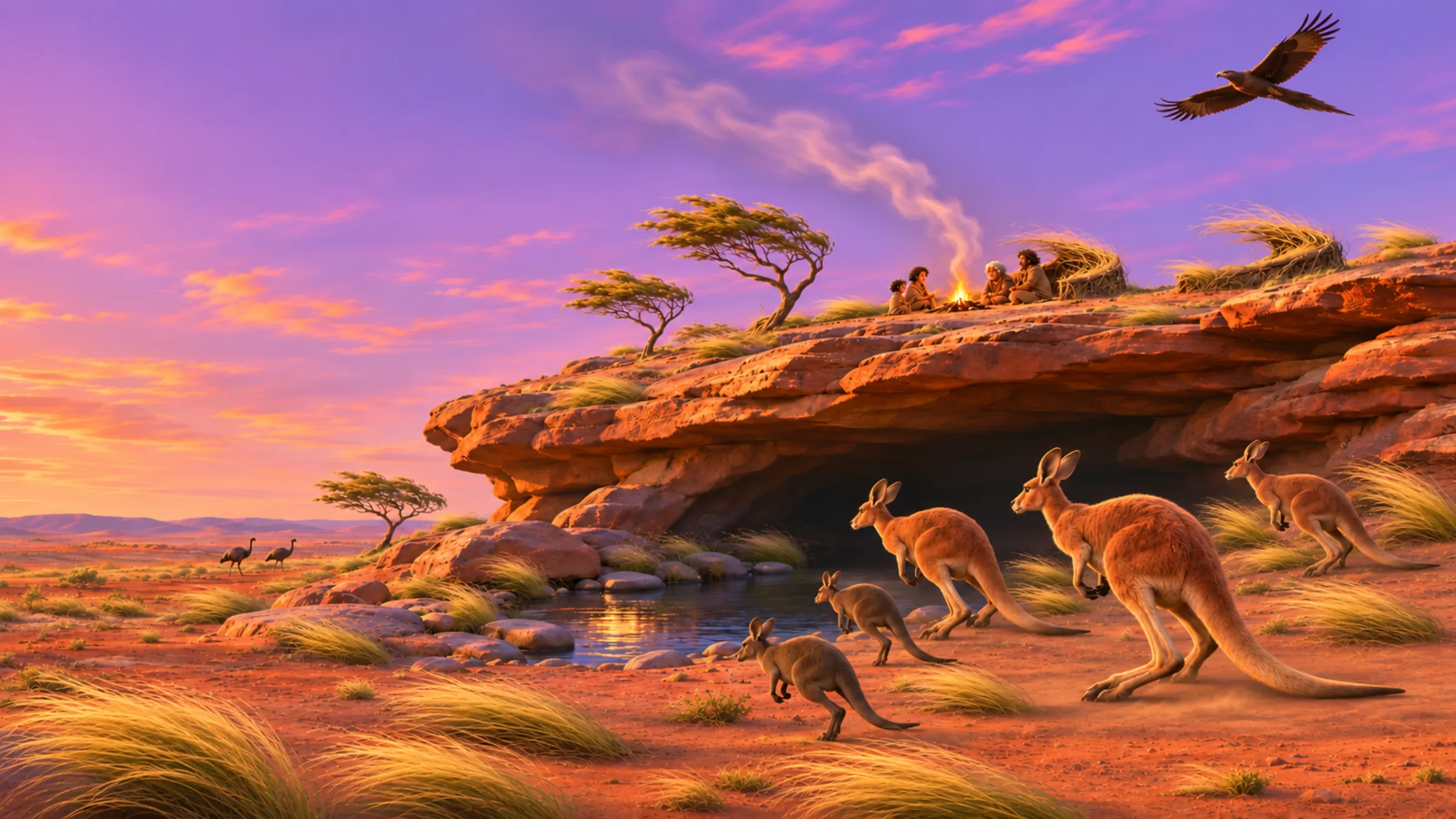
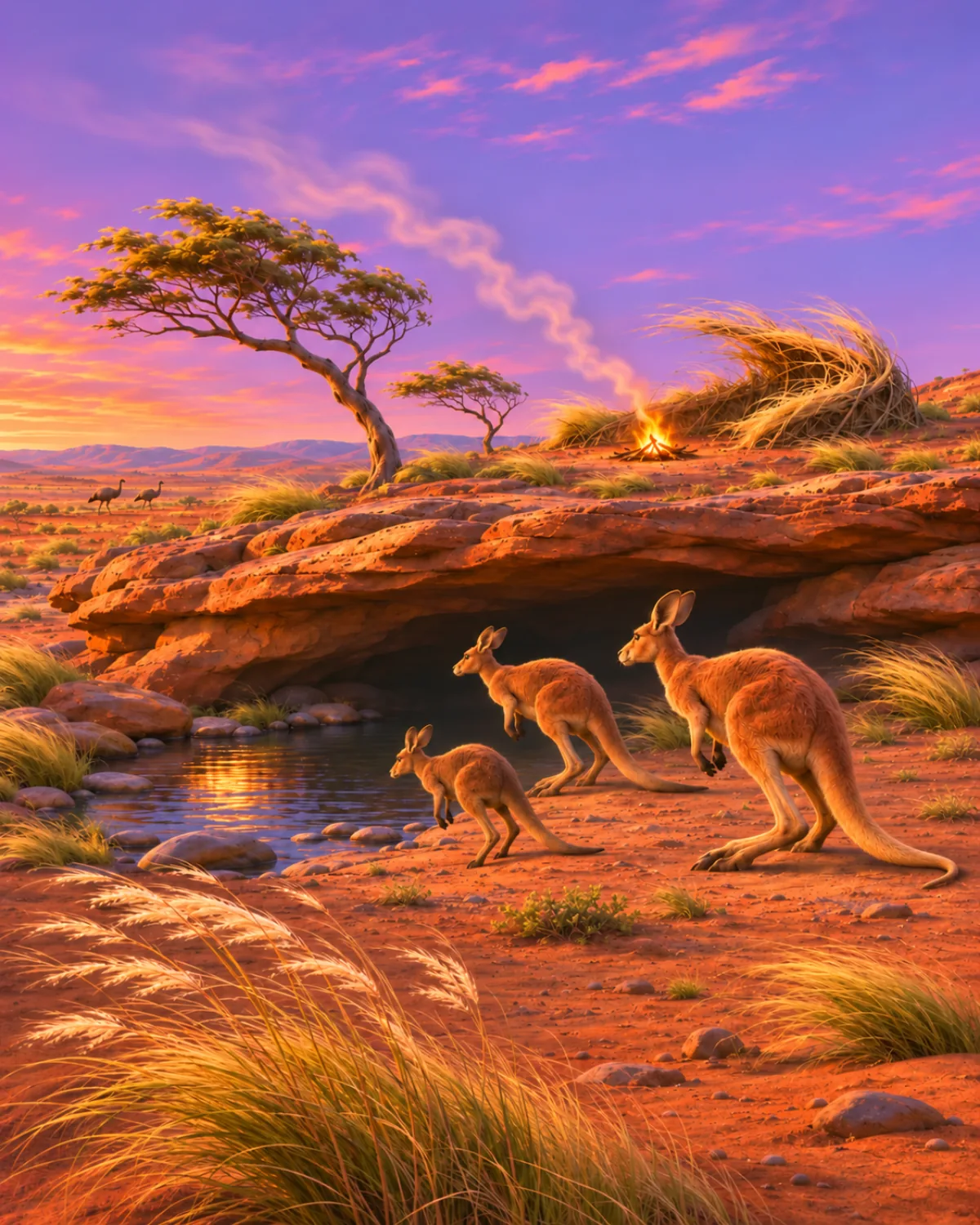
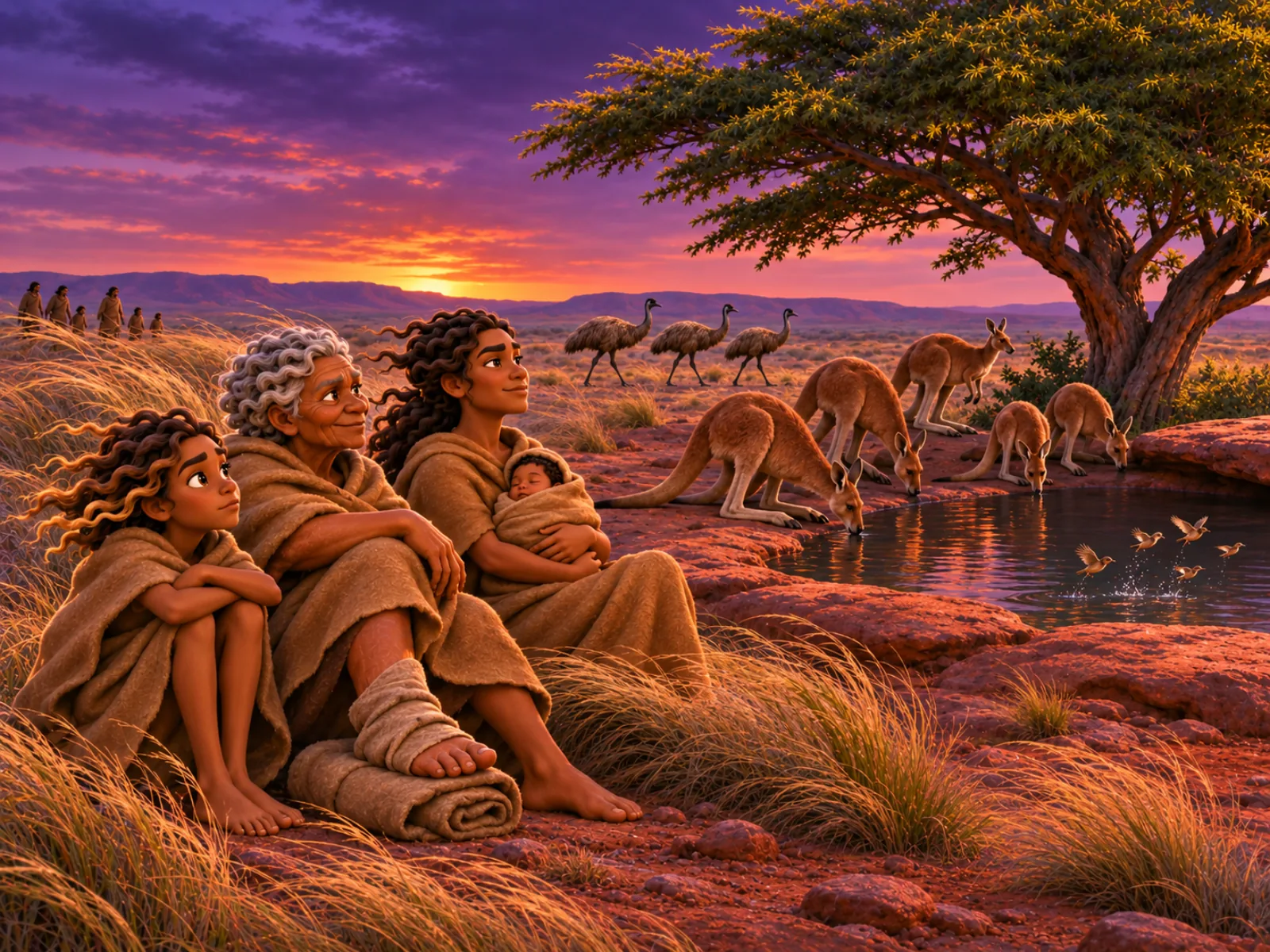
That evening the whole Red Ledge band sat downwind of the little water, out of sight and very still, the way they did at the big one.
Tjulpu sat beside Manta, whose foot was wrapped up and propped on a rolled skin. The new baby was asleep on her mother's chest. The sky went orange, then purple, then the color of a bruise.
The kangaroos came in on the last of the light. Three, then five, then more, picking their way down off the gravel, ears turning, stopping and going on. A line of emus came after them, nervous and long-legged. Small birds came down to the edge of the water and drank and went up again in a rush.
Nobody moved. Nobody had to. Everything that lived out here was coming to the same place they were.
“Who knows about this water now?” Tjulpu whispered.
Manta thought about it. “Everybody. You brought them all.”
“So it's not mine anymore.”
“It was never yours. You were just the one who remembered.” Manta leaned over and looked at the baby. “One day there'll be one more.”
“When?”
“When she can walk a morning without being carried,” Manta said. “Then you take her.”
Tjulpu looked out at the water and the dark shapes bending over it, and at the ridge behind it, and the one tree going black against the sky. She said them all over to herself, just to be sure.