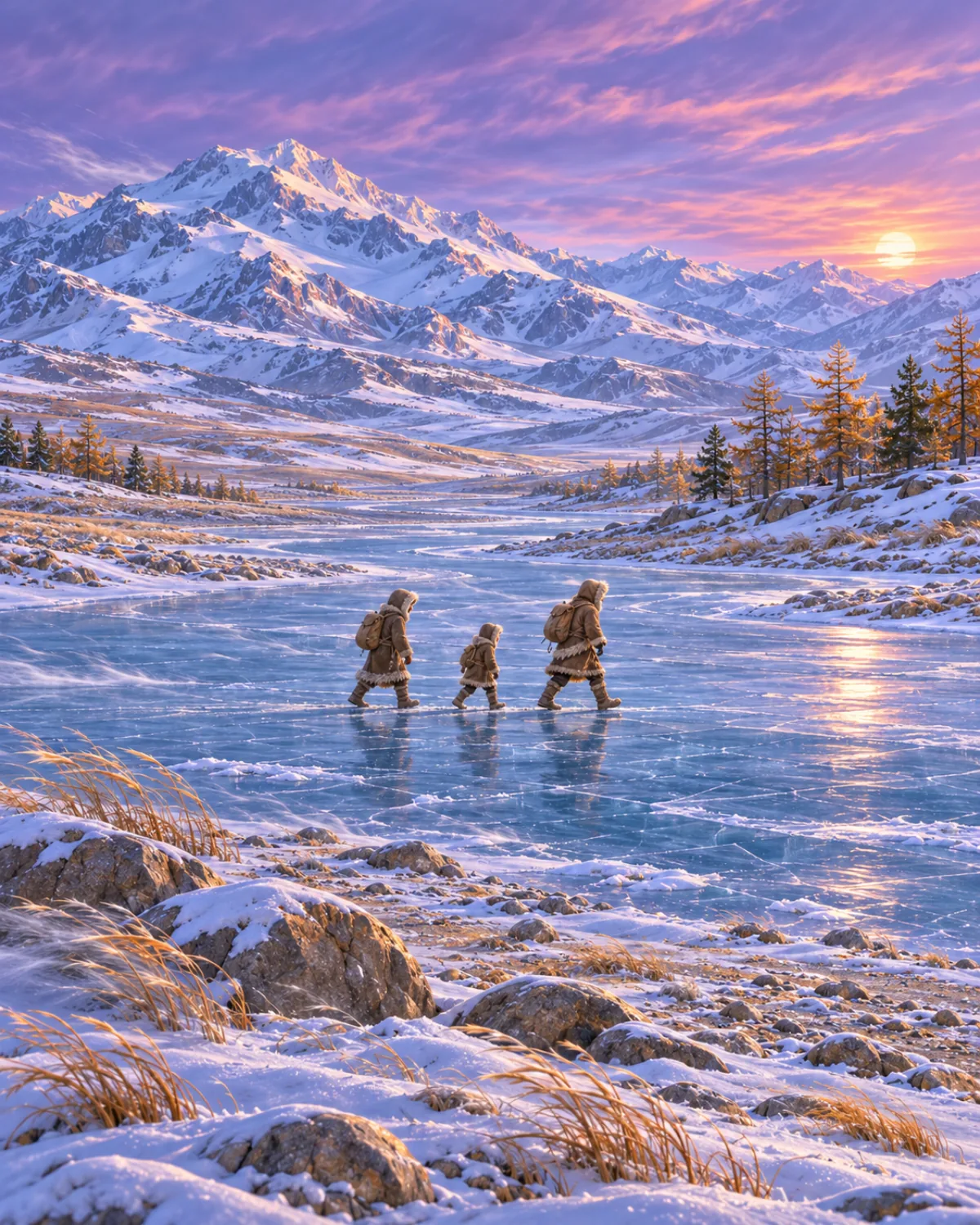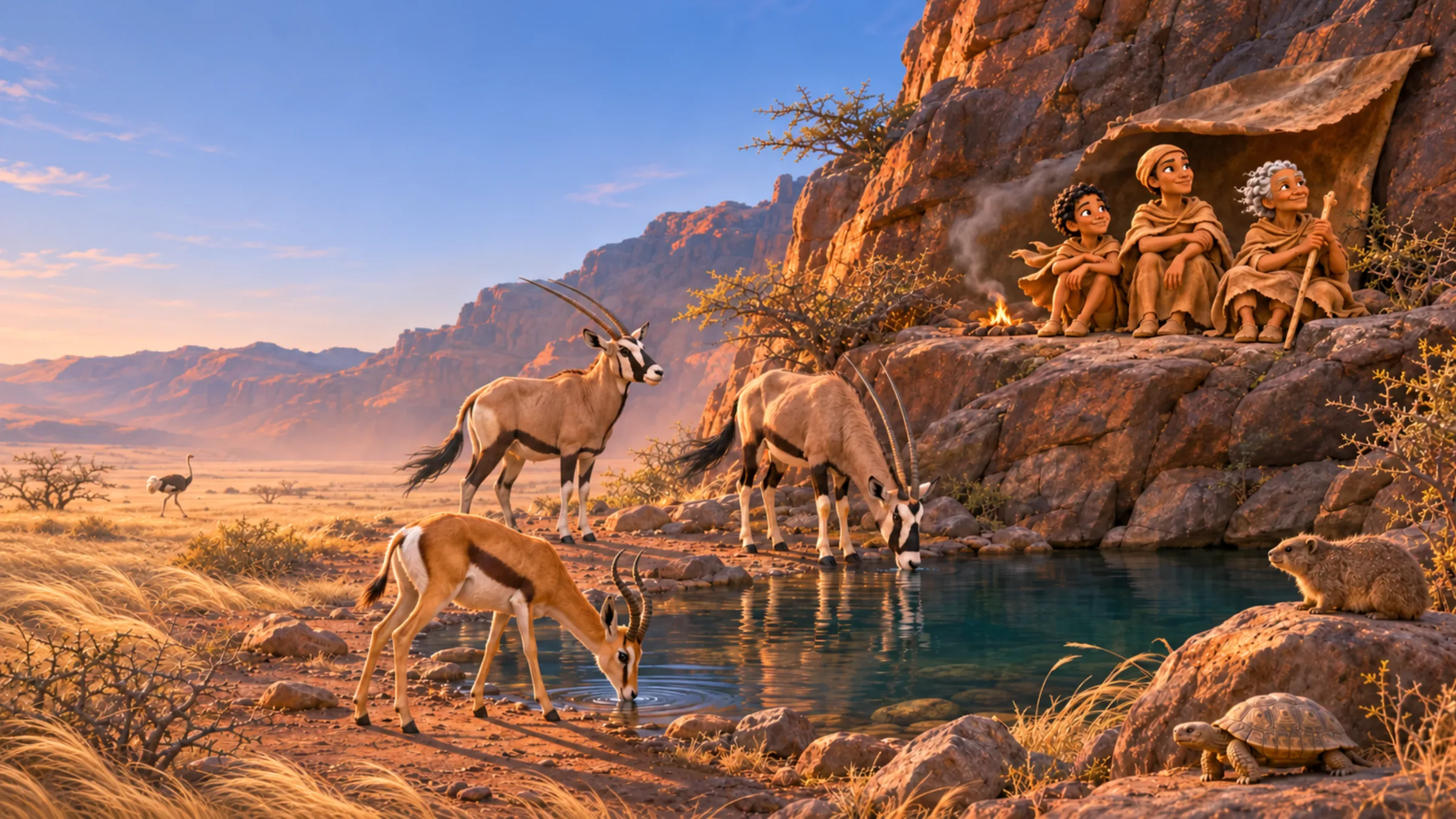

A story from Naras’s band
The Stone
About 9 minutes
Late autumn
The small water
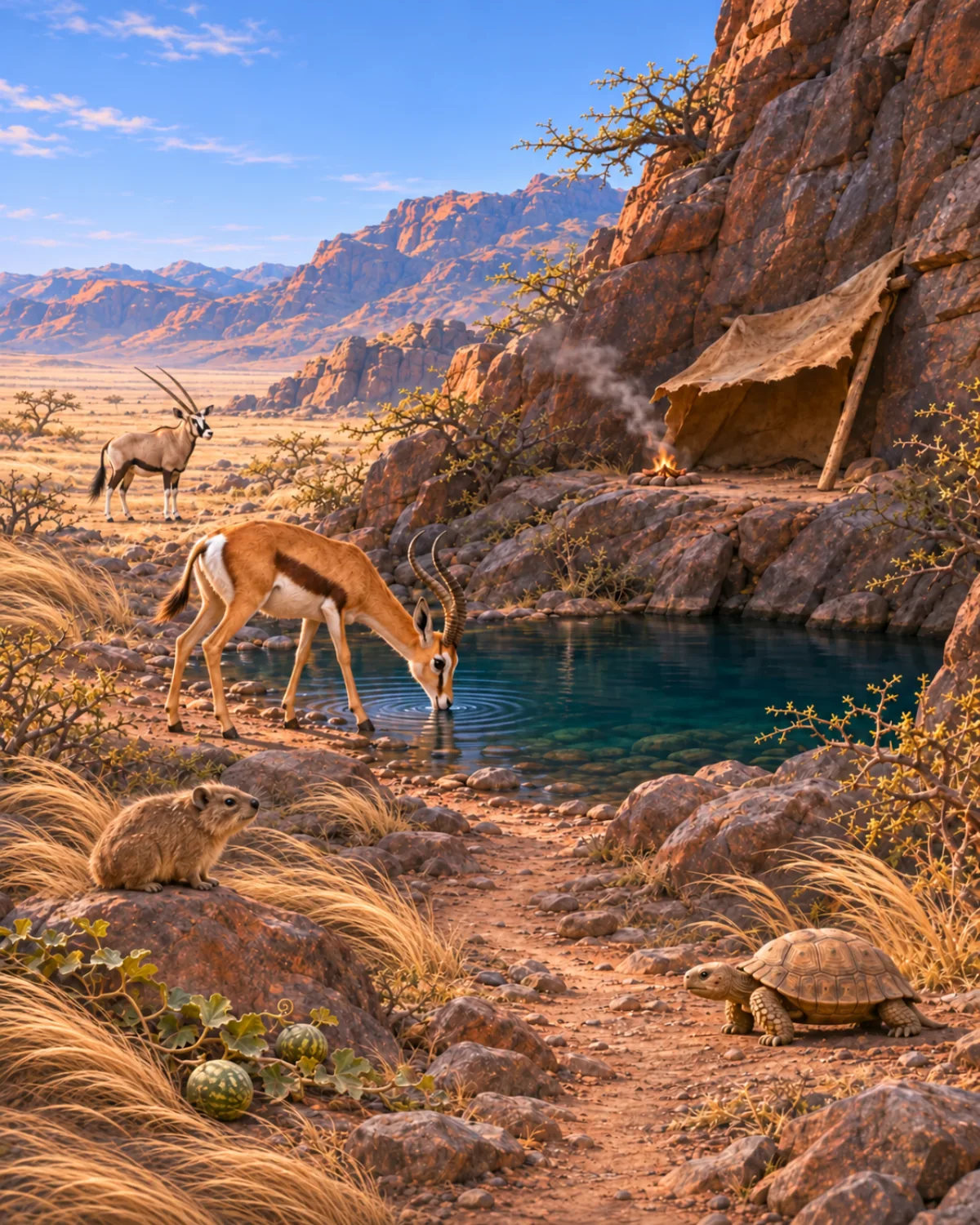
By late autumn the seep below the camp had shrunk to a dark patch the size of a hide, and you had to wait for it.
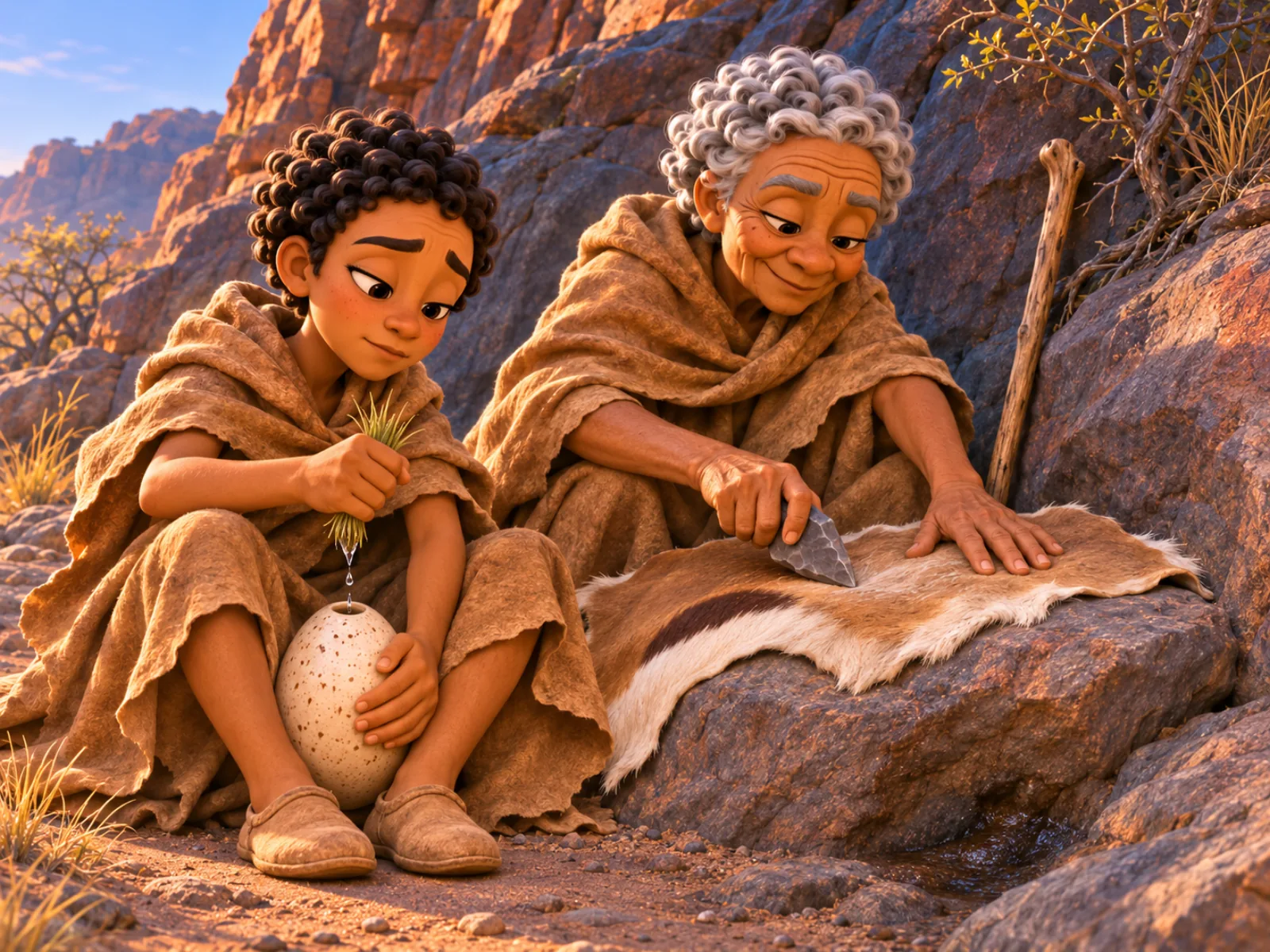
Naras waited for it every morning. She sat with an egg flask between her knees and a tuft of grass in her hand, and when enough had gathered in the hollow she soaked it up with the grass and squeezed it into the flask. It took most of the morning to fill one. She was eleven and it was her job, and she was sick of it.
“It's done,” her grandmother said, not looking up. She was scraping a springbok hide with a flint, and she said it the way she said everything, as if it had been true for a while. “The seep. There's the pool at the big gorge, and that's where we go. We go when the cousins come back with the news that it's holding.”
“They came back last night.”
“Then we go tomorrow.”
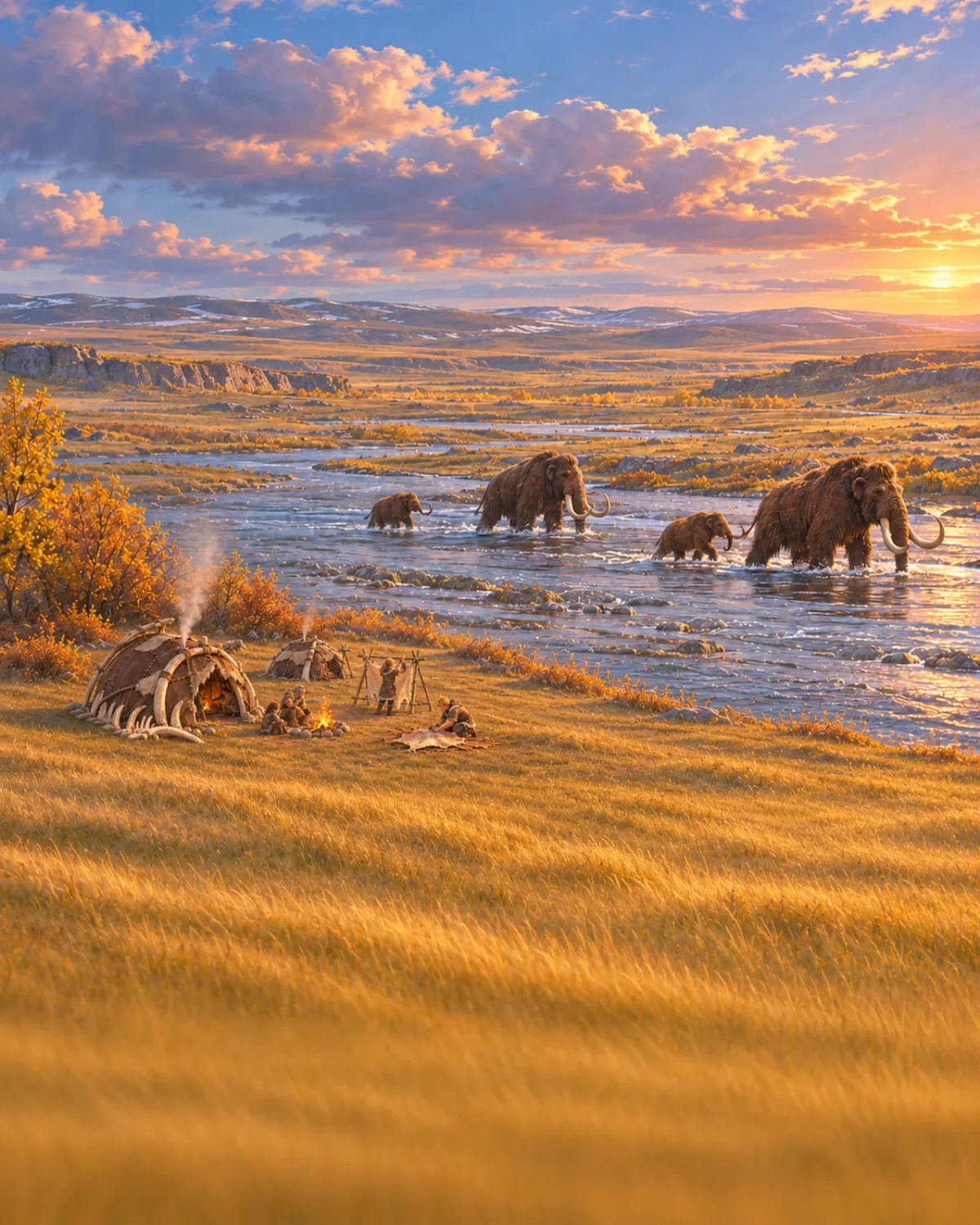
That was how the band did it. In summer they spread out thin across the hills, a few families at every little water, and as the dry came on they walked in to the one place that never failed, where the gorge kept a pool in its shade all winter. Then they stayed. You could be a day away from water, Naras's grandmother said, and no more. In the dry you camped on it and you didn't leave.
But first you had to get there, and the way there was long.
What goes and what stays
The packing took the evening.
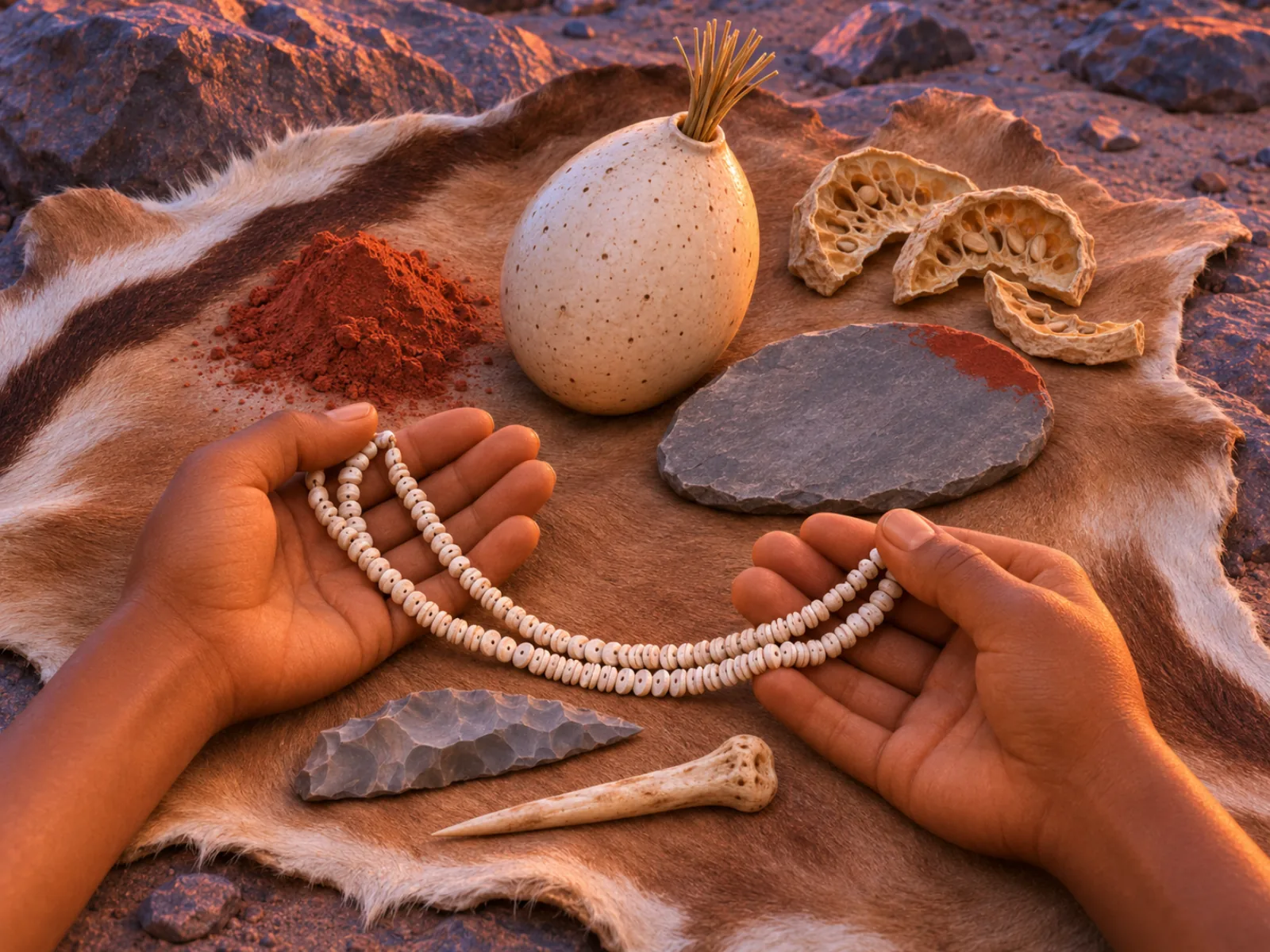
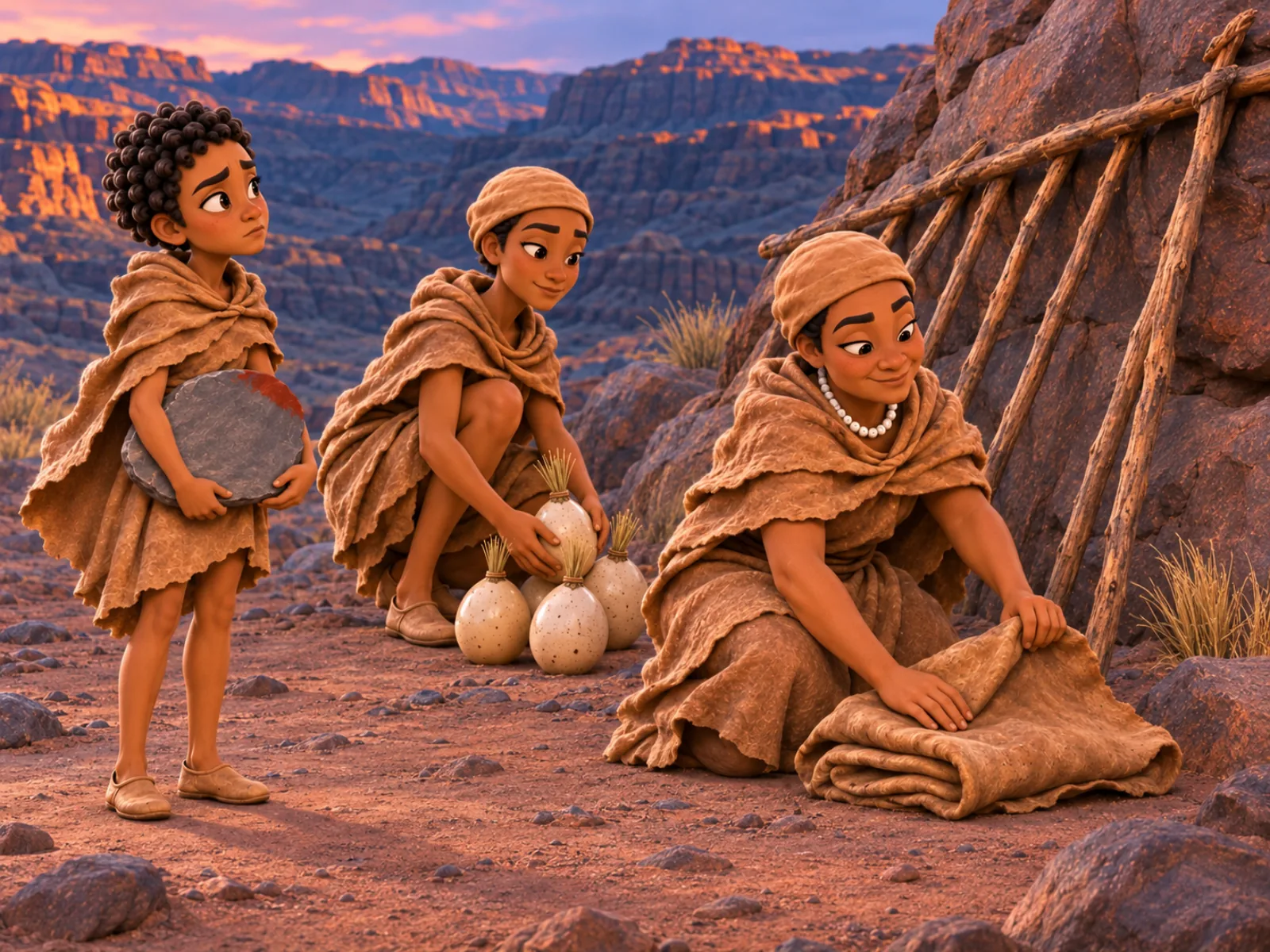
Everything the band owned had to be carried by the people who were walking, so everything got weighed in somebody's mind. The hide cloaks went, and the caps. The spare flint went, and the ground ochre, wrapped in a scrap of hide. The dried melon went, and the eggshell beads, and a dozen egg flasks, full, with plugs of grass in their tops. The grinding stone stayed, because there was another at the gorge.
The lean-to stayed too. It was only brush and a few hides on a frame, and it would be rain-rotted or blown over before anyone came back. Naras had slept under it all summer. She watched her mother pull the hides off the frame and fold them small, and the frame was just sticks again, and it looked like nothing.
“We'll make another,” her mother said, seeing her face.
“It's all right.”
“It's not nothing. I know.”
Her cousin Tses came across the camp as it was getting dark. Tses was nineteen, long and quiet, and she had a way of arriving next to you without being heard. She had something in a fold of hide.
“Here,” she said.
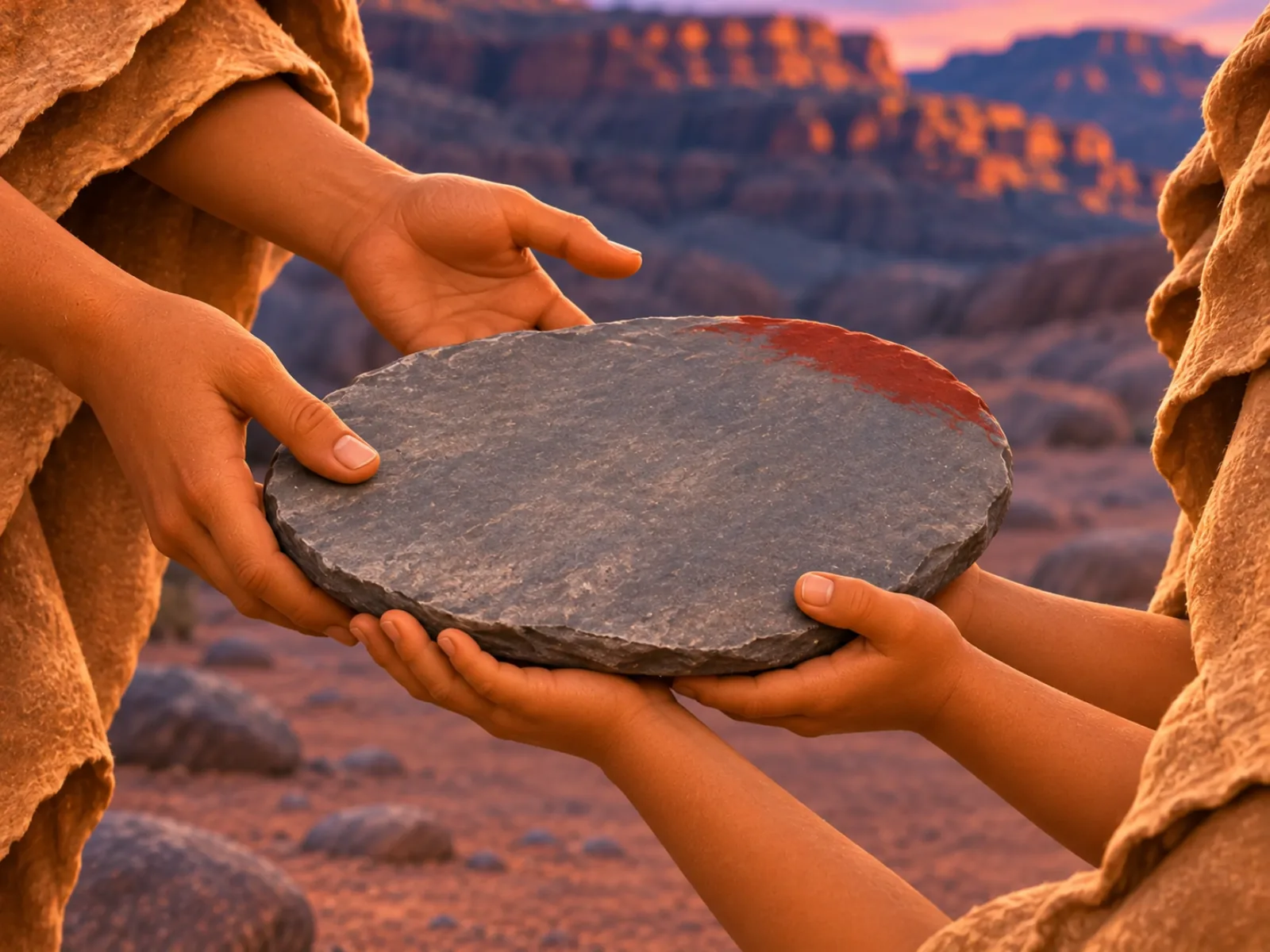
It was a stone. A flat one, gray, about as wide as Naras's two hands, and smooth on top. There was a smear of red ochre across one corner, and nothing else on it at all. Naras took it and nearly dropped it, because it weighed about as much as a baby.
“What's it for?”
“You carry it.”
“I know I carry it. What's it for?”
“Tomorrow,” Tses said, “the camp moves.”
That was all she said. She went off to see about her own pack. Naras stood there with the stone against her stomach and her arms already tired, and waited for the rest of the answer, and it didn't come.
Out of the hills
They left before the sun was up, in the cold.
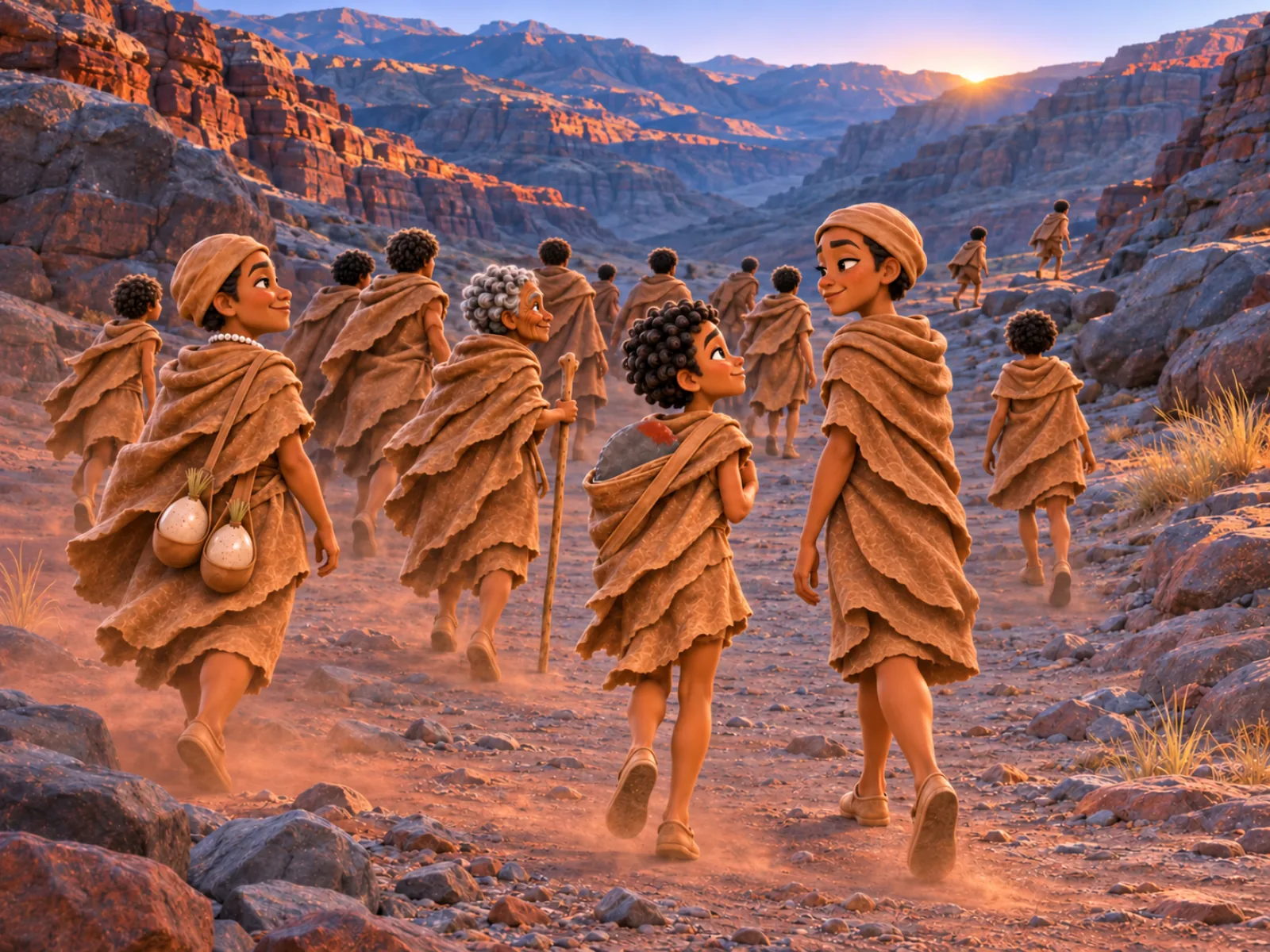
The cold in that country came down hard once the light went, and it hadn't let go by morning. Naras tied the stone into a fold of hide and the fold onto her back, with a strap across her chest, and walked, and for the first hour she was too cold to feel it. Then the sun came over the rocks and the rocks threw the heat back at her, and she felt all of it.
The band went in a long loose line along the dry streambed, with the scouts out in front and the old ones in the middle. The red dust hung over them in the early light and did not settle. Her mother carried the flasks. Her grandmother walked with a stick and kept up.
Tses walked beside Naras. She didn't say anything. She didn't offer to take the stone.
By midmorning the strap had found the place on Naras's shoulder where it was going to stay. She shifted the stone from one side to the other, and it was just as heavy on both.
“I could leave it at the next rock,” she said, to see what would happen.
“You could.”
“Would anyone care?”
“I don't know,” Tses said. “Would you?”
Naras thought about that for the next hour, and was annoyed by it for the next two.
A day out from water
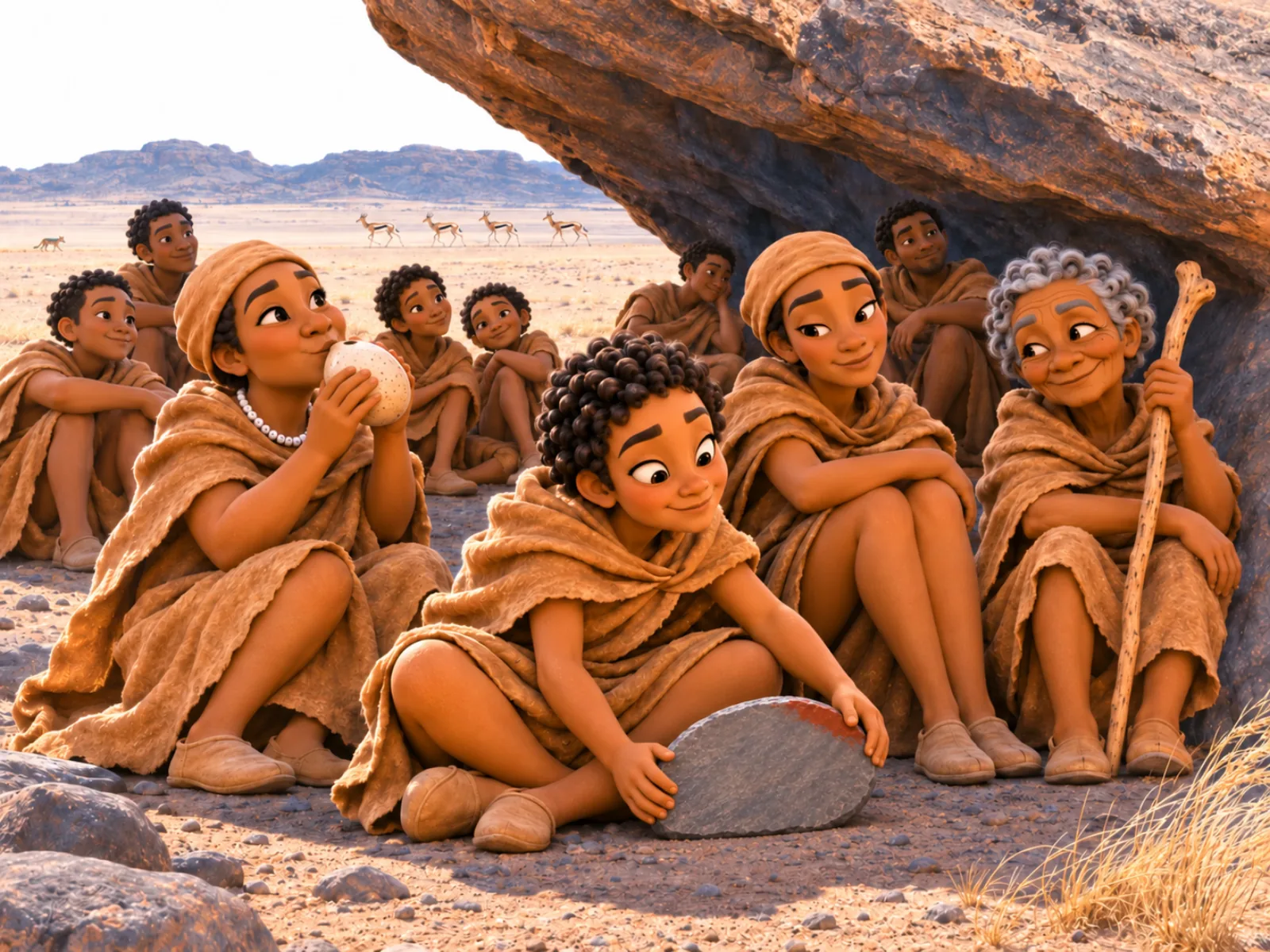
The dry stretch was one day's walk from the seep to the next small water, and no one liked it. There was nothing in it. The ground went from rock to pale grass to rock again, and the sun stood straight up over it and gave back nothing. Far off on the flat a line of springbok went across, light and quick, and then the flat was empty. Further still, a jackal worked along the edge of the grass for a while and gave up and trotted away.
At noon the band stopped in the shade of a tilted slab of rock. Everyone drank, a mouthful and no more. Naras slid the strap off, and the stone came off her back with a small sound, and her shoulder felt for a moment as though it was floating.
She propped the stone against the rock. She sat in the shade next to it with her eyes shut.
When she opened them, the band was getting up.
It happened fast. Somebody called, and the line began to stretch out again along the streambed. Naras got her feet under her. She took her flask and her cloak and fell in beside her mother, and she'd gone a hundred steps before she understood why she felt so good.
Her back was light.
She turned around. The slab of rock was small already, and in front of it, a tiny dark shape, someone was standing.
Behind the others
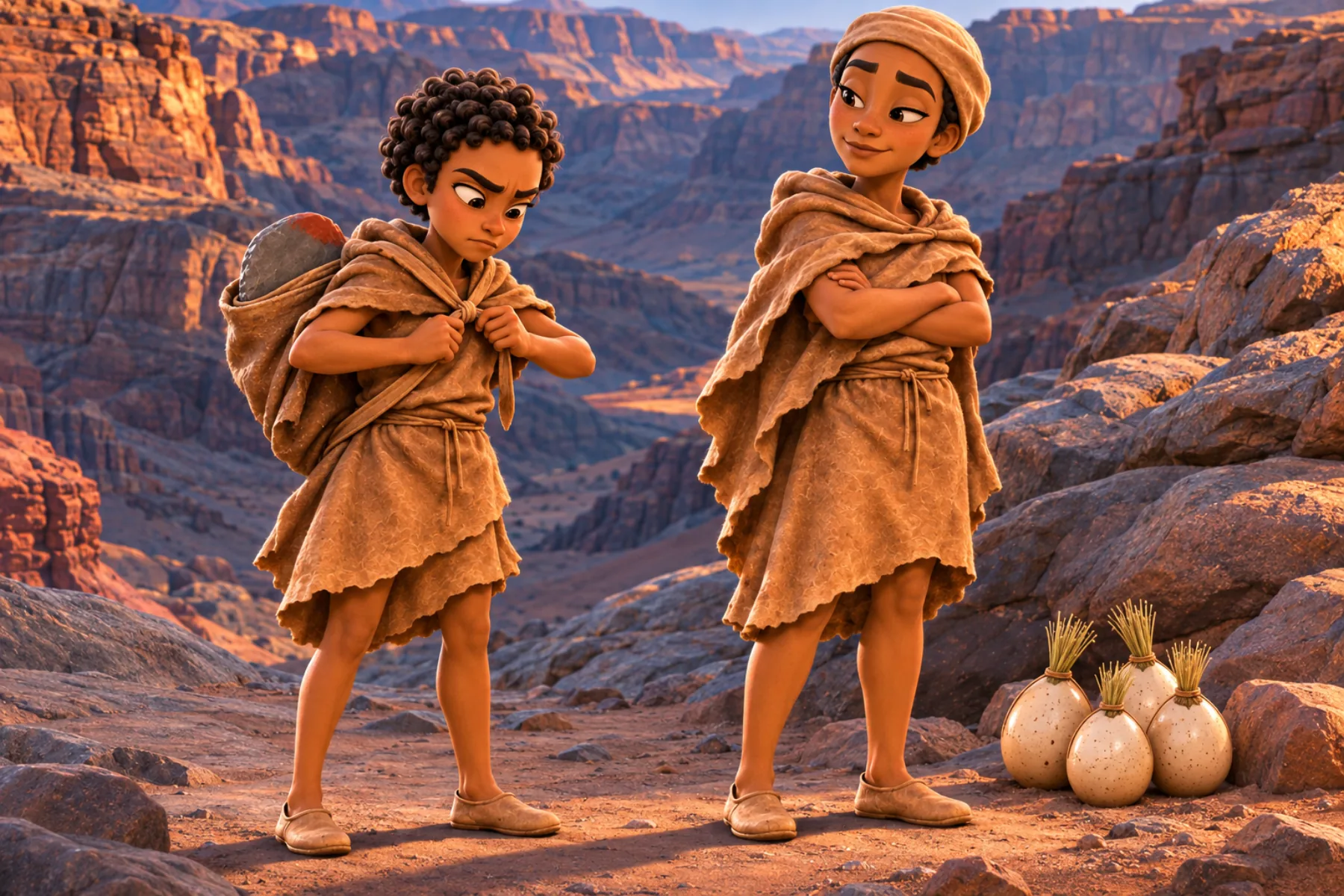
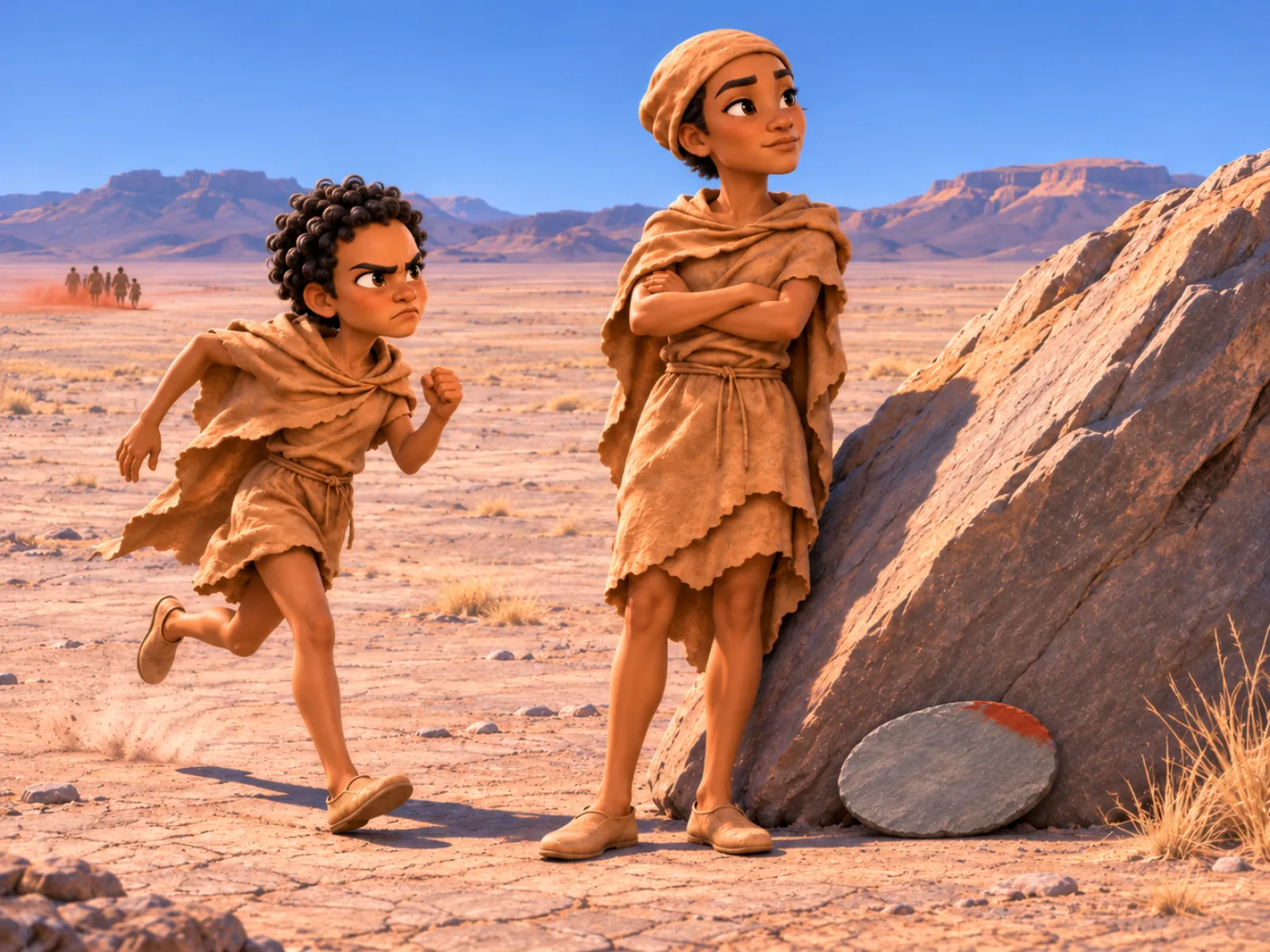
It was Tses. She'd stayed, and she was standing in front of the stone with her arms folded, looking at nothing.
Naras ran back. She was angry before she got there, and she said so.
“You could have said something.”
“I could have.”
“You could have just picked it up.”
“It's yours,” Tses said. “I didn't make it heavy. It wasn't given to me.”
“Then why are you standing here?”
“Because I'm not walking on without you,” Tses said, “and I'm not carrying it.”
The band was a long way off now. The line had become a thread of dust, and the thread was drawing out toward the next rock. Everything in Naras's body told her to go after it. They had half a day of dry country left, and the sun was already past the top, and the dark came down hard in that land with nothing to say about it.
She understood, standing there, that Tses had worked all this out in advance. She'd stood there while the band got smaller. She'd let it cost her.
“That's not fair,” Naras said. Her voice was thin.
“No.”
Naras picked up the stone. She tied it into the hide and the hide onto her back, and the strap went straight back into the groove on her shoulder, and it hurt exactly as much as it had before.
“Come on,” Tses said, and they went after the dust.
They walked fast, side by side, and neither of them said anything for a long time. About halfway to the next rock Tses reached over without looking and took Naras's water flask and carried it the rest of the way.
The buried shell
They caught up with the band at dusk, at the place where the small water was supposed to be. It was a crust of cracked mud in a dry bed, and the whole line was sitting in the last light with nothing to drink.
The flasks were nearly empty. Naras saw her mother's face, tired and shut, and her grandmother resting with her hands on the stick.
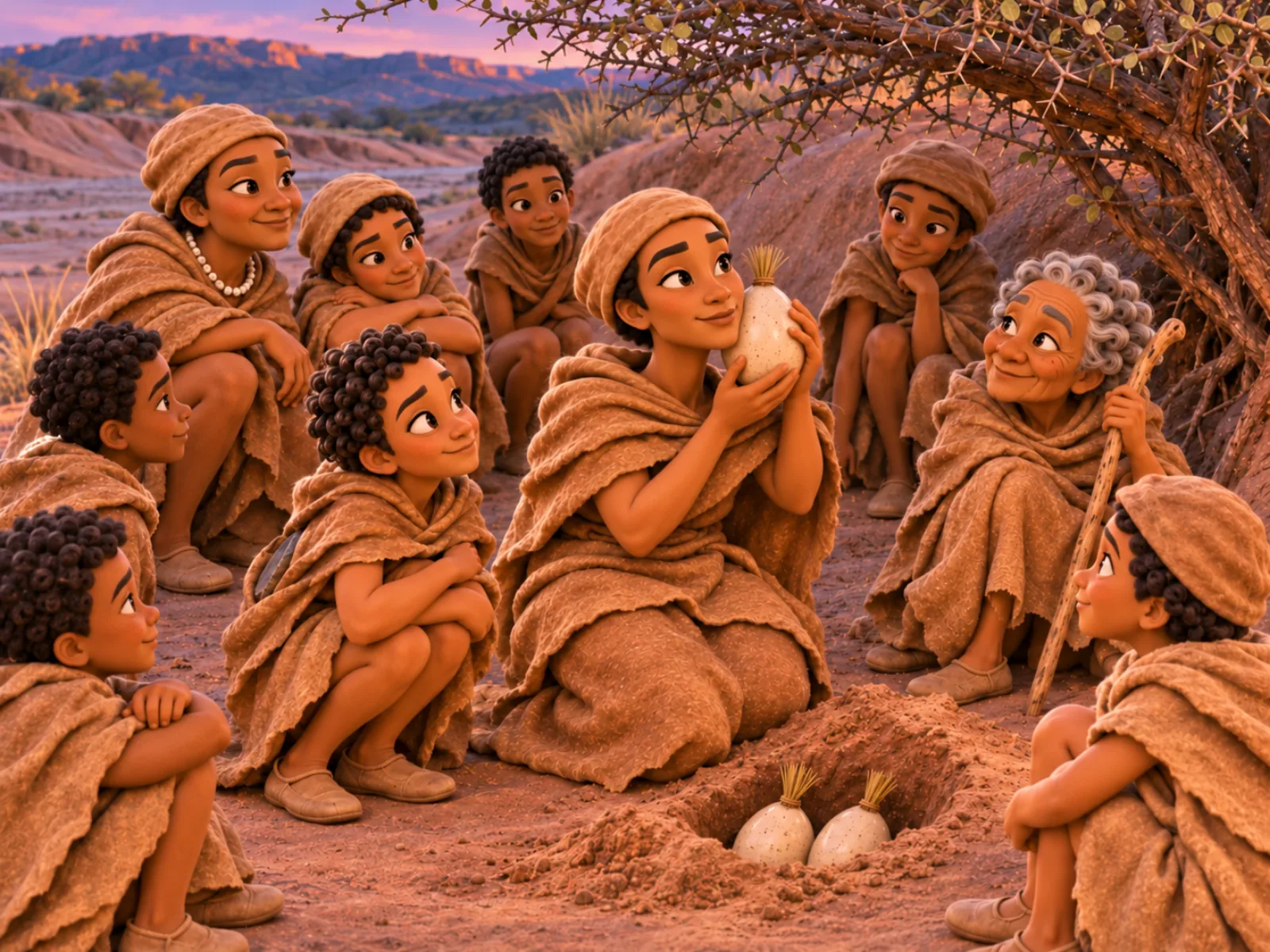
Then Tses went off by herself along the dry bed. She stopped under a bush with thorns on it, counted something in her head, and began to dig with her hands.
“What is she doing?” Naras said.
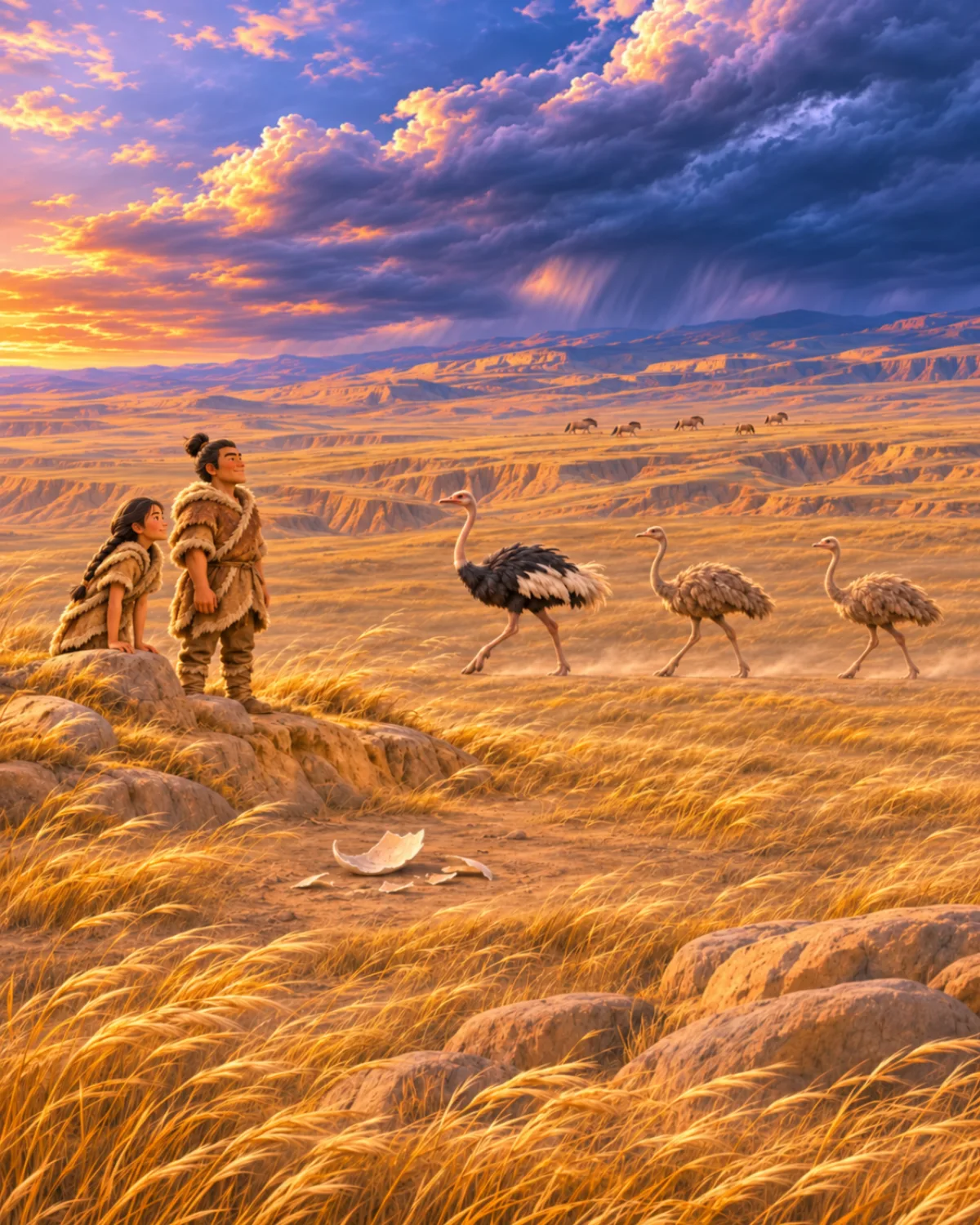
Nobody answered. Tses dug down a forearm's length, and then she stopped, and she pulled out something round and pale from the sand. It was an ostrich egg. She turned it over, and shook it, and wiped the grass plug clean and held it to her ear, and then she held it up, and everyone could hear it slosh.
She'd buried it there at the end of last winter, on the way out to the hills, and not told anyone. There were two more under the same bush.
“A buried shell of water is a friend you left for yourself,” Naras's grandmother said, and sounded, for the first time all day, pleased.
They passed the three eggs around. Each person got a mouthful. Naras held hers in her mouth a moment before she swallowed it. Tses sat next to her with her knees drawn up and said, to nobody in particular, that she'd forgotten which bush since the end of winter and had to remember it this morning.
“Why didn't you say?”
“Because I wasn't sure,” Tses said. “Anyone can be sure after.”
The first night
The water they would sit on
They reached the big gorge on the evening of the second day.
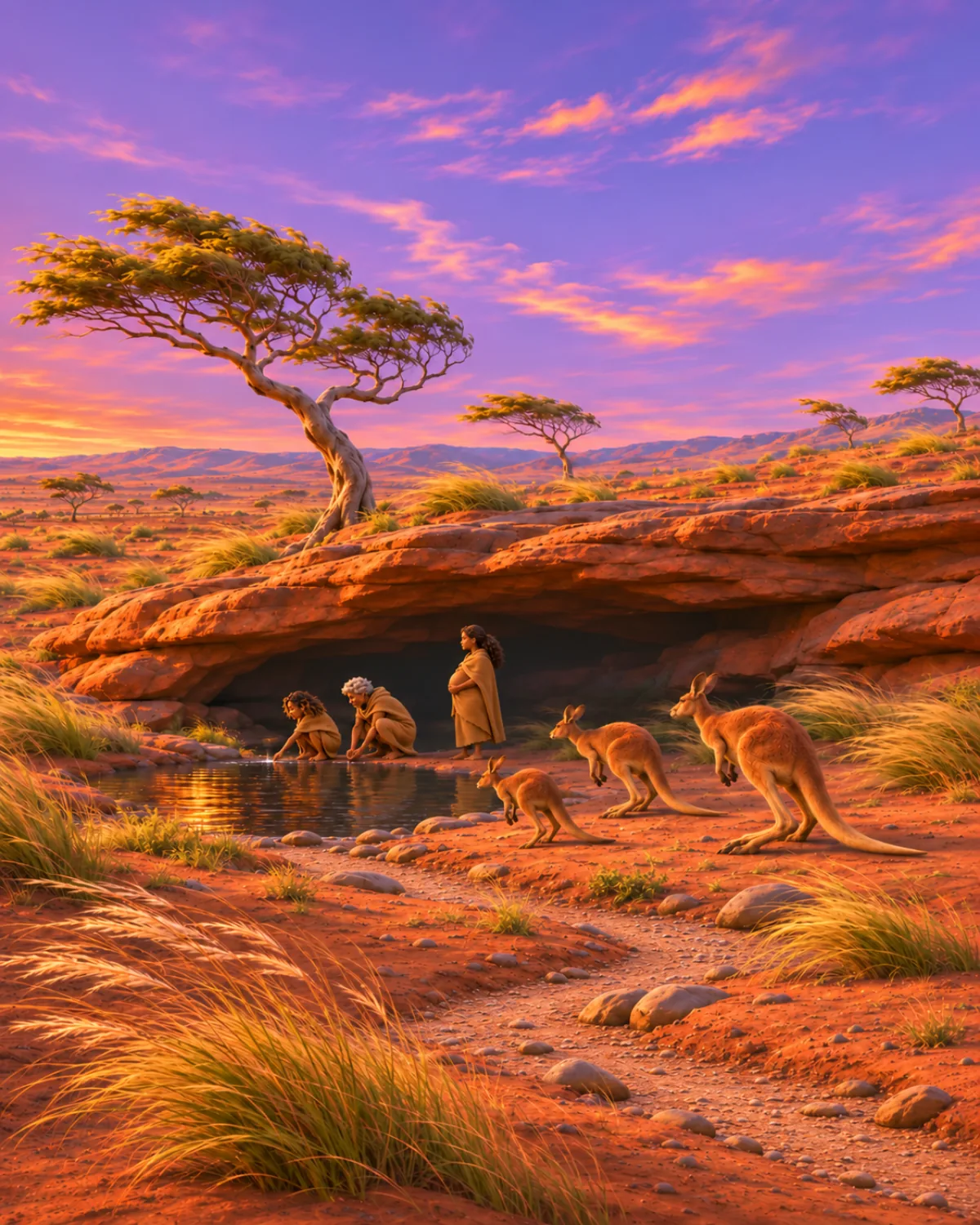
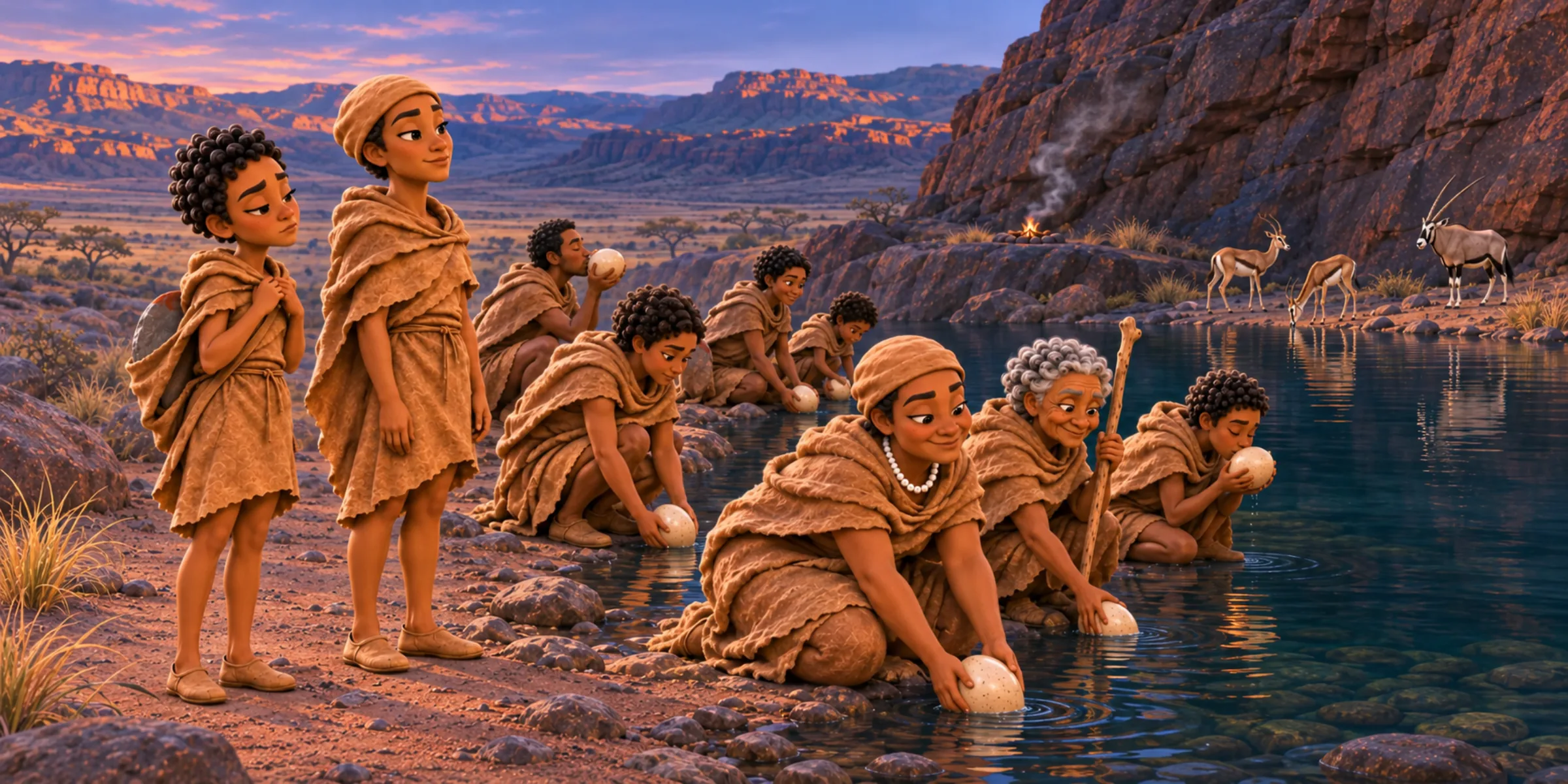
It came up out of the dusk all at once, where it always was, walls of red-brown and gray rock on both sides, and the cold coming down off them already. At the foot of the right-hand wall, in the shade where the sun had never reached, there was a pool. It was black and flat. It had been there longer than anyone had been alive.
The band went to it in a line, and nobody ran. They knelt at the edge, one family after another, and drank, and the sound of it was the only sound there was.
Naras did not drink with them at first. She stood on the bank with the stone still on her back, and her shoulder had stopped hurting an hour ago, which she'd noticed and not trusted.
“Put it down,” Tses said.
“Where?”
“Anywhere flat.”
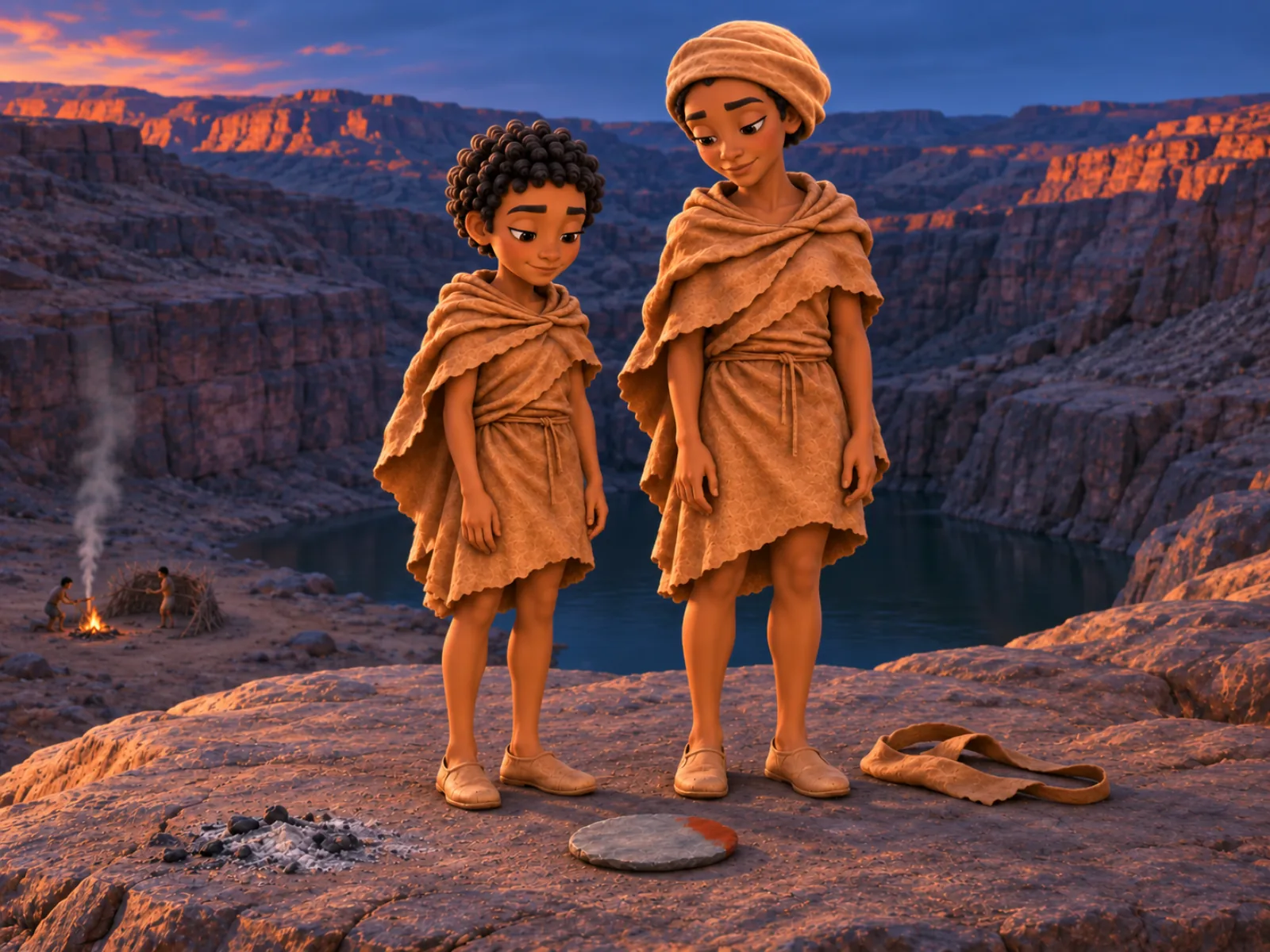
She looked around. There was a ledge of rock above the water with a bit of level ground on it, out of the wind, with ash on it from other winters. She climbed up there with the stone, slowly, and untied the strap, and set it down on the ground, face up. The red smear was dark in the last light.
She stood back. It looked like a stone on a rock.
Behind her somebody was already breaking brush for a windbreak, and somebody else was laying a fire. This was where they'd be until the spring. The camp had moved, and it was not going to move again for a long time, and she could feel that, in her legs, as if the ground was finally tired too.
Tses came up and stood beside her.
“It's a good stone,” Tses said.
“It's an ordinary stone.”
“Mm.”
They stood there a while. The cold came down hard, the way it does, and below them the fire caught.
In the morning Naras woke before anyone else, with a mark across her shoulder from the strap. She lay under her cloak and looked at the rock above her, and looked for the stone, and it was there.
Then she got up, and went down to the water with the first flask.