

A story from the Great Rift
Still Awake
About 10 minutes
When the rains had come
The edge of the work
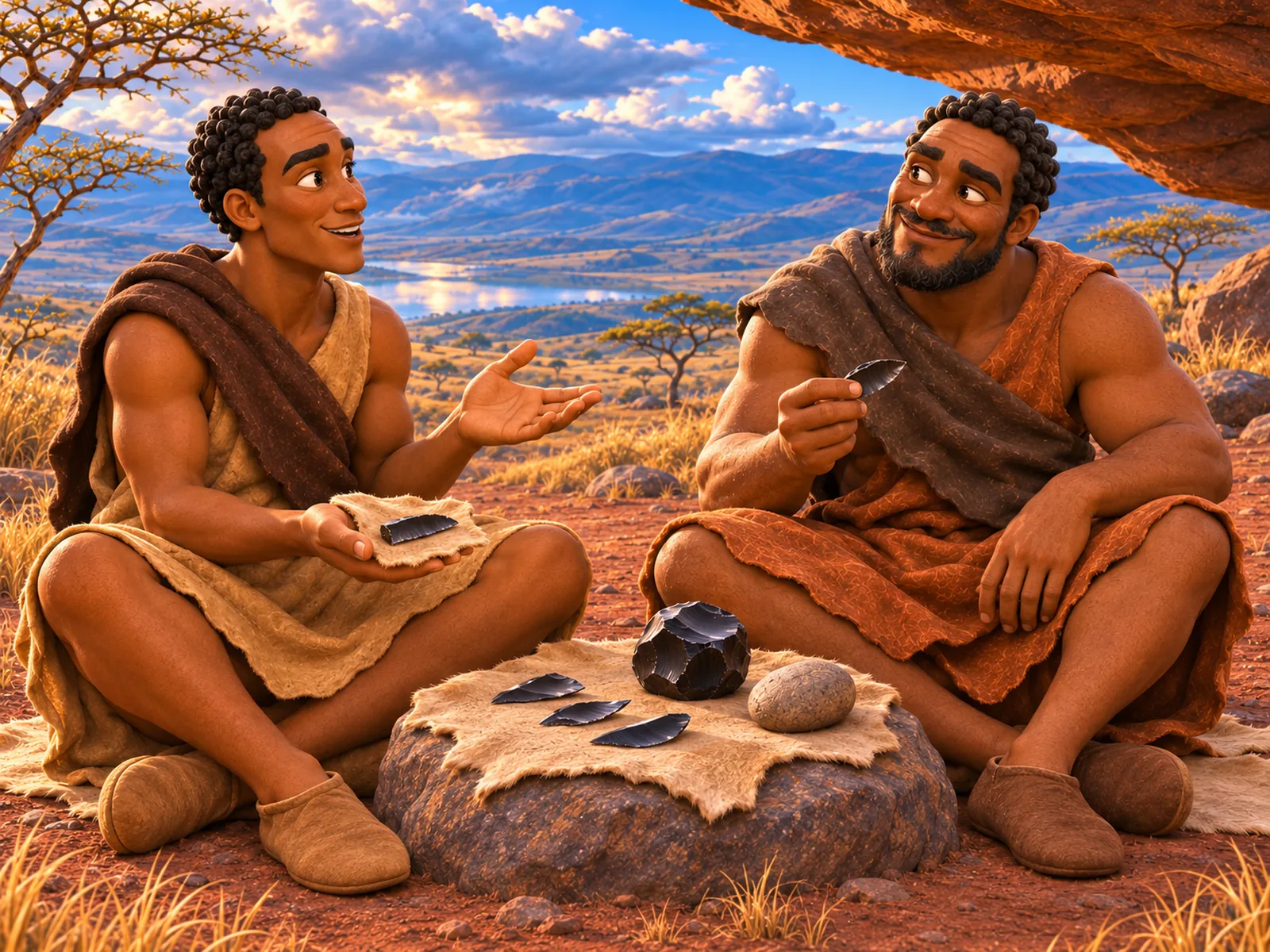
The blade came away whole. Osero turned it in the light, checked the thin edge and put it beside the others.
“There was another one in it,” the man sitting opposite him said.
“You told me there wasn't.”
“I was hoping you'd disagree.”
His name was Olkeju. He had come up from the lower country with a small group carrying black glass, food and news about people Osero only half remembered. Osero was twenty-eight. He had been working stone for years, and he liked the part of meeting someone where there was a thing in front of them to talk about.
He passed the finished blade across on a scrap of hide. Olkeju lifted it by the thick end.
“I could have used that yesterday.”
“Bring it yesterday next time.”
Olkeju laughed and began wrapping it.
The rains had brought green back between the stones. Below the camp, cloud kept moving across the valley, showing a patch of lake and covering it again. People had been coming up the path since morning. Someone Osero knew was arguing with someone he didn't about where a stream crossed the lower ground. Two children were trying to listen without looking as though they were listening.
Entim appeared with their son against her shoulder.
“I've found you,” she said.
Osero folded the working hide over the sharp chips and set it well back under the rock. He rinsed his hands at the stream before coming to take Oltome.
The baby was six months old. He looked at Osero, caught the loose edge of his wrap and pulled it straight into his mouth.
“Hello to you too.”
“Enkare's here,” Entim said. “I haven't seen her since before he was born. I'd like to finish a conversation with her.”
“What about?”
“Anything. I'd like to find out.”
She was twenty-seven. There were things she wanted to hear about besides how long Oltome had slept.
“Go on,” Osero said.
She kissed their son's curls, then Osero's cheek, and went to find her friend.
Olkeju was watching her leave.
“Enkare's my partner.”
“Then we'll probably see you at the fire.”
“Probably.”
What works
They met again before the food was ready.
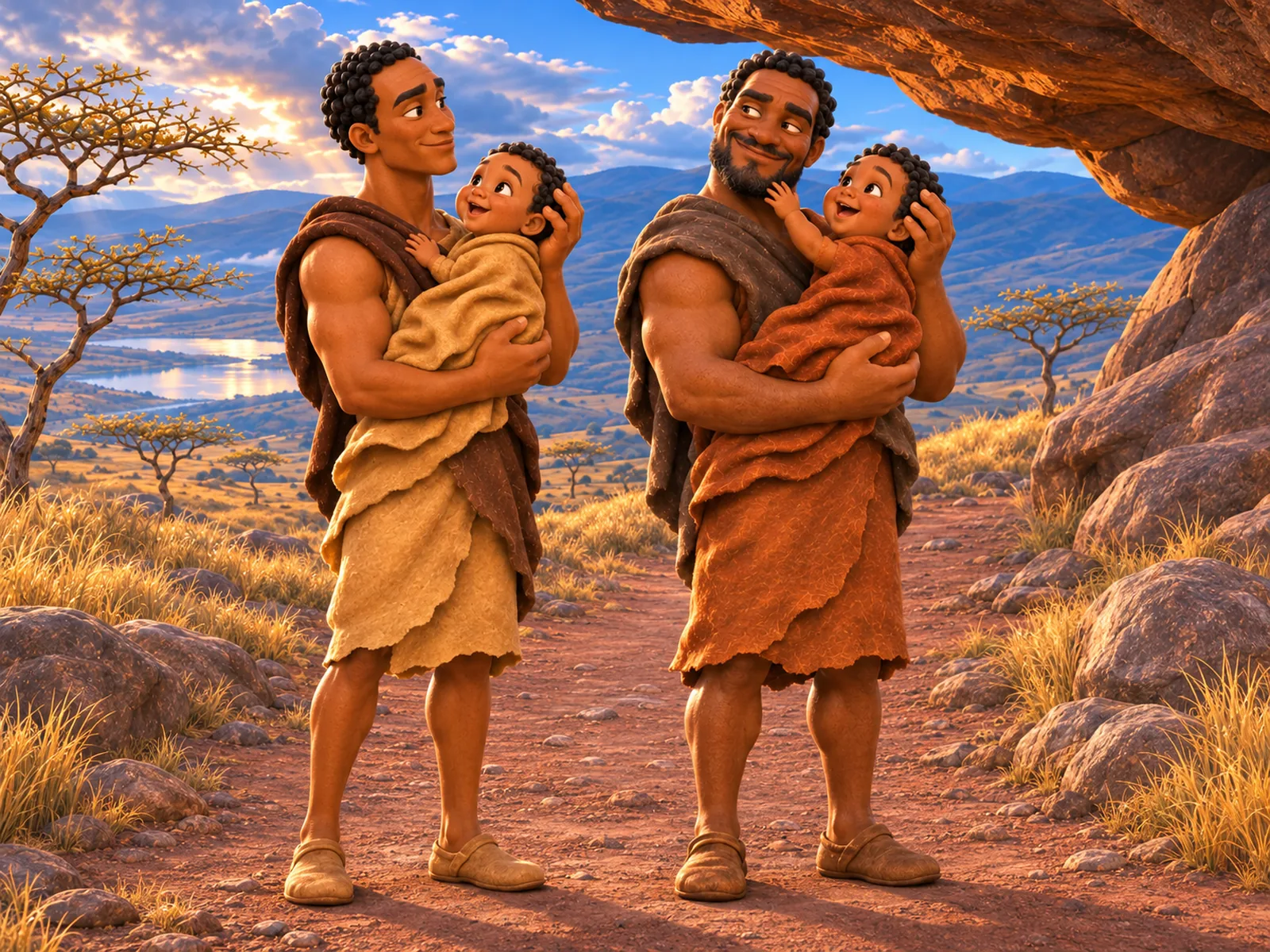
Olkeju had a child with him now: his daughter Enkerai, eight months old, looking over his arm at everybody. He was thirty-one, broader than Osero and a little shorter. Enkerai had taken hold of his beard.
He gently freed it.
She took hold of it again.
“She's interested in everything,” he said.
Osero shifted his son higher against him.
“He likes being walked.”
“So does she.”
“Usually he goes to sleep.”
Olkeju looked at Oltome, who was watching a loose tie on his father's shoulder.
“Does he?”
“Usually.”
“I put her down when she's ready,” Olkeju said.
“How do you know?”
“There's a point.”
Osero waited for him to explain the point.
Enkerai made a small noise and pulled her father's beard.
“You can tell,” Olkeju added.
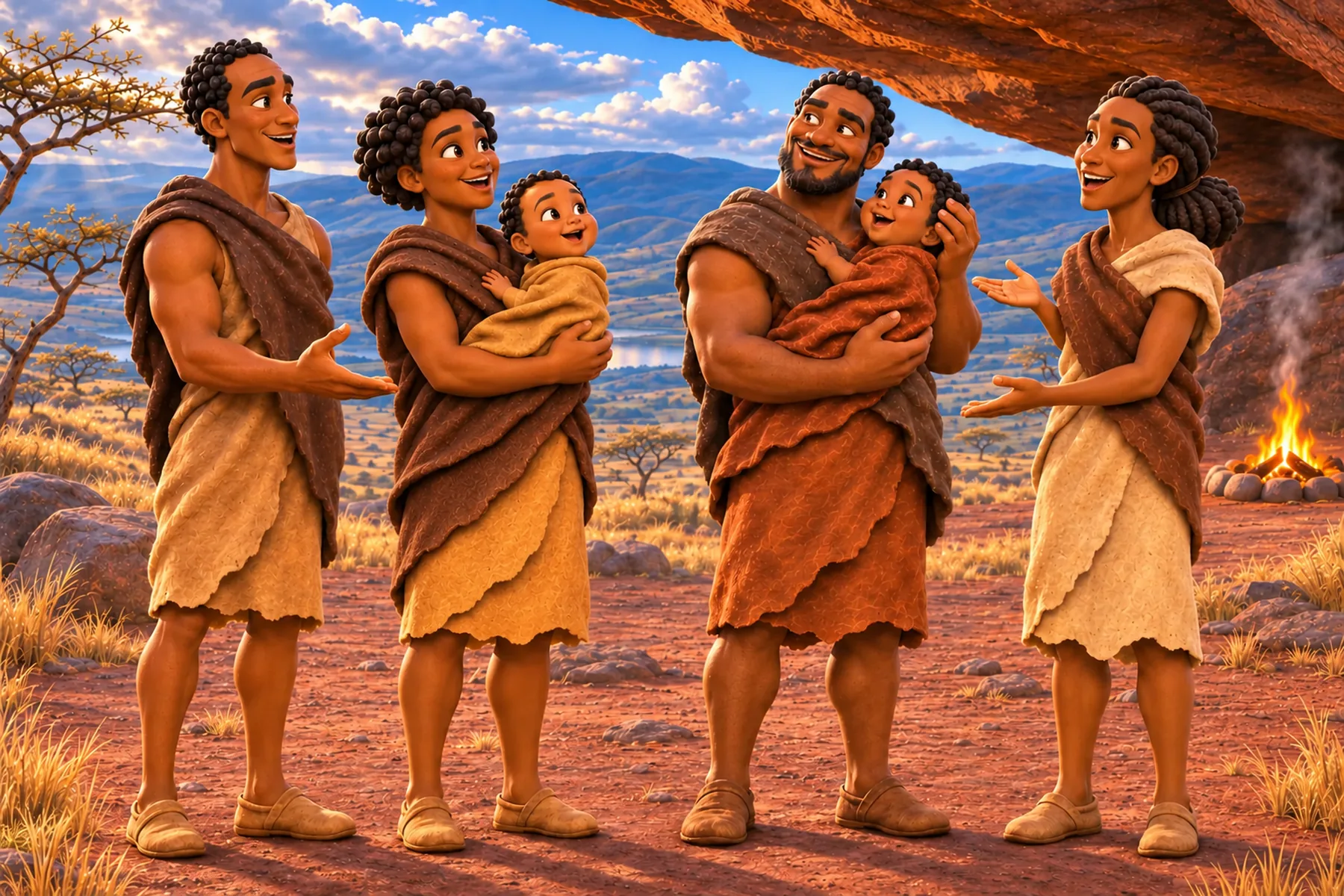
Enkare came over with Entim. She took the tie out of Oltome's mouth and handed it back to Osero.
“He's been telling you about the point?” she asked.
Olkeju looked at her.
“Sometimes I miss it,” he said.
“Sometimes we both miss it.”
She leaned her head briefly against his shoulder, just above their daughter's hand.
They ate near one another. Enkare told Entim about the path they'd taken and a woman who had walked half a morning before noticing she'd left her pack behind. Entim laughed so hard she had to set her food down, then admitted she'd recently looked for Oltome while he was in her arms.
Osero had done that too. He decided to say so.
Afterward, when the children needed feeding and settling, the four of them broke off their conversation and saw to them. There would be more time tomorrow.
After everyone else
When Osero opened his eyes, Entim was already sitting up.
“I only just got comfortable,” she said.
“I know.”
Their son was awake between them, making sure they were too.
Entim fed him again. Osero brought her water and waited beside her. Beyond their corner of the overhang, someone coughed, turned over and went quiet. The rain had stopped. Drops were still falling from the brush screen outside.
When Oltome had finished, he looked perfectly ready to begin the day.
“Shall I try walking?” Osero asked.
Entim held him out.
“Stay close. I'll want him back when he's hungry.”
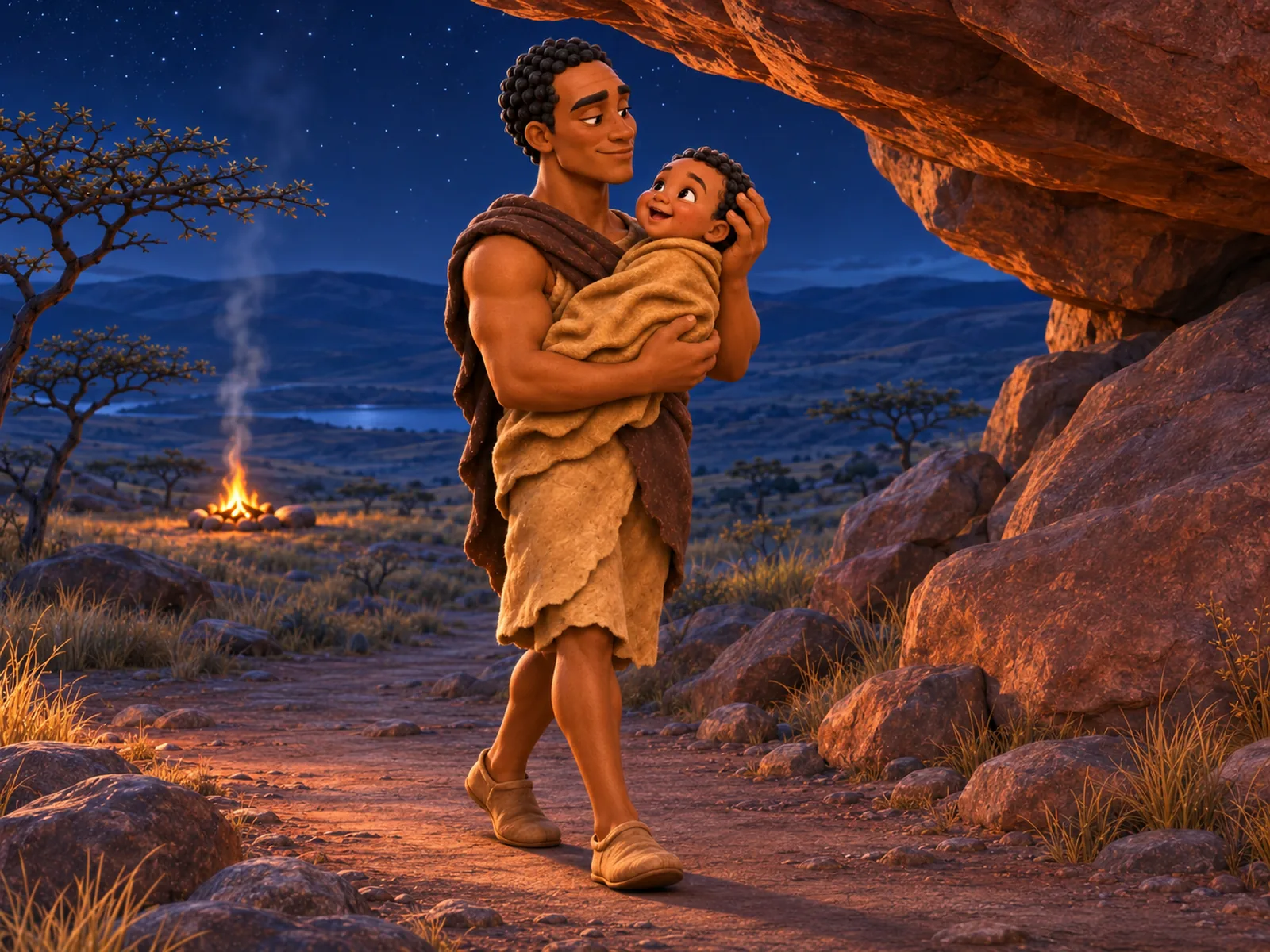
Osero settled the child securely in his arms, with the cover loose around his feet, and stepped onto the level path behind the rocks.
He walked to the end of the screen and back.
Oltome watched him.
He walked a little more slowly.
Oltome watched the screen.
Osero stopped and waited for his eyes to close.
His son's mouth began to turn down.
“All right.”
He walked again.
Osero knew how much stone he could take away before an edge broke. He could follow a familiar path with a heavy pack and think about something else. In his arms was a small person he loved more than he had expected to love anyone, and he couldn't work out whether to move faster or slower.
He tried slower.
From the dark beyond the screen, somebody said, “Still awake?”
Still awake
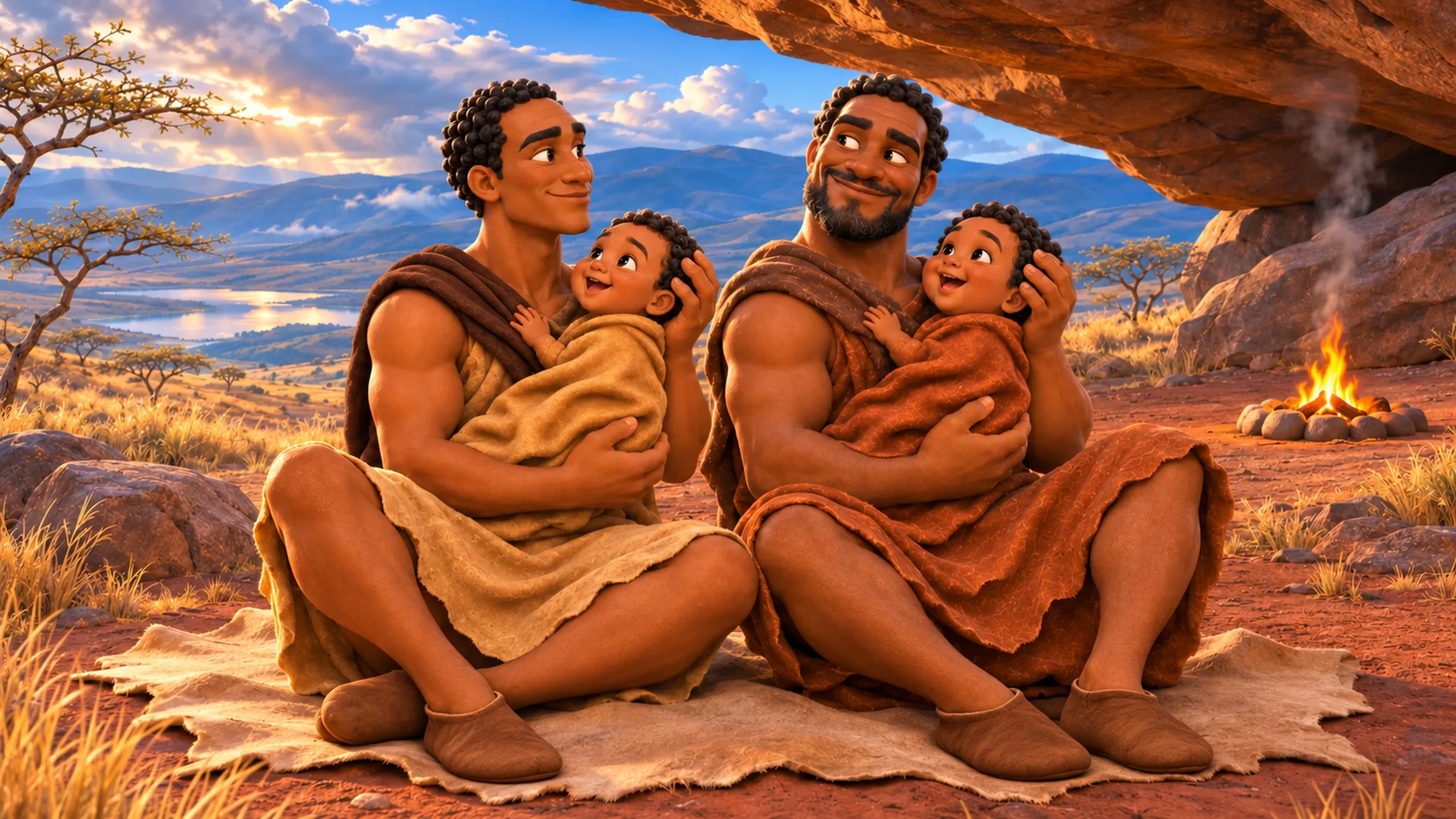
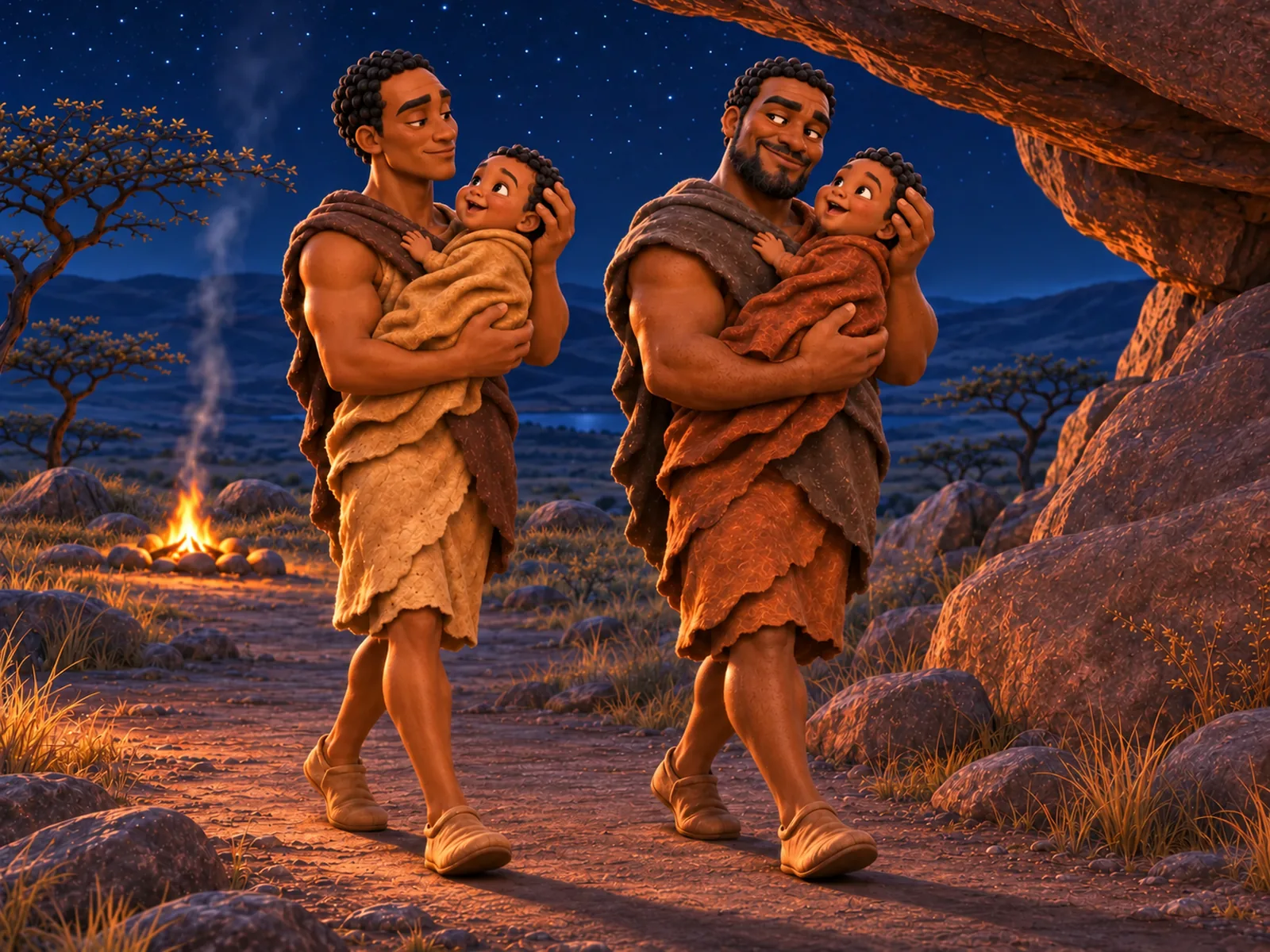
Olkeju came into the last of the firelight with Enkerai against him.
Osero looked from the child to her father.
“Have you missed the point?”
“By quite a long way.”
They stood together for a moment. Enkerai reached toward Oltome. He stared at her hand, then at his own.
“She's been fed,” Olkeju said. “She's been held. Enkare's been up with her. I've been up with her.”
“Have you told her it's night?”
“I thought she'd notice.”
Osero began to laugh. It came out louder than he meant. Both men looked back toward the sleepers.
Nobody stirred.
They walked the level stretch together, turned and came back. Olkeju knew which stones to step around by the second turn. By the fourth, they were leaving room for each other without looking.
Oltome's head grew heavy against Osero's arm. He slowed, delighted, and glanced across at Olkeju.
“Don't say it,” Olkeju whispered.
Osero said nothing.
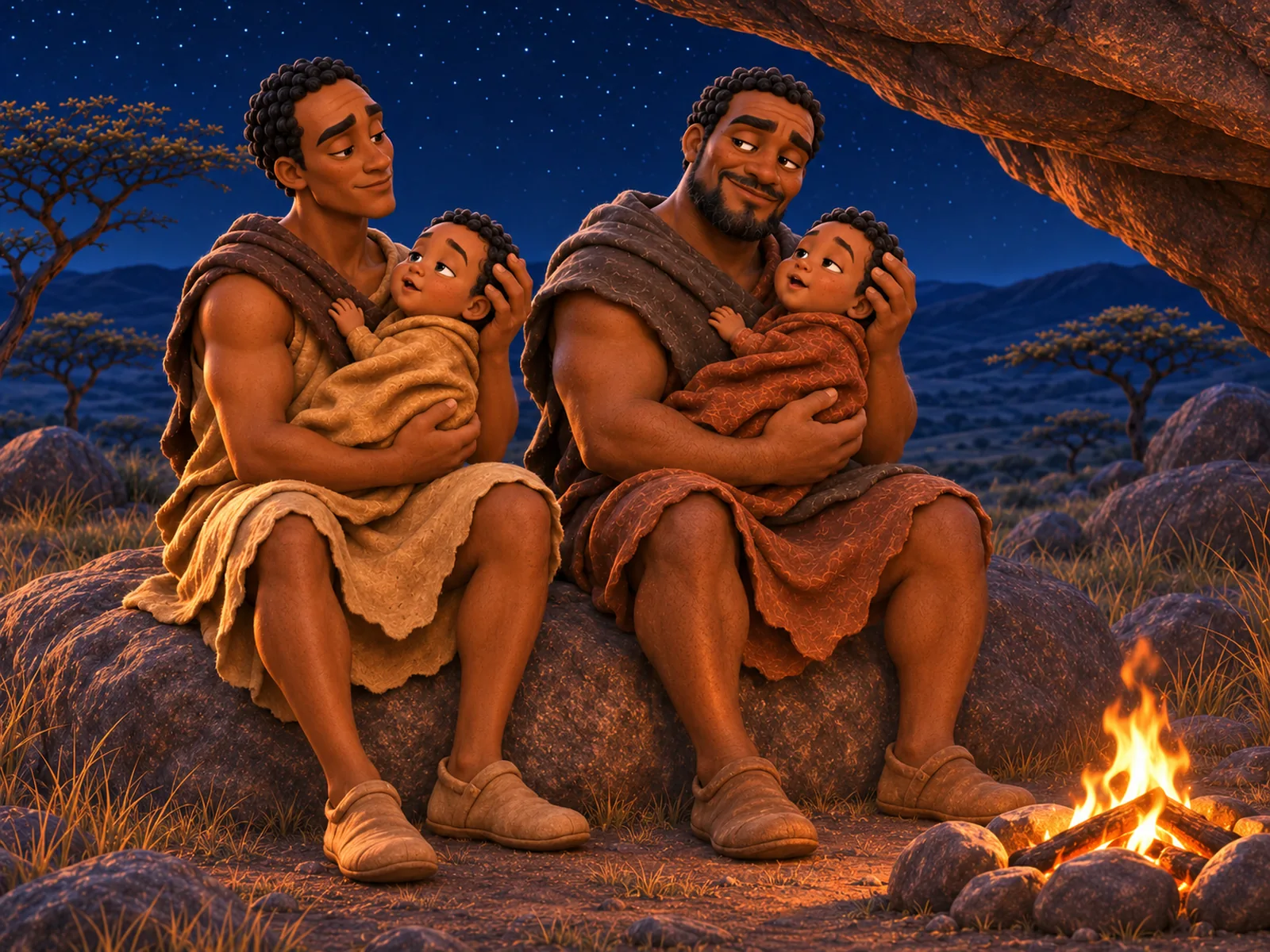
He stopped beside a broad rock where he could sit with his son supported in his lap.
Oltome opened his eyes.
Olkeju turned away.
His shoulders moved.
“I can see you,” Osero said.
“I'm not doing anything.”
Enkerai made a pleased sound. Olkeju looked down at her.
“You too?”
From under the overhang, Enkare called his name. He went back to her while Osero stayed on the rock. Entim came to the screen, checked on her son and sat for a while beside them. She told Osero the rest of the story about the abandoned pack. He'd missed the part where its owner had accused someone else of losing it.
When Olkeju returned, his daughter had been fed again and Enkare was settling down. Entim went back to their corner too.
Olkeju sat beside Osero.
“Well?” Osero asked.
“She's still herself.”
Things you can say in the dark
For a while they talked about the way Olkeju had come and who was camping farther down. Osero knew one of the people who had passed the black glass to him. By the time they had worked out which person they both meant, Enkerai had stopped pulling at her father's wrap.
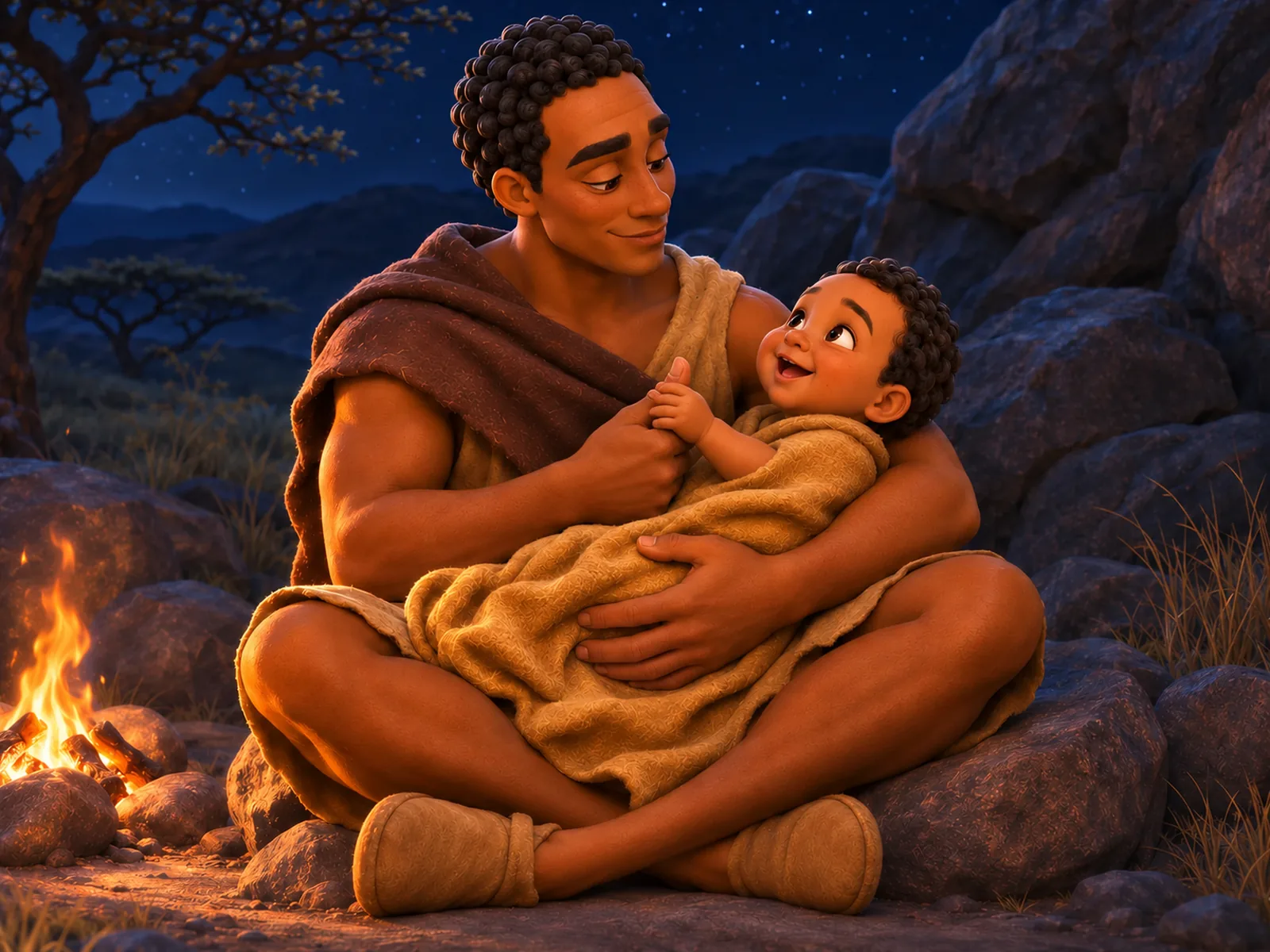
Oltome closed his hand around Osero's thumb.
Osero let him keep it. The grip was firm enough to make moving it feel unnecessary.
“I used to finish things,” he said.
Olkeju looked over.
“You finished my blade.”
“Before that, I mean. I'd start something, and when it was done I'd do the next thing.”
“Now you get partway through the first thing.”
“And forget where you put it.”
Olkeju nodded.
“I've eaten while walking more often than I've sat down lately.”
Osero looked at his son's small hand.
“This afternoon I wanted Entim to take him. Then she took him, and I stood there looking at them.”
“I do that.”
“Do you?”
“Enkare tells me to go and do whatever I wanted to do. Then I can't remember what it was.”
Osero laughed quietly. He hadn't known he wanted somebody to say that.
Enkerai began to fuss. Olkeju shifted her, checked her cover and stood. Osero stayed sitting while he walked to the screen and back.
“You can talk,” Olkeju said. “I can still hear you.”
So Osero did. He told him about making a whole journey with his working stone still beside the place where he'd eaten. Olkeju told him about walking past his own pack three times while looking for it. Some of it was funny only because it was late. They laughed anyway.
Then Osero said, “Sometimes I just want to sleep.”
Olkeju came back and sat beside him.
“So do I.”
They stayed quiet. Neither hurried to explain that he loved his child.

Cloud had moved away from the valley. Below them, water showed faintly in two gaps between the hills. Above the far scarp there were more stars than Osero could take in without moving his head.
He had been in camp for four days. He hadn't looked down there at night.
Olkeju followed his gaze.
“We came up that way.”
Osero looked at the dark slope.
“With her?”
“And everything else.”
“I'm glad I was already here.”
“So was I, when you said there was another blade in the stone.”
Their children watched the firelight. For several breaths, both were quiet.
Osero left his thumb where it was.
Before the sun
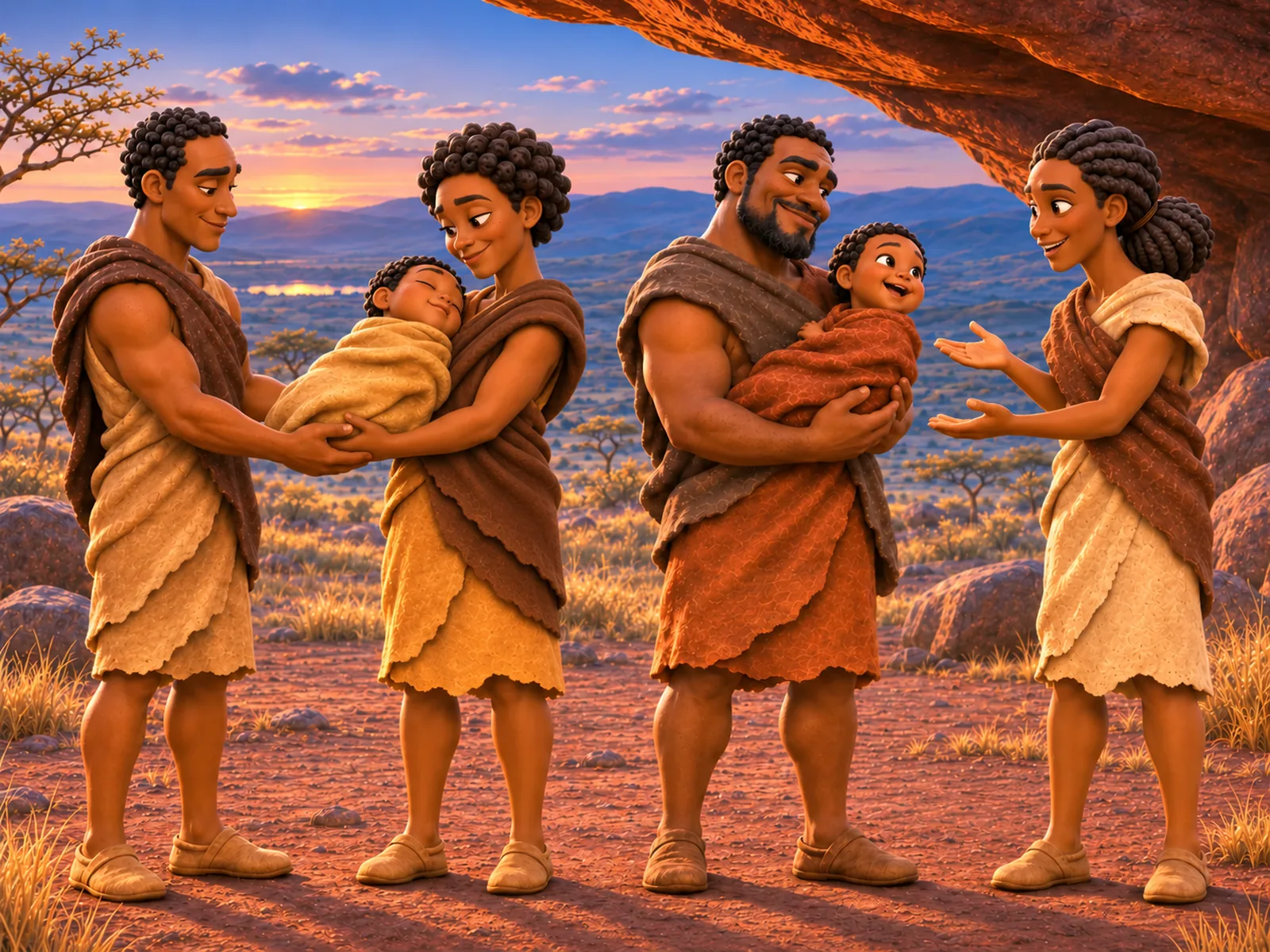
Entim found them together when the sky was beginning to change.
Oltome was asleep. Osero kept looking down to make sure.
“You can breathe,” she said.
“I am breathing.”
“Very carefully.”
Enkare came out behind her, pulling her hide around her shoulders. Enkerai lifted both arms toward her. Olkeju passed her across, and she immediately began reaching for the loose edge of her mother's cover.
“Did you sleep?” Enkare asked him.
“I sat down.”
“That's something.”
Entim took Oltome gently from Osero. The child moved his mouth against her arm and stayed asleep.
Osero stared.
“Of course,” he said.
Entim smiled at him.
“Come and lie down.”
He stood carefully. His legs had forgotten what he'd been asking them to do all night.
Beyond the camp, the first light was reaching the upper grass. Someone was stirring the embers for food. A voice called from the path, and another answered from farther down.
Osero looked back at Olkeju.
“I'll see you when I wake up.”
“I'll be the one sitting down.”
He went in beside Entim. Before he lay down, he made room for her to sit comfortably with their son. Then he stretched out under his cover and was asleep before she had finished telling him something.
She saved it for later.
When the water got busy
A few months later, the rain had stopped coming often enough to keep the small streams running. Osero's people moved down toward permanent water.
There were camps along the bank already. People called to one another over the work of settling in. Someone was trying to move a sleeping child without waking him. Osero watched with the private sympathy of a person who had recently failed at the same thing.
Entim was carrying Oltome. He had grown longer, and the curls above his ears no longer lay flat when she'd smoothed them. He was looking at the people with his mouth open.
Osero heard his own name.
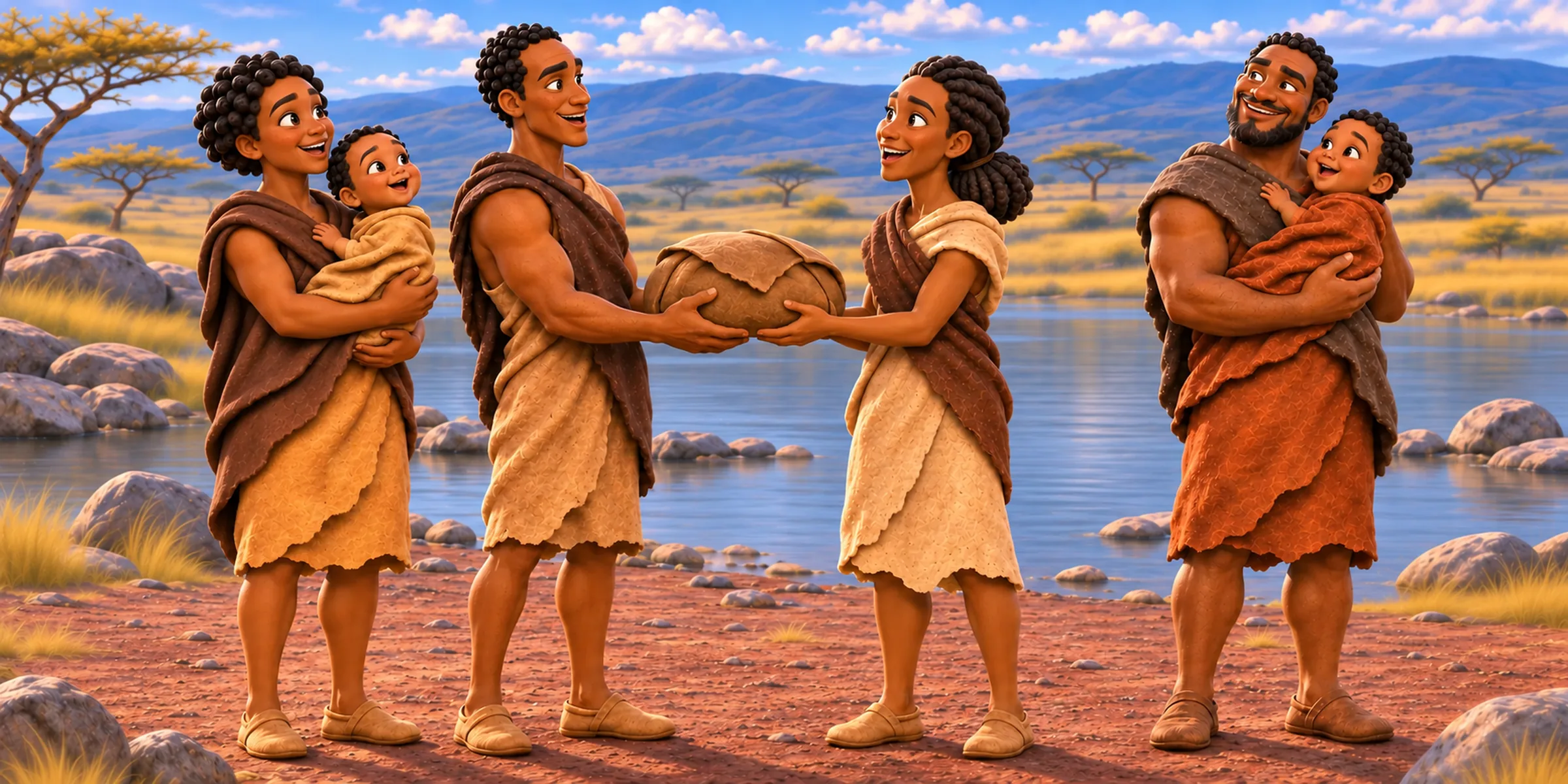
Olkeju was coming along the bank with Enkerai in his arms. Enkare followed with a covered bundle and a look that said she had already seen where Entim was.
“Did you ever put him down?” Olkeju asked.
“For a little while.”
“How did that go?”
“He had things to say about it.”
Olkeju laughed. Osero took the bundle from Enkare, and the two women greeted each other while the children looked across at one another.
“There's room near us,” Osero said. “If you haven't found a place.”
“We haven't.”
They walked back together. Osero showed them the level ground beside their camp, then went to help bring the rest of their things from the bank.
That evening, people sat between the two fires. Entim finished a story she'd begun earlier in the day. Enkare made her repeat the best part for Olkeju, and this time Osero heard the ending too.
Later, when both children were quiet, the men kept talking.
Neither of them mentioned sleep.